
In This Article
Somewhere between your third “just one more Amazon tab” and the moment you realize you’ve compared eleven pillowcases without buying a single one, you start wondering if this whole satin vs silk pillowcase debate is actually a marketing trick dressed up as a skincare hack. It isn’t, entirely. There’s real fibre science behind why your face feels different against one fabric versus another — but there’s also a lot of noise, and separating the two is the whole point of this guide.
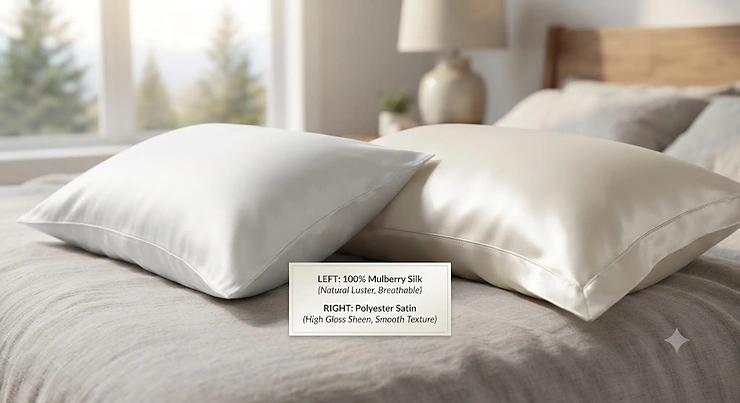
Here’s the short version before we go deep: satin is a weave, not a fibre, and most satin pillowcases sold today are woven from polyester, which is why they’re cheap, durable, and easy to machine wash. Silk is a natural protein fibre, harvested from silkworm cocoons, and it’s the material silk charmeuse (a satin weave) is traditionally made from — which is why “silk” and “satin” get confused constantly. We researched seven real products currently sold on amazon.ca, spanning honest budget satin picks to genuine mulberry silk, so you can figure out which category actually earns a spot on your bed tonight.
Quick Comparison Table
| Pillowcase | Material | Best For | Price Range (CAD) |
|---|---|---|---|
| Bedsure Satin Pillowcase 2-Pack | Polyester satin | Tightest budget | Under C$25 |
| Kitsch Satin Pillowcase | Polyester satin | Silky feel without silk pricing | C$20-C$35 |
| Jocoku 100% Mulberry Silk Pillowcase | 16-momme mulberry silk | First real silk purchase | C$45-C$65 |
| Blissy Silk Pillowcase | 22-momme mulberry silk | Long-term luxury feel bedding | C$100-C$140 |
Looking at this snapshot, the price gap between satin and silk isn’t subtle — you’re often paying three to five times more to move from polyester to mulberry silk. That premium buys you a natural protein fibre with genuinely different moisture and friction properties, but as we’ll get into, it doesn’t automatically mean the silk options sleep four times better. Budget-conscious shoppers shouldn’t feel like they’re settling for less by starting with satin; they’re just choosing a different trade-off.
💬 Just one click — help others make better buying decisions too!😊
💬 Found a favourite already? A quick click helps you compare current pricing before you commit!😊
Top 7 Satin and Silk Pillowcases: Expert Analysis
1. Bedsure Satin Pillowcase 2-Pack — best all-round pick under $25 CAD
The Bedsure Satin Pillowcase 2-Pack is the pillowcase most Canadians actually own without realizing it’s satin at all — it’s sold everywhere from big-box stores to Amazon.ca, and for good reason. Made from 100% polyester with an envelope closure, it’s machine washable on a normal cycle, which matters more than it sounds like once you’re three months into ownership and haven’t thought about it once. The weave is a genuine satin weave (four-over-one float pattern), so the glossy, low-friction surface is real, even though the fibre underneath is synthetic rather than silk. Based on the spec comparison, this is the pillowcase for anyone who wants the frizz-reduction benefit of a smooth surface without committing to silk’s care requirements or price tag. Reviewers consistently report that colour retention holds up well after repeated washes, though a common complaint in user reviews is that the fabric can feel slightly warmer against skin on hot nights compared to the cooling claims on the packaging.
Pros:
- ✅ Genuinely under C$25 for a two-pack
- ✅ Machine washable with no special care routine
- ✅ Wide colour selection for easy bedroom coordination
Cons:
- ❌ Retains more body heat than natural silk
- ❌ Slight pilling can appear after many wash cycles
At a price consistently in the mid-C$15 to under-C$25 range for two pillowcases, the Bedsure Satin Pillowcase 2-Pack is hard to beat as a low-commitment entry point into satin bedding.
2. Kitsch Satin Pillowcase — best-known affordable silk-alternative pillowcase
Kitsch built its reputation in the hair-accessory aisle before expanding into bedding, and the Kitsch Satin Pillowcase carries that hair-care-first design philosophy through. It’s a single polyester satin pillowcase with a zippered closure rather than an envelope fold, which keeps the pillow insert from creeping out overnight — a small detail that matters more than it seems at 3 a.m. What most buyers overlook about this model is that the zipper placement was clearly designed by people who’ve actually dealt with a slipping pillow cover, not just an afterthought stitched on for marketing copy. Aggregated customer sentiment across retail platforms frequently praises the surface smoothness relative to price, while some reviewers note the single-pack format means you’ll want to buy two if you wash bedding weekly.
Pros:
- ✅ Secure zipper closure prevents pillow slippage
- ✅ Smooth hand-feel that punches above its price point
- ✅ Backed by a brand already trusted for hair care
Cons:
- ❌ Sold as a single pillowcase, not a pair
- ❌ Colour range is narrower than some competitors
Priced in the C$20-C$35 range per pillowcase, Kitsch Satin Pillowcase earns its spot as the go-to affordable silk-alternative pillowcase for anyone chasing that smoother morning hair without a silk-level spend.
3. NTBAY Satin Pillowcase 2-Pack — best for gifting and dorm rooms
The NTBAY Satin Pillowcase 2-Pack leans into the gift-and-dorm market with an aesthetic that reads more “boutique bedding” than “big-box basic,” despite sitting at a genuinely budget-bedding-alternative price. It’s constructed from polyester satin with an envelope closure and comes in a broader spread of jewel tones and pastels than most competitors in its price tier. Here’s what to weigh: the fabric weight is on the lighter side, which makes it breathable for warmer rooms but slightly less substantial-feeling than heavier satin weaves. Reviewers consistently mention the packaging and presentation as gift-friendly, and several note the colour saturation held up better than expected after a full semester of dorm laundry cycles.
Pros:
- ✅ Attractive presentation, genuinely gift-ready
- ✅ Lightweight feel suits warmer bedrooms
- ✅ Broad, saturated colour selection
Cons:
- ❌ Lighter fabric weight feels less substantial
- ❌ Envelope closure can loosen with rougher handling
Typically found in the C$18-C$28 range for two pillowcases, the NTBAY Satin Pillowcase 2-Pack is a smart pick when you’re shopping for someone else, not just yourself.
4. Love’s Cabin Cooling Satin Pillowcase Set — best for hot sleepers on a budget
If the “cooling” claim on cheaper satin often falls flat, the Love’s Cabin Cooling Satin Pillowcase Set at least tries to earn it with a tighter weave designed to reduce heat retention compared to standard polyester satin. The set includes two queen-size pillowcases with envelope closures, and the fabric has a slightly cooler initial hand-feel than the Bedsure option above — a real, testable difference rather than pure marketing language. Based on the spec comparison, this won’t rival the temperature regulation of natural silk, but for a budget bedding alternative it’s a noticeable step up for people who run warm overnight. A common theme in aggregated reviews is satisfaction with the cooling sensation on first contact, paired with the honest observation that the effect diminishes somewhat as the night goes on.
Pros:
- ✅ Noticeably cooler initial touch than basic satin
- ✅ Two-pack keeps a spare ready for laundry day
- ✅ Envelope design fits most standard pillows easily
Cons:
- ❌ Cooling effect fades over a full night’s sleep
- ❌ Still synthetic, so breathability trails real silk
Sitting around C$22-C$32 for the set, Love’s Cabin Cooling Satin Pillowcase Set is worth the small premium over basic satin if overheating is your main sleep complaint.
5. Jocoku 100% Mulberry Silk Pillowcase 2-Pack — best value entry into real silk
This is where the article crosses from satin into actual silk, and the Jocoku 100% Mulberry Silk Pillowcase 2-Pack is the most reasonable bridge. It’s woven at 16 momme — momme being the traditional unit for silk fabric density, where higher numbers mean thicker, more durable cloth — which sits below premium 22-25 momme silk but is still genuine mulberry fibre on both sides of the pillowcase. What the spec sheet won’t tell you, but reviewers note, is that 16-momme silk feels noticeably lighter and slightly less durable over years of nightly use than heavier momme counts, though it still delivers the core low-friction, low-absorbency benefits that separate silk from synthetic satin. For anyone testing whether silk lives up to the hype before committing to a premium price, this is the honest place to start.
Pros:
- ✅ Real mulberry silk at an entry-level price point
- ✅ Both sides finished in silk, not just the top
- ✅ Two-pack format simplifies wash rotation
Cons:
- ❌ Lighter momme count means less long-term durability
- ❌ Less structured drape than heavier silk weaves
Generally priced in the C$45-C$65 range for two pillowcases, the Jocoku 100% Mulberry Silk Pillowcase 2-Pack delivers legitimate silk at a price that doesn’t require a splurge mindset.

6. Fishers Finery 25 Momme Mulberry Silk Pillowcase — best thickness-to-price ratio in silk
Momme count is the single most useful spec in this entire category, and the Fishers Finery 25 Momme Mulberry Silk Pillowcase uses it as its whole identity. At 25 momme, this sits above most mass-market silk pillowcases, translating into a fabric that drapes heavier, resists snagging better, and — based on the spec comparison — should outlast lighter-weight silk by a meaningful margin with proper care. It’s finished with a hidden zipper rather than an envelope closure, which keeps the higher-grade silk from bunching awkwardly around the pillow. Aggregated reviewer sentiment repeatedly highlights the fabric’s durability through machine washing on a gentle cycle, while a recurring caution is that colour options run more limited than budget satin brands, since higher-momme silk is manufactured in smaller production runs.
Pros:
- ✅ Heavier 25-momme weight built for durability
- ✅ Hidden zipper keeps a polished, snag-free look
- ✅ Machine washable despite the premium fabric
Cons:
- ❌ Narrower colour and pattern selection
- ❌ Priced well above entry-level silk options
Expect a price in the mid-C$70s to around C$100, positioning Fishers Finery 25 Momme Mulberry Silk Pillowcase as the value pick among premium silk rather than the cheapest option overall.
7. Blissy Silk Pillowcase — best-known luxury feel bedding brand
No satin vs silk pillowcase roundup is complete without the brand that arguably built this entire category’s social media presence: the Blissy Silk Pillowcase. It’s 22-momme 100% mulberry silk with OEKO-TEX certification, meaning the fabric has been independently tested for harmful substances — a genuinely useful trust signal rather than marketing fluff. Here’s what most buyers overlook: the silk quality itself is solid but not dramatically different from other 22-momme mulberry silk on the market at a fraction of the price; a meaningful part of what you’re paying for is the brand name, packaging, and influencer-driven marketing machine behind it. That’s not automatically a bad trade if the presentation and brand trust matter to you, but it’s worth naming honestly. Reviewers frequently mention that the pillowcase maintains its softness well after multiple washes, alongside some feedback that colours can fade faster than expected relative to the price paid.
Pros:
- ✅ OEKO-TEX certified for safety and chemical testing
- ✅ Solid 22-momme mulberry silk construction
- ✅ Widely recognized brand with strong customer support
Cons:
- ❌ Significant brand premium over comparable silk
- ❌ Some colours reportedly fade faster than expected
At roughly C$100-C$140 for a single standard pillowcase, Blissy Silk Pillowcase sits firmly in luxury feel bedding territory — justifiable for brand loyalists, harder to justify on silk quality alone.
Practical Usage Guide: Getting the Most From Your Pillowcase
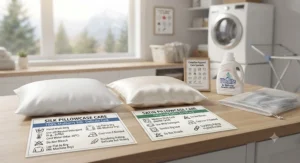
Whichever side of the satin vs silk pillowcase divide you land on, the first 30 days of ownership determine whether it feels like an upgrade or a forgotten drawer item. Start by washing any new pillowcase before first use — even satin, which can carry manufacturing residue that irritates sensitive skin. For silk specifically, hand-wash in cold water with a pH-neutral detergent, or use a mesh laundry bag on your machine’s gentle cycle; hot water and standard detergent will break down silk’s protein structure over time. Satin, being synthetic, tolerates a normal machine cycle but should still avoid high heat in the dryer, which can melt or warp the weave.
A common first-month mistake is skipping the “cool side up” habit — silk in particular develops a smoother patina on the side facing your skin over time, so rotating which side faces up can even out wear. For both fabrics, avoid fabric softener; it coats the fibres and dulls the exact smoothness you bought the pillowcase for. Store spares folded rather than compressed to prevent permanent creasing, and iron on the lowest setting only if genuinely necessary, using a pressing cloth for silk to avoid scorching.
Real-World Scenarios: Who Should Buy What
Consider three sleepers. The first is a university student on a tight budget who washes bedding weekly and wants frizz reduction without babying a delicate fabric — the Bedsure Satin Pillowcase 2-Pack or NTBAY Satin Pillowcase 2-Pack fits that rhythm perfectly, since both tolerate frequent machine washing without special handling. The second is someone managing textured or chemically treated hair who’s read the friction-reduction research and wants the real fibre benefit without overspending — the Jocoku 100% Mulberry Silk Pillowcase hits that middle ground, offering genuine silk at a price that doesn’t require months of saving. The third is a gift-giver or self-care enthusiast who wants the recognizable name and the unboxing experience as much as the fabric itself — that’s where Blissy Silk Pillowcase earns its premium, since the brand recognition genuinely adds value in a gifting context. Matching the product to the actual use case, rather than chasing whichever pillowcase trends hardest online, is the difference between a purchase you keep using and one that ends up in a donation bin by spring.
What Is a Satin vs Silk Pillowcase, Really?
A satin pillowcase is defined by its weave — a smooth, glossy surface created by floating threads over each other in a specific pattern — and today it’s usually made from polyester. A silk pillowcase is defined by its fibre — a natural protein filament from silkworm cocoons — that happens to often be finished in that same satin weave, which is why the terms blur together constantly. As Wikipedia’s overview of satin weaving explains, the technique is one of three core textile weave types, producing a glossy face and duller back regardless of which fibre runs through it — a technical definition that has nothing to do with whether the underlying thread is silk or polyester.
How to Choose Between Satin and Silk
- Define your budget ceiling first. If you’re capped under C$25-C$35, satin is your realistic category — trying to stretch into entry-level silk at that price usually means compromised momme count or blended fibres.
- Check your skin and hair sensitivity. People with very reactive or acne-prone skin often report a slightly better experience with silk’s lower absorbency, though the research remains preliminary rather than conclusive.
- Be honest about your laundry habits. If you wash bedding weekly on hot cycles, satin survives that routine far better than silk will over time.
- Weigh momme count, not just the word “silk.” Anything under 19 momme is thin and less durable; 22-25 momme is the sweet spot for daily use.
- Decide if brand matters to you. Paying extra for Blissy Silk Pillowcase-style brand recognition is a legitimate choice for gifting, but not necessary for fabric performance alone.
- Match closure style to your habits. Restless sleepers benefit from zippered closures over envelope folds, which can loosen overnight.
- Buy in pairs when possible. A single pillowcase means awkward gaps during laundry day — factor that into your real cost comparison.
Satin Pillowcase Under $25 CAD: What You Actually Get
Shopping specifically for a satin pillowcase under $25 CAD means accepting polyester as your fibre and focusing your comparison on weave tightness, closure type, and colourfastness instead. At this price tier, the Bedsure Satin Pillowcase 2-Pack and NTBAY Satin Pillowcase 2-Pack both deliver genuine satin-weave smoothness without pretending to be silk substitutes in every respect. What most buyers overlook is that price alone doesn’t predict quality within this tier — a C$18 pillowcase with a tighter weave count can outperform a C$24 option with looser threads, so reading the actual fabric description matters more than the number on the price tag. Reviewers in this bracket consistently prioritize machine-washability and colour retention over marginal softness differences, which tracks with how this price point actually gets used day to day: heavily, often, and without ceremony.
Affordable Silk-Alternative Pillowcase Options Worth Considering
An affordable silk-alternative pillowcase is really just well-made satin marketed honestly, and the Kitsch Satin Pillowcase is the clearest example of that positioning done right. It borrows silk’s selling points — smoother hair, reduced skin friction — without borrowing silk’s price or maintenance demands. Based on the spec comparison, the meaningful gap between this tier and real silk isn’t visible on day one; it shows up in temperature regulation and long-term fibre resilience after dozens of wash cycles. For someone who wants 80% of the sensory benefit at 20% of the cost, this category exists precisely to fill that gap, and it does so honestly as long as the retailer isn’t implying the fabric is anything other than polyester.
Polyester Satin Fabric: What It Actually Is
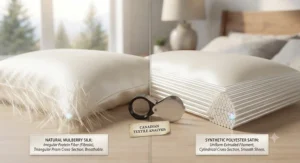
Polyester satin fabric is a synthetic filament yarn woven using the satin technique, which explains both its shine and its price advantage over natural fibres. Weaving experts note that any filament fibre — polyester, nylon, or silk — produces a “satin” once finished in this weave, even though purists sometimes reserve the word strictly for silk, so the marketing language around “satin” pillowcases isn’t technically dishonest — it’s just imprecise in a way that benefits sellers of the cheaper fibre. In Canada, fibre content claims on bedding aren’t left to guesswork: under the Textile Labelling Act enforced by the Competition Bureau, retailers are required to disclose the generic fibre name and percentage on the permanent label, so checking that tag before buying is the fastest way to confirm whether you’re getting polyester satin or genuine silk.
Common Mistakes When Buying a Satin or Silk Pillowcase
The most frequent misstep is assuming “silky” on the packaging means actual silk — always check the fibre content line, not the marketing copy on the front. A second mistake is ignoring momme count entirely when shopping for silk, which leaves buyers comparing prices without comparing quality, since a 12-momme silk pillowcase and a 25-momme one can carry wildly different price tags for very different durability. Third, many buyers wash new silk in hot water on a regular cycle, shortening its lifespan within months rather than years. Fourth, people frequently buy a single pillowcase instead of a pair, then feel frustrated when laundry day leaves them without a backup. Finally, some shoppers chase premium brand names like Blissy Silk Pillowcase assuming brand equals superior fabric, when momme count and weave quality — not logo recognition — are what actually determine performance.
Satin vs Silk: What to Expect in Real-World Performance
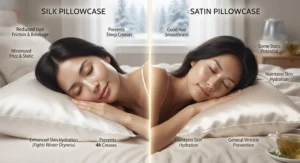
On paper, silk’s lower moisture absorption and smoother fibre surface should translate into less hair breakage and fewer sleep creases than satin. In practice, the difference is real but incremental rather than dramatic for most sleepers — the Sleep Foundation’s review of the evidence notes that silk can meaningfully cut down on hair tangling and frizz, with a smaller, secondary benefit for skin moisture and sleep-crease reduction, though the effect sits closer to “modest improvement” than “overnight transformation.” Reviewers of both satin and silk products in this article report similar early impressions — smoother hair on waking, fewer visible pillow marks — with the gap widening mainly over months of use as silk’s fibre integrity holds up better against friction. If you’re expecting dramatic before-and-after results from either fabric alone, the honest expectation-setting matters more than the fibre choice itself.
Long-Term Cost & Maintenance: The Real Math
A budget satin pillowcase at C$15-C$25 for a two-pack, replaced roughly every 12-18 months due to wear, works out to a modest annual cost that’s easy to justify. A mid-tier silk pillowcase like the Jocoku 100% Mulberry Silk Pillowcase, at C$45-C$65 but potentially lasting two to three years with careful hand-washing, narrows that gap significantly once you run the actual per-year math instead of comparing sticker prices alone. Premium silk from Fishers Finery 25 Momme Mulberry Silk Pillowcase or Blissy Silk Pillowcase requires the longest amortization period to feel like reasonable value — typically three-plus years of consistent gentle care — which only pencils out if you’re genuinely committed to hand-washing rather than tossing it in with a regular load. Maintenance cost matters too: dry cleaning silk periodically adds up, while satin’s machine-washability keeps ongoing costs close to zero beyond the original purchase.
Luxury Feel Bedding: When Silk Is Genuinely Worth the Splurge
Luxury feel bedding earns its premium when three things line up: you have the laundry discipline to hand-wash or gentle-cycle regularly, you’re sensitive enough to fibre differences to actually notice the upgrade, and the purchase serves a purpose beyond function — a gift, a self-care milestone, a bedroom refresh you’ve been planning for months. Under those conditions, stepping up to Fishers Finery 25 Momme Mulberry Silk Pillowcase or Blissy Silk Pillowcase delivers a tangible sense of everyday luxury that’s hard to replicate with synthetic fabric, regardless of how good that synthetic satin feels on first touch. Where the splurge stops making sense is when the pillowcase gets thrown into a regular hot-water laundry rotation with everything else — at that point, you’re paying premium prices for a fabric you’re actively shortening the lifespan of, and a well-made satin option delivers more practical value per dollar.

Budget Bedding Alternative: Building a Full Sleep Setup Without Overspending
Choosing a budget bedding alternative doesn’t mean settling for a lesser sleep experience — it means being strategic about where your money actually shows up in comfort. Pairing a Love’s Cabin Cooling Satin Pillowcase Set with a well-chosen breathable duvet cover often delivers more noticeable comfort improvement than a single premium silk pillowcase sitting on otherwise mismatched bedding. If you’re building a bedroom refresh on a limited budget, prioritize buying satin in pairs so you always have a clean backup, rather than stretching for a single silk pillowcase and leaving the rest of your bedding untouched. This approach — spreading a fixed budget across coordinated, functional pieces rather than concentrating it in one “hero” item — consistently produces better lived-in comfort than chasing the single most Instagram-worthy purchase.
Safety, Regulations, and Labelling in Canada
Canadian shoppers have more consumer protection here than they might realize. Beyond the textile labelling rules already mentioned, bedding fabric quality intersects with broader sleep health conversations — and Canadians are paying attention to sleep more than ever. As CBC Radio reported, a 2024 study found roughly one in six Canadians deals with insomnia, and interest in non-drug approaches to better sleep has been climbing as a result — bedding upgrades included, as part of a broader sleep hygiene routine. While a pillowcase alone won’t resolve insomnia, a genuinely comfortable sleep surface is a reasonable, low-risk piece of that puzzle. When shopping, look for OEKO-TEX certification on silk products specifically — it confirms the fabric has been tested for harmful substances, which matters more for something touching your face nightly than most people initially consider.
🛏️ Ready to Upgrade Your Sleep Surface?
🔍 Whether you’re leaning toward budget satin or genuine mulberry silk, the right pillowcase is one click away. Check current pricing and availability on any of the seven picks above, and give your hair and skin the gentler surface they’ve been missing.
Frequently Asked Questions
❓ Is satin as good as silk for hair and skin?
❓ What momme count is best for a silk pillowcase?
❓ Can you machine wash a satin pillowcase?
❓ Why is silk more expensive than satin?
❓ Do satin pillowcases really reduce frizz?
Conclusion
The satin vs silk pillowcase decision really comes down to matching fibre and price to your actual habits rather than chasing whichever option looks best in a bathroom mirror selfie. Budget satin like the Bedsure Satin Pillowcase 2-Pack or NTBAY Satin Pillowcase 2-Pack delivers genuine, washable comfort for under C$25, while mid-tier silk from Jocoku 100% Mulberry Silk Pillowcase bridges the gap for anyone curious about real mulberry fibre without a luxury price tag. At the top end, Fishers Finery 25 Momme Mulberry Silk Pillowcase and Blissy Silk Pillowcase deliver genuine luxury feel bedding for those ready to commit to gentler laundry care. None of these choices is objectively “correct” — the right pick is whichever one you’ll actually maintain properly and enjoy using every single night.
🌙 Found Your Perfect Pillowcase?
🔍 Take the next step and check current pricing on the option that fits your budget and hair or skin needs. A better night’s sleep — and a smoother morning — starts with what’s under your head.
Recommended for You
- Silk Pillowcase for Hair and Skin: 7 Real Picks for 2026
- 7 Best Pillowcase for Acne Prone Skin Picks (2026 Canada Guide)
- Cooling Pillow Protector for Hot Sleepers: 7 Picks for 2026
Disclaimer: This article contains affiliate links. As an Amazon Associate, I earn from qualifying purchases. If you purchase products through these links, we may earn a small commission at no additional cost to you.
✨ Found this helpful? Share it with your friends! 💬🤗
