In This Article
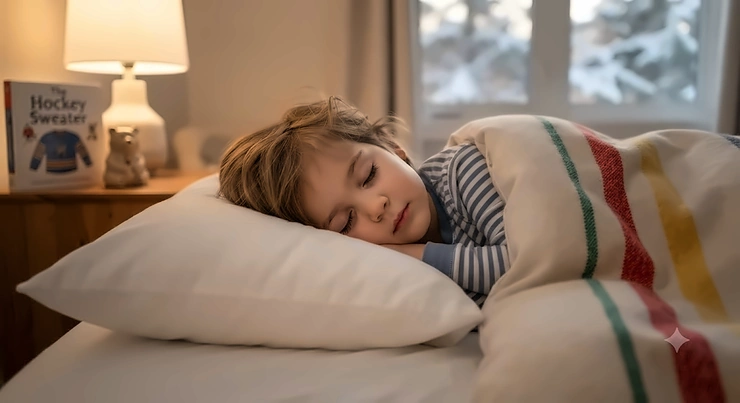
There’s a moment every parent remembers. Your little one drags a couch cushion into the toddler bed, jams it under their cheek, and looks at you like they’ve just invented comfort. That’s the signal. They want a pillow. And, naturally, they want the squishiest cloud money can buy.
Here’s the catch. Extra soft pillows for kids are not simply adult pillows shrunk in the wash. A child’s neck is shorter, their head is proportionally heavier, and their breathing space matters far more than it does for you. So “soft” has to be the right kind of soft — plush against the cheek, but low and resilient enough that a small face never sinks into it like a snowbank.
What Is Extra Soft Pillows for Kids?
Extra soft pillows for kids are small, low-loft pillows (usually about 33 x 46 cm, or 13 x 18 in) filled with fluffy fibre, wool, or shredded foam and wrapped in a gentle cotton shell. They feel plush to the touch yet stay relatively flat, supporting a child’s neck without swallowing their face.
In this guide, you’ll get seven real products available to Canadian shoppers, honest analysis of what their specs mean at 2 a.m. when your toddler rolls over, and a practical plan for introducing the pillow safely. We’ll also cover the question most listings skip entirely: when is your child actually old enough? Health Canada’s safe sleep tips are blunt that babies’ sleep spaces should be free of pillows and other soft items, so the right answer depends on age, bed type, and readiness — not just on how cozy the pillow looks in the photo.
Think of this as a friend who read every spec sheet and review summary so you don’t have to. Let’s find your kid’s new favourite thing.
Quick Comparison Table: 7 Extra Soft Pillows for Kids at a Glance
| Pillow | Size | Fill | Machine Washable | Approx. Price (CAD) | Best For |
|---|---|---|---|---|---|
| Little Sleepy Head Toddler Pillow | 33 x 46 cm (13 x 18 in) | Polyester cluster fibre | Yes | C$25-C$35 | Little Sleepy Head Toddler Pillow: first pillow on a budget |
| KeaBabies Toddler Pillow with Pillowcase | 33 x 46 cm (13 x 18 in) | Fibre fill | Yes (pillow + case) | C$25-C$40 | KeaBabies Toddler Pillow: all-in-one gift |
| Utopia Bedding Toddler Pillow (2-Pack) | 33 x 46 cm (13 x 18 in) | Polyester | Spot clean advised | C$20-C$30 (pair) | Utopia Bedding Toddler Pillow: daycare + home duo |
| Coop Sleep Goods Toddler Pillow | 33 x 48 cm (13 x 19 in) | Shredded memory foam blend | Yes | C$45-C$65 | Coop Sleep Goods Toddler Pillow: adjustable loft |
| Woolino Premium Wool Toddler Pillow | 36 x 48 cm (14 x 19 in) | 100% Australian wool | Delicate cycle, air dry | C$60-C$75 | Woolino Toddler Pillow: hot sleepers, natural fibre |
| My Little North Star Organic Toddler Pillow | 33 x 46 cm (13 x 18 in) | Fibre cluster | Yes | C$35-C$50 | My Little North Star: organic-cotton case lovers |
| Little Sleepy Head Youth Pillow | 41 x 56 cm (16 x 22 in) | Polyester cluster fibre | Yes | C$35-C$45 | Little Sleepy Head Youth Pillow: kids 3+ outgrowing toddler size |
Prices are approximate ranges at the time of research — prices may vary, so check current price before buying.
Reading across the table, the pattern is clear: the budget polyester pillows (Little Sleepy Head Toddler Pillow, Utopia Bedding Toddler Pillow, KeaBabies Toddler Pillow) cluster under C$40 and win on easy washing, which matters enormously for kids who drool, spill, and occasionally get sick. The Coop Sleep Goods Toddler Pillow and Woolino Toddler Pillow cost roughly double, but you’re paying for adjustability and temperature regulation rather than extra “softness.” And the Little Sleepy Head Youth Pillow isn’t a toddler pillow at all — it’s the next step once your child outgrows the 13 x 18 size.
💬 Just one click — help others make better buying decisions too!😊
Top 7 Extra Soft Pillows for Kids: Expert Analysis
Each pick below was chosen from real, currently listed products with verifiable specs. Where review data is summarized, it reflects aggregated sentiment from published review roundups and retailer listings — not invented quotes.
1. Little Sleepy Head Toddler Pillow — the best-selling budget starter pillow
The Little Sleepy Head Toddler Pillow has become the default “first pillow” in countless households, and the reason is simple: it’s soft, small, and very hard to ruin.
It measures 33 x 46 cm (13 x 18 in) and uses polyester cluster fibre, with a classic loft of roughly 10 cm (4 in) according to published testing. In practice, cluster fibre behaves like thousands of tiny cotton balls — it compresses easily under a small head, so the “real” height once your child lies down is noticeably lower than the out-of-bag measurement. The whole pillow is machine washable, which is a bigger deal than it sounds when you factor in nighttime accidents.
Based on the spec comparison, this is the one to buy if your child is 2 or older, already in a toddler bed, and you want the lowest-risk entry point. The brand also sells versions with different fill levels, so if your child is small for their age, a lower-fill option is worth considering. Review roundups show strong ratings across thousands of buyers, with the most common complaint being that the fill flattens over time and needs regular fluffing.
Pros:
- ✅ Soft, squishy fibre that compresses gently under small heads
- ✅ Fully machine washable for real-life toddler messes
- ✅ Low price makes a spare pillow easy to justify
Cons:
- ❌ Pillowcase often sold separately
- ❌ Fill can flatten and clump after repeated washing
Usually found in the C$25-C$35 range — excellent value for a first pillow you may well replace within two years anyway.
2. KeaBabies Toddler Pillow with Pillowcase — best ready-to-gift bundle
The KeaBabies Toddler Pillow with Pillowcase solves the most annoying part of buying a toddler pillow: finding a case that actually fits.
It’s 33 x 46 cm (13 x 18 in) with a listed height of about 9 cm (3.5 in), filled with fibre designed to stay fluffy after washing. The included case is 100% organic cotton and OEKO-TEX Standard 100 certified, meaning the textile was tested for a list of harmful substances. For a child whose face is pressed into fabric for 11 hours a night, that certification is a sensible baseline rather than a luxury.
Here’s what to weigh: KeaBabies offers dozens of prints, which makes the pillow feel like a “big kid” reward — a genuinely useful tool when you’re trying to coax a reluctant sleeper into their new bed. The 3.5-inch loft is moderate, so it suits children around 2 to 5. Reviewers frequently mention that the pillow arrives compressed and needs several hours (or a quick tumble in the dryer) to reach full size, and some note that bold patterns can be a little too exciting at bedtime.
Pros:
- ✅ Organic cotton case included and properly fitted
- ✅ Both pillow and case are machine and dryer friendly
- ✅ Huge range of prints kids actually get excited about
Cons:
- ❌ Needs expansion time after unboxing
- ❌ Busy patterns may distract easily stimulated sleepers
Expect roughly C$25-C$40 depending on print — strong value given the case is included.
3. Utopia Bedding Toddler Pillow (2-Pack) — best value for two beds
The Utopia Bedding Toddler Pillow comes as a pair, which is exactly what most families need: one for home, one for daycare, the grandparents’, or the cottage.
Each pillow is 33 x 46 cm (13 x 18 in) with a polyester fill, a polycotton shell, and a loft of roughly 9 cm (3.5 in) in published tests. The feel is on the softer side, and that softness is both the appeal and the caveat. On paper, a softer, less structured fill means less neck support, which is why testers have suggested it’s better suited to older toddlers and preschoolers than to a brand-new pillow user.
What most buyers overlook about this model is the care guidance — it’s generally listed as spot clean and air dry rather than fully machine washable. So it pairs best with a good zippered protector or a couple of washable cases. Review summaries praise the price-to-comfort ratio and OEKO-TEX certification, while the most frequent criticism is that it can feel a bit flat or unsupportive for smaller children.
Pros:
- ✅ Two pillows for about the price of one
- ✅ Plush, soft feel kids enjoy immediately
- ✅ OEKO-TEX certified materials
Cons:
- ❌ Spot-clean care is awkward for messy sleepers
- ❌ Less supportive than firmer fibre options
Typically C$20-C$30 for the pair — the best cost-per-pillow in this round-up.
4. Coop Sleep Goods Toddler Pillow — best adjustable loft for growing kids
The Coop Sleep Goods Toddler Pillow is the only pick here that lets you physically take stuffing out — which, for kids, is a surprisingly powerful safety and comfort feature.
It measures 33 x 48 cm (13 x 19 in) and is filled with shredded memory foam blended with microfibre, behind a zippered cover. That zipper means you can start with a flatter pillow for a 2-year-old, then add fill back as they grow. Coop lists it for ages 2 and up, and its foam carries CertiPUR-US and GREENGUARD Gold certifications, which address foam content and chemical emissions respectively.
Honest analysis: shredded foam feels “soft” differently from fibre. It’s cushy on contact but holds its shape, so it won’t flatten into a pancake by morning. That makes it ideal for side-sleeping kids who need a bit more loft. Review summaries are strongly positive, though a recurring note with shredded-foam pillows generally is a mild new-product smell for the first day or two, and Sleep Foundation’s testing notes the fill isn’t meant for frequent washing.
Pros:
- ✅ Removable fill lets you tune height as kids grow
- ✅ Certified foam with low-emission credentials
- ✅ Holds its shape better than pure fibre pillows
Cons:
- ❌ Mild initial odour reported with shredded foam
- ❌ Fill shouldn’t be washed often
Usually C$45-C$65 — pricier, but one pillow can realistically last from toddlerhood into early school years.
5. Woolino Premium Wool Toddler Pillow — best natural fibre for hot sleepers
The Woolino Premium Wool Toddler Pillow swaps synthetic fluff for 100% Australian wool, and it’s the pick for the kid who wakes up with damp hair every morning.
It’s 36 x 48 cm (14 x 19 in), filled with about 300 gsm of wool inside a 300-thread-count cotton sateen shell, and certified by OEKO-TEX and the Woolmark Company. Wool wicks moisture away from the skin and helps buffer temperature swings — useful in Canadian homes where forced-air heating can make a bedroom stuffy in January and humid in July. Published testing measured it at roughly 5 cm (2 in) loft, the lowest in its test group.
That low loft is exactly why it works as a very first pillow at around 18-24 months, once your child is in a toddler bed. It’s soft in a denser, springier way than polyester — more “firm cushion” than “marshmallow.” Reviewers praise breathability and natural materials, while common drawbacks are the higher price and fussier care: delicate cycle, no spin, air dry only, plus regular fluffing.
Pros:
- ✅ Lowest loft here — ideal first-pillow height
- ✅ Wool regulates temperature and wicks sweat
- ✅ Canadian storefront makes support and returns easier
Cons:
- ❌ Most expensive toddler-size option
- ❌ Delicate washing and slow air drying
Around C$60-C$75 at the time of research — worth it for sweaty sleepers, overkill for others.
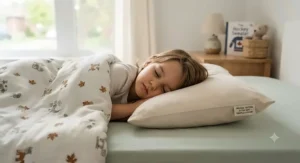
6. My Little North Star Organic Toddler Pillow — best organic-cotton comfort
The My Little North Star Organic Toddler Pillow targets parents who care most about what’s touching their child’s skin.
The pillow is 33 x 46 cm (13 x 18 in) with fibre-cluster fill and a cotton shell, and it ships with a 36 x 48 cm (14 x 19 in) 100% organic cotton pillowcase. That slightly oversized case is a thoughtful detail: it slips on easily and doesn’t compress the fill, so the pillow keeps its plush feel. The brand recommends it for ages 2 to 5.
Based on the spec comparison, this sits between the Little Sleepy Head Toddler Pillow and the KeaBabies Toddler Pillow — similar size and fill, but with more emphasis on organic cotton. If your child has sensitive or eczema-prone skin, a soft, breathable organic case is a practical upgrade (though it won’t treat the condition itself). Review roundups rate it highly for softness and breathability; the most common critiques are the need for occasional fluffing and a slightly higher price than comparable fibre pillows. Availability can also fluctuate, so check stock before planning around it.
Pros:
- ✅ Organic cotton case included in the box
- ✅ Soft fibre-cluster fill with a gentle feel
- ✅ Relaxed-fit case keeps pillow plush
Cons:
- ❌ Pricier than similar fibre pillows
- ❌ Stock can come and go on Amazon.ca
Typically C$35-C$50 — a fair premium if organic cotton is a priority for you.
7. Little Sleepy Head Youth Pillow — best next step for kids 3+
The Little Sleepy Head Youth Pillow is the “I’m a big kid now” pillow, sized for children who’ve outgrown the toddler format but aren’t ready for a full adult standard pillow.
At 41 x 56 cm (16 x 22 in), it’s roughly a third bigger than a toddler pillow. It comes in three fill levels — Less (about 9 cm / 3.5 in), Classic (about 10 cm / 4 in), and More (about 11.5 cm / 4.5 in) — with a cotton shell, polyester cluster fibre, and OEKO-TEX certification. The brand recommends it for ages 3 and up, and it’s fully machine washable and dryer safe.
Here’s what to weigh: the extra width gives restless sleepers more pillow to roll onto, which cuts down on the midnight “my pillow fell off” wake-ups. For most kids, the “Less” fill is the safest bet, particularly stomach sleepers. It’s also a smart choice for a child moving into a twin bed, where a tiny toddler pillow can look (and feel) a bit lost. Reviewers highlight its softness and value, echoing the brand’s toddler model, with the same caveat about fill needing regular fluffing.
Pros:
- ✅ Three loft options for different sleep positions
- ✅ Bigger surface suits twin beds and wriggly sleepers
- ✅ Machine washable and dryer safe
Cons:
- ❌ Too large for most toddlers under 3
- ❌ Fibre fill needs fluffing to stay even
Usually C$35-C$45 — a solid bridge until your child is ready for an adult pillow.
Side-by-Side Spec Showdown
| Pillow | Loft (approx.) | Age Guidance | Case Included | Key Certification | Best For |
|---|---|---|---|---|---|
| Woolino Toddler Pillow | 5 cm (2 in) | ~18 months+ in toddler bed | No | OEKO-TEX, Woolmark | Woolino Toddler Pillow: lowest first pillow |
| Utopia Bedding Toddler Pillow | 9 cm (3.5 in) | 3+ suggested by testers | No | OEKO-TEX | Utopia Bedding Toddler Pillow: budget pair |
| KeaBabies Toddler Pillow | 9 cm (3.5 in) | 2-5 | Yes | OEKO-TEX | KeaBabies Toddler Pillow: gift-ready |
| Little Sleepy Head Toddler Pillow | 10 cm (4 in) classic | 2+ | No | OEKO-TEX | Little Sleepy Head Toddler Pillow: everyday value |
| Coop Sleep Goods Toddler Pillow | Adjustable | 2+ | Yes | CertiPUR-US, GREENGUARD Gold | Coop Sleep Goods Toddler Pillow: tunable height |
Loft is the number to stare at longest. The Woolino Toddler Pillow sits lowest, which is why it’s the gentlest introduction for young toddlers, while the Coop Sleep Goods Toddler Pillow is the only one you can lower on demand. If you’re choosing for a child right at the 2-year mark, a low-loft or adjustable pillow beats a thick, plush one — even if the plush one feels nicer in your hand at the store.
Practical Usage Guide: Introducing and Caring for Your Child’s First Pillow
Buying the pillow is the easy part. Getting a toddler to actually sleep on it — safely — takes a little strategy.
Setup and first-use tips
- ✅ Unbox a day early. Fibre and foam pillows ship compressed. Let them expand for 24 hours, or tumble on low with two dryer balls for 15-20 minutes.
- ✅ Wash the case first. New fabric can carry finishing residue; one cycle makes it softer, too.
- ✅ Make it a ceremony. Let your child pick the pillowcase print. Ownership turns “a new thing in my bed” into “my special pillow.”
- ✅ Start at naptime. Introduce the pillow for naps first, when you’re more likely to check in.
The first 30 days: common mistakes
- Adding a duvet at the same time. Introduce one new bedding item at a time so you can see how your child handles each.
- Stacking pillows. Two toddler pillows don’t equal comfort — they equal a steep neck angle.
- Using an adult pillow “for now.” Adult pillows are far too high and wide for small bodies.
- Ignoring the flop test. If your child keeps pushing the pillow away, they may not be ready. That’s fine — wait a few weeks.
Maintenance schedule
| Task | Frequency |
|---|---|
| Wash pillowcase | Weekly |
| Fluff pillow | Daily (10 seconds at bedtime) |
| Wash pillow (washable types) | Every 1-3 months |
| Replace pillow | Every 1-2 years, or when it fails the fold test |
The “fold test” is simple: fold a fibre pillow in half. If it stays folded instead of springing back, the fill is spent.
Real-World Scenarios: Matching the Pillow to Your Kid
Specs are abstract. Kids are not. Here’s how the picks line up with three very typical Canadian households.
Scenario 1: The 2-year-old in a new toddler bed, Winnipeg
Maya just graduated from her crib. Her parents want something low, gentle, and washable because potty training is in progress. Budget: under C$40.
Best match: the Little Sleepy Head Toddler Pillow with a zippered waterproof protector, or the Woolino Toddler Pillow if the budget stretches. Why? Low effective loft, fully washable (or wool that resists odour), and a size that fits a crib-sized toddler mattress without crowding. Frequency of use: every night plus naps, so easy care wins.
Scenario 2: The 4-year-old sweaty sleeper, Vancouver
Leo wakes up with damp hair and kicks off his blankets. His room gets warm in summer, and his parents prefer natural fibres. Budget: flexible.
Best match: the Woolino Toddler Pillow. Wool’s moisture-wicking is the one feature here that directly targets his problem. As a runner-up, the Coop Sleep Goods Toddler Pillow allows airflow through shredded fill, though it won’t manage moisture the same way.
Scenario 3: Two kids, daycare, and a road trip to the cottage, Halifax
Twins, age 3, need nap pillows for daycare and home, plus something for long drives. Budget: tight.
Best match: the Utopia Bedding Toddler Pillow (2-Pack), paired with two inexpensive washable cases. Two pillows at roughly the price of one covers daycare and travel duty. For the car, keep in mind that pillows shouldn’t be placed behind a child in a car seat harness — use them only once you’ve stopped.

Problem → Solution: Fixing the Most Common Pillow Headaches
Problem 1: 'My child won't use the pillow.'
Problem 2: The pillow went flat after a few washes.
Problem 3: Your child wakes up with a stuffy nose.
Problem 4: The pillow keeps ending up on the floor.
Problem 5: A new-product smell.
How to Choose Extra Soft Pillows for Kids
Softness is the feeling you’re buying, but these seven factors are what make it safe and worth the money.
- Confirm readiness first. Your child should be out of the crib (or at minimum well past infancy) and showing interest, like bunching blankets under their head. Age alone isn’t the deciding factor.
- Prioritize low loft. Around 5-9 cm (2-3.5 in) suits most toddlers. Higher lofts push the chin toward the chest.
- Pick the right size. 33 x 46 cm (13 x 18 in) for toddlers; 41 x 56 cm (16 x 22 in) for kids 3-10 moving to bigger beds.
- Check the washability. Kids are leaky. A fully machine-washable pillow saves money and sanity.
- Look for certified textiles. OEKO-TEX, GOTS, or GREENGUARD Gold labels tell you something concrete about materials.
- Choose “soft but springy.” Squeeze the pillow; it should rebound. Soft that doesn’t rebound is the kind a face can sink into.
- Match the fill to the sleeper. Sweaty sleeper? Wool. Growing fast? Adjustable foam. Tight budget? Polyester cluster fibre.
When you run the seven picks through this checklist, the Coop Sleep Goods Toddler Pillow and Woolino Toddler Pillow tick the most safety boxes for younger toddlers, while the Little Sleepy Head Toddler Pillow and KeaBabies Toddler Pillow win on everyday practicality.
Safe Pillows for Children: A Canadian Safety Guide
Here’s the honest bottom line: safe pillows for children start with the right age. For babies under 12 months, there is no “safe” pillow. The Canadian Paediatric Society’s safe sleep guidance says babies should sleep with no loose, soft items — including pillows — and Health Canada says the same. That includes “baby pillows” and nursing pillows marketed as sleep aids.
After the first birthday, Canadian guidance becomes less specific. Many U.S. paediatric sources, including advice attributed to the American Academy of Pediatrics in parenting guides, suggest waiting until about 18-24 months and ideally until your child has moved to a toddler bed. Most pillow makers in this round-up label their products for ages 2 and up — a sensible floor to follow.
What makes safe pillows for children different
- ✅ Small footprint: a toddler pillow shouldn’t cover most of the mattress.
- ✅ Low, springy loft: it supports the neck without creating a hollow around the face.
- ✅ No loose parts: skip pillows with buttons, pom-poms, tassels, or long ties.
- ✅ Breathable shell: cotton, wool, or other breathable fabrics help manage heat.
- ✅ Fitted or envelope cases: no zippers or ties that could come loose near the face.
Toy-pillow hybrids and plush character pillows can be fun for reading corners, but many aren’t designed or certified as sleep pillows. Safe pillows for children should feel boring in the best way — simple, stable, and predictable.
✨ Don’t Miss These Carefully Chosen Picks!
🔍 Give your child a safer, softer night with the pillows above. Click any highlighted product to check current pricing and availability on Amazon.ca — and help your little one sleep like the proud big kid they are!
Pillow Size for Toddler Bed: Getting the Fit Right
Choosing the pillow size for toddler bed setups is where a lot of parents go wrong — usually by going too big.
Most toddler beds in Canada use a standard crib mattress, roughly 130 x 70 cm (about 52 x 28 in). A 33 x 46 cm (13 x 18 in) toddler pillow takes up about a third of the mattress width and leaves plenty of open sleeping surface. That open space is the point: if your child rolls off the pillow, they land on firm mattress rather than another soft object.
Quick size guide
| Bed Type | Recommended Pillow Size | Suitable Picks |
|---|---|---|
| Toddler bed (crib mattress) | 33 x 46 cm (13 x 18 in) | Little Sleepy Head Toddler Pillow, KeaBabies Toddler Pillow, My Little North Star |
| Toddler bed, slightly larger pillow | 33-36 x 48 cm (13-14 x 19 in) | Coop Sleep Goods Toddler Pillow, Woolino Toddler Pillow |
| Twin bed, age 3-10 | 41 x 56 cm (16 x 22 in) | Little Sleepy Head Youth Pillow |
The right pillow size for toddler bed use is almost always the 13 x 18 standard. Pillowcases matter too: a 36 x 48 cm (14 x 19 in) toddler case fits a 13 x 18 pillow with a relaxed drape, while a standard adult case leaves a flapping tail of fabric you really don’t want near a small face.
A final tip on pillow size for toddler bed transitions: when your child moves to a twin, don’t rush the youth pillow. Many kids happily use their toddler pillow in a big bed for another year or two.
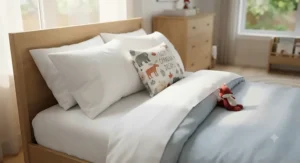
Extra Soft Pillow vs Plush Pillow: What’s the Difference?
People use these words interchangeably, but the extra soft pillow vs plush pillow distinction actually matters when you’re shopping for a child.
Extra soft describes how easily a pillow compresses. Press your palm into it — if it gives way with almost no resistance, it’s extra soft. Plush describes the surface feel and fullness: a plush pillow is thick, lofty, and luxurious, like a hotel pillow. A pillow can be soft but thin (great for kids), or plush and tall (not so great for kids).
Why it matters for children
For adults, a plush pillow is a treat. For a toddler, a tall, plush pillow can push the head forward and create a deep, enveloping surface. An extra soft but low pillow, like the Woolino Toddler Pillow or a lightly filled Coop Sleep Goods Toddler Pillow, gives the cozy feeling kids love without the height.
| Feature | Extra Soft (Low Loft) | Plush (High Loft) | Best For |
|---|---|---|---|
| Height | 5-9 cm (2-3.5 in) | 12 cm+ (5 in+) | Extra soft: toddlers and young kids |
| Feel | Gives easily, springs back | Full, cloud-like, deep | Plush: adults and teens |
| Neck angle | Neutral | Raised | Extra soft: side and back sleepers under 6 |
| Example | Little Sleepy Head Toddler Pillow | Adult hotel pillow | Little Sleepy Head Toddler Pillow: first pillows |
The table makes the extra soft pillow vs plush pillow trade-off obvious: for kids, you want the softness without the height. Plush adult pillows win on luxury but lose on neck angle for a small body, which is why none of the seven picks in this guide exceed roughly 11.5 cm (4.5 in) of loft.
Hypoallergenic Kids Bedding: Reducing Allergens Where Kids Sleep
If your child sneezes through the night or wakes with itchy eyes, their pillow may be part of the problem. Hypoallergenic kids bedding can help — but it’s worth understanding what the label does and doesn’t promise.
“Hypoallergenic” isn’t a strictly regulated term. It generally means materials are less likely to trigger reactions: synthetic fibre instead of feathers, wool that resists dust mite build-up, or tightly woven fabrics. The real allergy workhorse, though, is your routine.
SickKids’ dust mite allergy guidance recommends zippered dust mite covers for pillows and mattresses, and washing sheets and bedding weekly in hot water at 55°C (130°F), followed by at least 15 minutes in the dryer. It also suggests keeping bedroom humidity between 30% and 50% — which, in Canadian winters, may actually mean a humidifier, while summer might call for a dehumidifier.
Building a hypoallergenic kids bedding setup
- ✅ Washable pillow: the Little Sleepy Head Toddler Pillow or KeaBabies Toddler Pillow can go in the machine.
- ✅ Certified fabrics: look for OEKO-TEX labels, which indicate testing for harmful substances.
- ✅ Mite-proof cover: add a zippered, tightly woven encasement under the pillowcase.
- ✅ Fewer plushies: rotate stuffed animals and freeze or wash them regularly.
Wool is a special case. The Woolino Toddler Pillow is marketed as naturally hypoallergenic, but it can’t be washed hot, so pair it with a washable protector. Good hypoallergenic kids bedding is a system, not a single product.
Extra Soft Pillows Canada: Shopping Smart North of the Border
Shopping for extra soft pillows Canada-wide comes with a few quirks worth knowing.
First, many popular kids’ pillows are U.S. brands. On Amazon.ca, some are sold directly, while others ship via third-party sellers — which can mean longer delivery times or different return windows. Check who the seller is before you buy.
Second, Canadian climate changes what “comfortable” means. A pillow that’s perfect in a Toronto August may feel different in a dry, heated bedroom in February. Wool, like the Woolino Toddler Pillow, helps smooth out those swings, and Woolino operates a Canadian storefront, which can make support simpler. Polyester fibre pillows are more climate-neutral but can feel warm.
Third, consider laundry reality. Many Canadian families use shared or apartment laundry rooms. If you’re paying per load, a fully machine-washable pillow that can go in with other bedding (like the Little Sleepy Head Toddler Pillow or KeaBabies Toddler Pillow) is worth more than it looks on paper.
Finally, when shopping for extra soft pillows Canada buyers should compare listings carefully: identical-looking pillows can come in different fill levels, sizes, and case options. Read the size in centimetres, check whether a case is included, and confirm the age guidance.
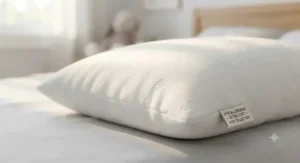
Kids Pillows vs Traditional Alternatives
Before kid-specific pillows became common, families made do with folded towels, adult pillows, or couch cushions. Here’s how those compare.
| Option | Height | Washability | Safety Fit | Best For |
|---|---|---|---|---|
| Kids’ toddler pillow (e.g., Little Sleepy Head Toddler Pillow) | Low, 5-10 cm | Usually machine washable | Designed for small bodies | Little Sleepy Head Toddler Pillow: everyday sleep |
| Adult standard pillow | High, 12-18 cm | Varies | Too tall and wide | Grown-ups |
| Folded blanket or towel | Variable, unstable | Easy | Can unfold into loose bedding | Emergency only |
| Plush toy pillow | Variable | Often washable | Not designed as a sleep pillow | Reading nooks, play |
The comparison shows why purpose-made kids’ pillows exist. An adult pillow is simply the wrong scale, and a folded blanket can turn into loose bedding overnight. A dedicated toddler pillow like the Little Sleepy Head Toddler Pillow or KeaBabies Toddler Pillow gives predictable height, easy washing, and a shape that stays put — for roughly the cost of a takeout dinner.
Long-Term Cost & Maintenance: Which Pillow Gives the Best Value?
Price tags can mislead. What matters is cost per year of useful life.
| Pillow | Approx. Price (CAD) | Expected Useful Life | Est. Cost per Year | Best For |
|---|---|---|---|---|
| Utopia Bedding Toddler Pillow (2-Pack) | C$20-C$30 | 1-2 years | ~C$8-C$15 per pillow | Utopia Bedding Toddler Pillow: lowest upfront |
| Little Sleepy Head Toddler Pillow | C$25-C$35 | 1-2 years | ~C$15-C$25 | Little Sleepy Head Toddler Pillow: easy care |
| Coop Sleep Goods Toddler Pillow | C$45-C$65 | 3-4 years (adjustable) | ~C$12-C$20 | Coop Sleep Goods Toddler Pillow: longevity |
| Woolino Toddler Pillow | C$60-C$75 | 2-3 years | ~C$20-C$35 | Woolino Toddler Pillow: natural fibre |
Useful-life estimates are analytical projections based on fill type and care, not manufacturer guarantees.
The surprise is the Coop Sleep Goods Toddler Pillow. It costs more upfront, but because you can adjust its fill as your child grows, it can plausibly serve from age 2 into early school years — bringing its yearly cost close to the budget options. The Woolino Toddler Pillow remains the premium choice, justified mainly for hot sleepers.
Don’t forget the hidden costs: replacement pillowcases (C$10-C$20 each), a mite-proof encasement (C$15-C$30), and the laundry itself. A fully washable pillow saves on all three over time.
Common Mistakes When Buying Extra Soft Pillows for Kids
Even careful parents make these. Here’s how to dodge them.
- Buying “softest” instead of “safest.” The squishiest pillow in the store isn’t automatically the best choice. Aim for soft and low, not deep and pillowy.
- Starting too early. Pillows aren’t a milestone to rush. Your child’s readiness should lead.
- Forgetting the case. Some pillows ship without one, and an adult case is a poor substitute. Budget for a proper toddler case.
- Assuming “hypoallergenic” solves allergies. Without mite-proof covers and hot washing, the label won’t do much.
- Choosing by print alone. A cute pattern on the KeaBabies Toddler Pillow is a great motivator — but check the loft and care details too.
- Skipping the fluff. Fibre pillows need a quick daily shake to stay even. Thirty seconds a week of fluffing adds months of life.
- Keeping a pillow too long. A flat, lumpy pillow offers no support. Use the fold test.
FAQ
❓ At what age can a child use extra soft pillows for kids?
❓ Are toddler pillows worth buying, or can kids skip pillows entirely?
❓ Which is better for kids, a wool or polyester pillow?
❓ Can I buy a kids pillow with a pillowcase included on Amazon.ca?
❓ How often should I replace my child's pillow?
Conclusion
The best extra soft pillows for kids aren’t the tallest or fluffiest — they’re the ones that feel cozy while staying low, breathable, and easy to keep clean. That’s the balance every pick in this guide aims for.
If you want a no-fuss first pillow, the Little Sleepy Head Toddler Pillow is the dependable everyday choice. If you’d rather everything arrive in one box, the KeaBabies Toddler Pillow with Pillowcase is ready for bedtime straight away. Buying for two beds on a budget? The Utopia Bedding Toddler Pillow (2-Pack) covers home and daycare. For kids who grow fast or sleep on their side, the Coop Sleep Goods Toddler Pillow adapts with them. Sweaty sleeper? The Woolino Toddler Pillow earns its premium. Organic-cotton fans will appreciate the My Little North Star Organic Toddler Pillow, and when your child outgrows toddler size, the Little Sleepy Head Youth Pillow is the natural next step.
Whichever you choose, the rules stay the same: wait until your child is ready, start low, keep the sleep space simple, and wash often. Get those right and the pillow becomes what it should be — a small, soft symbol of your kid growing up.
✨ Ready to Upgrade Bedtime? 🔍
Take your child’s sleep setup to the next level with these carefully selected pillows. Click on any highlighted product to check current pricing and availability on Amazon.ca. The right pillow can turn bedtime into the cozy, drama-free routine your whole family will love!
Recommended for You
- 7 Best Extra Soft Pillows For Side Sleepers In Canada (2026 Picks)
- Extra Soft Down Pillows: 7 Cloud-Soft Picks Worth It In 2026
- 7 Soft Cooling Pillows For Hot Sleepers Worth Buying In 2026
Disclaimer: This article contains affiliate links. As an Amazon Associate, I earn from qualifying purchases. If you purchase products through these links, we may earn a small commission at no additional cost to you.
✨ Found this helpful? Share it with your friends! 💬🤗
