
In This Article
Finding the right pillow when you have special requirements isn’t a luxury — it’s essential for your health, sleep quality, and daily functioning. Whether you’re managing sleep apnea with CPAP therapy, supporting a child with sensory processing challenges, recovering from surgery, or navigating pregnancy discomfort, specialized therapeutic pillows can transform your nights and, ultimately, your quality of life.
A pillow buying guide for special needs goes beyond thread count and fluffiness. It’s about understanding how specific medical conditions, physical requirements, and sensory profiles demand targeted support. According to research on sleep-related breathing disorders, proper positioning during sleep can significantly impact respiratory function, spinal alignment, and overall therapeutic outcomes. For Canadian users, this means considering not just the pillow itself, but how it performs in our unique climate conditions — from humid Vancouver summers to bone-chilling Winnipeg winters where proper temperature regulation becomes crucial.
The Canadian market offers exceptional therapeutic pillow options through Amazon.ca, but navigating the choices requires knowledge about medical condition matching and firmness level selection. What works brilliantly for someone with cervical spine issues might be completely wrong for a child with autism seeking deep pressure stimulation. This guide breaks down exactly which pillows serve which needs, helping you invest wisely in sleep solutions that actually deliver results.
Quick Comparison Table: Best Pillows for Special Needs in Canada
| Pillow Type | Primary Use | Ideal For | Price Range (CAD) |
|---|---|---|---|
| CPAP Pillows | Sleep apnea therapy | Side/back sleepers using masks | $40-$120 |
| Cervical Support | Neck pain, alignment | Chronic pain, post-injury | $35-$90 |
| Wedge Pillows | Elevation therapy | GERD, breathing issues, recovery | $30-$110 |
| Sensory Pillows | Tactile stimulation | Autism, ADHD, SPD | $25-$75 |
| Body Pillows | Full-body support | Pregnancy, post-surgery | $40-$100 |
| Positioning Pillows | Medical positioning | Disability care, bedridden | $45-$140 |
| Knee Pillows | Hip/spine alignment | Sciatica, pregnancy, side sleepers | $20-$55 |
The table above reveals an important pattern: specialized therapeutic pillows span a wide price range in Canadian dollars, but the most expensive option isn’t always the best match for your specific needs. A $45 CAD sensory pillow might deliver more therapeutic value for a child with autism than a $120 CPAP pillow would — and vice versa for someone managing obstructive sleep apnea. The key is matching the pillow’s design features to your particular medical condition or sensory profile, which we’ll explore in depth below.
💬 Just one click — help others make better buying decisions too! 😊
Top 7 Therapeutic Pillows on Amazon.ca: Expert Analysis
1. Contour CPAPMax Pillow with Cooling Gel
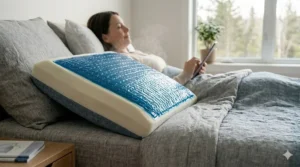
This specialized CPAP pillow features strategically placed cutouts on both sides to accommodate full-face, nasal, and nasal pillow masks without causing uncomfortable pressure points or air leaks. The cooling gel-infused memory foam regulates temperature — particularly valuable for Canadian users who find traditional memory foam uncomfortably warm during our short but intense summer heat waves or when heating systems run high in winter months.
The dual-height design (10 cm and 12 cm sides) lets you customize loft based on your sleeping position and body frame. This matters more than most people realize: side sleepers typically need the higher loft to fill the gap between shoulder and head, while back sleepers benefit from the lower profile that prevents neck hyperextension. Canadian CPAP users report that the mask cutouts genuinely reduce the “wrestling with your hose” frustration that often leads to therapy abandonment during the critical first 30 days of adaptation.
Customer feedback from Canadian buyers highlights consistent mask seal maintenance throughout the night, though some note a 2-3 day break-in period where the gel foam feels firmer than expected. The pillow arrives compressed but expands to full size within 24-48 hours at room temperature.
Pros:
- Prevents mask displacement and air leaks effectively
- Cooling technology offsets memory foam heat retention
- Dual-height versatility for different body types
Cons:
- Initial firmness requires adjustment period
- Larger footprint than standard pillows (may crowd queen-size beds)
Price & Value: In the $70-$95 CAD range on Amazon.ca, this pillow justifies its cost for committed CPAP users who’ve struggled with traditional pillows. The investment pays off in improved therapy compliance and better sleep quality.
2. Core Tri-Core Cervical Support Pillow
The Tri-Core stands out with its patented trapezoid centre design that cradles your head while the raised lobes on either side support your neck in proper cervical alignment. What sets this apart from generic contour pillows is the graduated firmness: the centre depression uses medium-density foam while the side bolsters employ firmer support to maintain neck curvature throughout the night.
For Canadians dealing with whiplash injuries, chronic neck stiffness, or cervical disc issues, this pillow enforces the neutral spine position that physiotherapists recommend. The design works across sleeping positions — back sleepers rest in the centre cavity, while side sleepers utilize one of the raised edges. The fibrefill version offers a softer feel, but the standard foam variant provides more consistent therapeutic support, especially for those with acute conditions.
Canadian users frequently mention reduced morning headaches and less neck stiffness after switching to the Tri-Core, with many reporting noticeable improvement within the first week of use. Some note that the pillow’s distinctive shape takes getting used to, and it doesn’t fit standard decorative pillowcases well, though it includes its own cotton cover.
Pros:
- Clinically proven cervical alignment design
- Available in multiple sizes and firmness levels
- Made in North America (easier warranty claims for Canadian buyers)
Cons:
- Unconventional shape may feel awkward initially
- Not suitable for stomach sleepers
Price & Value: At around $50-$75 CAD on Amazon.ca, the Tri-Core offers excellent value for anyone with diagnosed neck problems or post-injury recovery needs. It’s a therapeutic tool, not just a comfort pillow.
3. Drive Medical Folding Bed Wedge
This triangular foam wedge elevates your upper body at approximately 7-12 degrees, creating the incline that helps manage acid reflux, GERD, respiratory issues, and post-surgical recovery. The Canadian healthcare system often recommends wedge pillows for patients recovering from chest or abdominal surgeries, and the folding design makes this model particularly practical for storage and travel.
The wedge’s gradual slope prevents the uncomfortable “broken in half” feeling that stacking regular pillows creates. For Canadians managing breathing difficulties during our harsh winter months when indoor air becomes dry and irritating, sleeping elevated can significantly improve overnight comfort. The high-density foam maintains its shape over months of use, unlike cheaper alternatives that compress and lose effectiveness.
Canadian customers appreciate that it’s wide enough (60 cm) to prevent rolling off during sleep, and the removable poly-cotton cover is machine washable — important for anyone dealing with night sweats or respiratory issues that require frequent cleaning. The folding feature means it packs flat for cottage trips or when visiting family.
Pros:
- Effective elevation for multiple conditions
- Folds for storage and travel convenience
- Wider than most wedges (prevents roll-off)
Cons:
- May be too firm for those preferring soft support
- Takes up significant vertical space in bed
Price & Value: In the $35-$65 CAD range depending on size, this wedge delivers medical-grade support at an accessible price point. It’s especially valuable for Canadians managing chronic conditions requiring elevation therapy.
4. Special Supplies Vibrating Sensory Pillow
This pressure-activated vibrating pillow transforms sensory therapy into something children actually want to use. When squeezed or sat upon, it delivers gentle vibrations without requiring batteries to be changed constantly — it uses two AA batteries (not included) that last for months of regular use. The textured bumps on the cover provide additional tactile stimulation that many children with autism or sensory processing disorder find organizing and calming.
What makes this particularly effective for Canadian families is its portability. You can bring it to restaurants, car rides, or anywhere your child needs sensory regulation support. The vibration automatically stops when pressure is released, preventing battery drain and teaching cause-and-effect relationships. Many occupational therapists in Canada recommend this type of tool for children who are sensory seekers — those who crave proprioceptive input but struggle with traditional “heavy work” activities.
Parent reviews from Canadian buyers consistently mention improved focus during homework time and calmer behaviour during transitions. Some children use it at bedtime as part of their wind-down routine, while others prefer it during seated activities. The pillow measures approximately 33 cm x 33 cm, making it substantial enough for sitting but not so large it becomes cumbersome.
Pros:
- Pressure-activated (no switches to operate)
- Dual sensory input (vibration + texture)
- Portable for on-the-go regulation needs
Cons:
- Some children find vibration too intense initially
- Cover not removable for washing (spot-clean only)
Price & Value: At $30-$50 CAD on Amazon.ca, this pillow costs less than a single occupational therapy session but provides ongoing sensory support. It’s an accessible entry point for families exploring sensory strategies.
5. Chilling Home U-Shaped Pregnancy Pillow
This full-body maternity pillow wraps around your entire torso, providing simultaneous support for your back, belly, hips, and knees — the four areas where pregnancy discomfort concentrates most intensely during the second and third trimesters. The U-shape means you don’t need to flip the pillow when changing sides during the night (a significant advantage when you’re 32 weeks pregnant and every movement feels like a production).
The velvet cover is removable and machine washable, which Canadian users appreciate given our winter static cling issues and the reality that pregnancy often brings increased night sweats. The filling is adjustable polyester fibrefill rather than solid foam, allowing you to customize firmness by adding or removing fill through the zippered opening. This adaptability makes the pillow useful beyond pregnancy — many Canadian users report continuing to use it for nursing support, back pain relief, or simply better side sleeping.
Customer feedback emphasizes the pillow’s generous size (it’s about 150 cm in total length), which provides proper support for taller users but does dominate a queen-size bed. Partners often find themselves relegated to less bed real estate, though most Canadian reviewers note this is a worthwhile trade-off for improved sleep during pregnancy.
Pros:
- Comprehensive full-body support in one product
- Adjustable fill accommodates changing needs
- Extends usefulness beyond pregnancy
Cons:
- Takes up substantial bed space
- May be too warm for hot sleepers
Price & Value: In the $55-$85 CAD range on Amazon.ca, this pregnancy pillow costs less than specialized belly bands or multiple smaller pillows while providing more comprehensive support throughout your entire pregnancy journey.
6. ComfiLife Memory Foam Knee Pillow
This ergonomic knee pillow is deceptively simple but remarkably effective for side sleepers dealing with hip pain, sciatica, or lower back issues. The contoured design fits between your knees to keep your hips, pelvis, and spine in proper alignment, preventing the top leg from pulling your spine out of its neutral position during the night.
The memory foam is firm enough to maintain positioning (it won’t compress flat like cheaper alternatives) but has sufficient give to feel comfortable against your skin. The breathable cover helps regulate temperature — important for Canadian users who run warm at night or live in regions with significant seasonal temperature swings. The elastic strap keeps the pillow positioned even for active sleepers, though some find it unnecessary and prefer to use the pillow without it.
Canadian physiotherapists frequently recommend knee pillows for pregnant women experiencing pelvic girdle pain, adults with hip arthritis, and anyone recovering from lower back injury. Users report noticeable reduction in morning stiffness and improved sleep continuity, with many noting they no longer wake up to adjust their leg position multiple times per night.
Pros:
- Effective spine alignment for side sleepers
- Includes washable cover and carrying case
- Compact enough for travel
Cons:
- Requires consistent nightly use for cumulative benefits
- May slip out of position for very restless sleepers
Price & Value: At around $25-$40 CAD on Amazon.ca, this knee pillow offers exceptional therapeutic value relative to its modest cost. It’s one of the most affordable specialized pillows that delivers genuine medical benefits.
7. Versa Form Plus Positioning Pillow
This moldable positioning pillow uses fluidized microbead technology that allows you to shape it to any body contour and it holds that position until you actively reshape it. For Canadians supporting family members with limited mobility, cerebral palsy, or other conditions requiring custom positioning, this adaptability is invaluable. You can mold it to support a specific posture, relieve pressure points, or create comfortable seating arrangements for individuals who spend extended time in one position.
The pillow’s ability to hold its shape means it won’t shift or compress during use the way traditional pillows do — it maintains the exact support you’ve sculpted into it. The cover is removable and washable, which is essential for medical positioning applications where hygiene is a priority. At approximately 40 cm x 60 cm, it’s substantial enough to provide meaningful support without being too heavy to maneuver.
Canadian occupational therapists and disability support workers frequently utilize this type of moldable positioning aid for clients with complex support needs. Parent and caregiver reviews emphasize the pillow’s versatility across multiple positioning challenges, from preventing pressure sores to creating comfortable feeding positions for children with physical disabilities.
Pros:
- Moldable to any body shape or positioning need
- Maintains position without constant readjustment
- Washable cover accommodates frequent cleaning
Cons:
- Heavier than traditional pillows
- Higher price point than standard options
Price & Value: In the $60-$90 CAD range on Amazon.ca, this positioning pillow represents a significant investment, but for families managing complex mobility or positioning needs, it often replaces multiple less-effective products and provides positioning solutions that standard pillows simply cannot achieve.
Matching Your Medical Condition to the Right Pillow Type
The most critical decision in your pillow buying guide for special needs journey is accurately matching your specific condition to the pillow design that addresses it. A CPAP pillow won’t help your child’s sensory seeking behaviours, just as a vibrating sensory pillow won’t prevent your sleep apnea mask from leaking. Here’s the expert framework Canadian buyers should use:
Respiratory & Sleep Disorders
If you’re managing sleep apnea, chronic snoring, or other breathing-related sleep issues, your pillow needs to either accommodate CPAP equipment or promote airway-friendly positioning. CPAP pillows with mask cutouts prevent equipment displacement and air leaks — the two main reasons Canadians abandon therapy within the first month. Look for models with cooling features, as CPAP masks can already feel warm and confining.
For non-CPAP users with positional sleep apnea (where symptoms worsen when sleeping on your back), wedge pillows that elevate your upper body or specially contoured cervical pillows that encourage side sleeping can reduce breathing obstruction episodes. Health Canada research on sleep disorders emphasizes that positional therapy complements other treatments but shouldn’t replace medical interventions prescribed by your healthcare provider.
Neck, Spine & Joint Conditions
Cervical support pillows with contoured designs are engineered for chronic neck pain, whiplash recovery, cervical disc problems, and persistent tension headaches. These aren’t about comfort — they’re about maintaining the therapeutic neck curvature your physiotherapist measures during assessments. The pillow should support your cervical spine’s natural lordotic curve whether you sleep on your back or side.
For lower body issues like sciatica, hip arthritis, or pelvic girdle pain during pregnancy, knee pillows provide targeted relief by maintaining proper hip and spine alignment. This is particularly important for Canadians who work physical jobs or spend long hours on concrete floors, as these conditions often worsen from accumulated daytime stress that poor nighttime positioning fails to address.
Sensory Processing & Autism Spectrum
Children and adults with autism spectrum disorder, ADHD, or sensory processing disorder often benefit from pillows that provide predictable, organizing sensory input. Vibrating pillows deliver proprioceptive feedback that many sensory seekers find calming and regulating. The key is understanding whether your child is a sensory seeker (craves input) or sensory avoider (overwhelmed by input) — seekers typically respond well to vibration and deep pressure, while avoiders may find these features distressing.
Textured covers, adjustable weights, and pressure-activated features all provide different types of sensory feedback. Canadian occupational therapists recommend starting with gentler input and gradually increasing intensity based on your child’s response, rather than jumping directly to the most intensive options.
Pregnancy & Postpartum Recovery
Full-body pregnancy pillows support the simultaneous pressure points that develop as your body changes: lower back strain from shifted centre of gravity, hip discomfort from relaxin hormone effects, and belly weight pulling forward when side sleeping. The U-shaped or C-shaped designs eliminate the need for multiple regular pillows and prevent the frustrating middle-of-the-night pillow rearranging that disrupts sleep.
Canadian midwives often recommend starting pregnancy pillow use in the second trimester before severe discomfort develops, as this helps establish comfortable sleep positions early. These same pillows transition effectively to nursing support and general back relief during postpartum recovery when you’re spending hours feeding and holding your baby.
How CPAP Users Should Choose Pillows in Canada
CPAP therapy compliance rates in Canada hover around 40-60% long-term, and uncomfortable equipment setup is one of the primary abandonment factors. Your pillow choice directly impacts whether you’ll stick with this life-changing therapy or give up in frustration.
Mask Type Determines Pillow Design: Full-face masks require deeper cutouts on both sides of the pillow to accommodate the mask’s bulk without pressing it into your face and breaking the seal. Nasal masks and nasal pillow masks need less dramatic cutouts but still benefit from contoured edges that provide space for hose positioning. If you’re a combination sleeper who shifts between side and back sleeping, ensure your CPAP pillow has accommodation features on both sides and provides adequate back-sleeping support in its centre section.
Material Matters for Temperature: Memory foam CPAP pillows offer excellent contouring and support, but traditional memory foam retains heat — problematic when you’re already wearing a mask on your face. Look for gel-infused or ventilated memory foam versions that dissipate heat more effectively. This is particularly important for Canadian users during summer months or if your bedroom tends to run warm. Some users find shredded memory foam or latex foam alternatives provide better temperature regulation while maintaining support.
Consider Your Bed Size: Many CPAP pillows are wider than standard pillows to accommodate the cutout areas. On a queen-size bed, this can crowd your sleeping partner. Measure your bed width and check pillow dimensions on Amazon.ca before purchasing. Some couples find that investing in a king-size bed alongside CPAP therapy equipment significantly improves both partners’ sleep quality.
Hose Management: The best CPAP pillow design won’t matter if your hose keeps pulling at your mask or getting tangled during position changes. Look for pillows that work with hose management systems (ceiling hangers or bedside stands), and ensure the cutout placement doesn’t interfere with your specific hose routing setup.
Real-World Scenarios: Matching Canadian Users to Pillows
Scenario 1: The Toronto Commuter with Sleep Apnea
David, 52, uses a nasal CPAP mask and sleeps primarily on his side. He works downtown Toronto and needs quality sleep to maintain focus during his demanding job. Recommendation: The Contour CPAPMax Pillow with its cooling gel technology and side cutouts prevents mask displacement while managing Toronto’s sometimes oppressively warm summer nights in older apartments without air conditioning. Budget: $70-$95 CAD.
Scenario 2: The Calgary Parent of a Child with Autism
Jennifer’s 7-year-old son with autism struggles with regulation during transitions and homework time. He’s a sensory seeker who benefits from deep pressure but gets frustrated with complicated tools. Recommendation: The Special Supplies Vibrating Pillow provides pressure-activated proprioceptive input without batteries to manage or switches to operate — crucial for maintaining independence and preventing meltdowns over “broken” tools. Budget: $30-$50 CAD.
Scenario 3: The Vancouver Woman in Third Trimester
Sarah, 34 weeks pregnant, experiences hip pain, lower back strain, and restless sleep from constant position adjusting. Recommendation: The Chilling Home U-Shaped Pregnancy Pillow supports all pressure points simultaneously and eliminates nighttime pillow shuffling. The removable cover handles Vancouver’s damp climate where washing and thoroughly drying bedding can be challenging in winter months. Budget: $55-$85 CAD.
Common Mistakes When Buying Therapeutic Pillows
Mistake 1: Choosing Based on Price Alone
Canadian buyers often default to the cheapest option or assume the most expensive is automatically best. A $25 knee pillow might solve your sciatica more effectively than a $100 specialty pillow designed for a completely different condition. Match the pillow’s specific design features to your actual medical needs first, then evaluate price within that category.
Mistake 2: Ignoring the Adjustment Period
Therapeutic pillows, especially cervical support and CPAP models, often feel uncomfortable for the first 3-7 nights as your body adapts to proper positioning. Many Canadians give up too quickly, assuming discomfort means the pillow is wrong. Unless you’re experiencing pain (which indicates a genuine mismatch), allow at least one week for adaptation before making a final judgment.
Mistake 3: Overlooking Climate Impact
Memory foam pillows that work brilliantly in climate-controlled environments can become uncomfortably warm during Canadian summer heatwaves or when indoor heating runs high in winter. Similarly, pillows marketed for “cooling” may feel too cold in unheated bedrooms during Prairie winters. Consider your year-round sleeping environment, not just current conditions, when selecting materials.
Mistake 4: Not Verifying Amazon.ca Availability
Some highly-rated therapeutic pillows on Amazon.com don’t ship to Canada or arrive with prohibitive shipping costs and long delays. Always verify the product is actually stocked and sold through Amazon.ca, and check shipping times to your province. Northern and remote Canadian locations often face additional delivery challenges that urban buyers don’t encounter.
Mistake 5: Ignoring Return Policies
Therapeutic pillows are medical tools, and what works for someone else may not work for your specific body mechanics or condition. Purchase from sellers offering return windows — Amazon.ca’s standard return policy typically provides 30 days, giving you adequate time to assess whether the pillow delivers the promised therapeutic benefits. Keep original packaging until you’re certain you’re keeping the product.
Understanding Firmness Levels for Special Needs
Firmness in therapeutic pillows isn’t about personal preference the way it is with regular bed pillows — it’s a functional requirement based on your specific condition and sleeping position.
Soft/Plush Firmness (1-3 on scale): Best for sensory-sensitive individuals who find firmer materials overwhelming or distressing. Also appropriate for children with tactile defensiveness and anyone recovering from acute neck injury where any pressure feels painful. The trade-off is less positional support, so these work better for mild conditions rather than severe alignment issues.
Medium Firmness (4-6 on scale): The versatile middle ground suitable for most cervical support needs, pregnancy support, and general therapeutic positioning. Provides enough structure to maintain spinal alignment without creating pressure points. Most Canadian physiotherapists recommend this firmness range for chronic but not acute conditions.
Firm/Extra Firm (7-10 on scale): Essential for heavy body weight users, severe cervical misalignment cases, and situations requiring rigid positioning maintenance. CPAP pillows typically need this firmness level to prevent mask displacement from compression. Also critical for positioning pillows used in disability care where maintaining a specific posture is medically necessary.
Adjustable Firmness: Some therapeutic pillows use removable layers or adjustable fill, allowing you to customize firmness to your needs. This is particularly valuable for conditions that fluctuate — pregnancy discomfort that increases with each trimester, injuries that heal gradually, or children who grow and need different support levels over time.
Canadian users should note that firmness can feel different in cold bedrooms (foam becomes slightly harder) versus warm environments (foam softens). If your bedroom temperature varies significantly between seasons, test the pillow in various conditions before committing fully.
The Science Behind Therapeutic Sleep Positioning
According to research documented in the Journal of Clinical Sleep Medicine, positional therapy using supportive pillows can significantly reduce sleep apnea severity in patients with positional obstructive sleep apnea. The study found that patients using supportive positioning tools experienced measurable reductions in apnea-hypopnea index (AHI) scores — the primary metric for assessing sleep apnea severity.
For cervical spine health, proper pillow support maintains the neck’s natural lordotic curve, which typically measures 30-40 degrees. When this curve flattens or reverses during sleep, it places strain on cervical muscles, ligaments, and nerve roots, leading to morning pain, stiffness, and even radiating symptoms into shoulders and arms. Canadian chiropractors and physiotherapists routinely assess this curvature and recommend cervical pillows as part of conservative treatment protocols.
The therapeutic benefit of pregnancy pillows extends beyond comfort — proper positioning during pregnancy improves blood circulation to the placenta and reduces compression on the inferior vena cava (the large vein returning blood from lower body to heart). This is why healthcare providers consistently recommend side sleeping, particularly left-side sleeping, during the second and third trimesters. Full-body pillows make maintaining this position throughout the night significantly easier.
For individuals with sensory processing differences, the proprioceptive input from vibrating or weighted pillows provides organizing neurological feedback. This input helps the nervous system regulate arousal levels, improve body awareness, and reduce anxiety — outcomes that support better attention, emotional regulation, and sleep quality. Canadian occupational therapists incorporate these tools into comprehensive sensory diets designed to help children and adults with autism or ADHD function more effectively.
Frequently Asked Questions
❓ Do CPAP pillows work with all mask types available in Canada?
❓ Can therapeutic pillows help with fibromyalgia symptoms?
❓ Are sensory pillows safe for young children unsupervised?
❓ How long do therapeutic pillows last in typical Canadian climate conditions?
❓ Can I claim therapeutic pillows on health insurance in Canada?
Making Your Final Pillow Selection
After analyzing your specific medical needs, sleeping position, and budget constraints in Canadian dollars, the decision process becomes clearer. Prioritize matching the pillow’s design features to your primary therapeutic goal first — whether that’s maintaining CPAP mask seal, supporting cervical alignment, providing sensory regulation, or accommodating pregnancy changes.
Consider your full-year sleeping environment rather than just current conditions. A pillow that feels perfect during mild spring weather might be too warm during summer heatwaves or too firm in an unheated bedroom during January cold snaps. Canadian users benefit from selecting materials with inherent temperature regulation properties (gel-infused foam, latex, breathable covers) to handle our significant seasonal temperature swings.
Don’t underestimate the value of customer reviews from other Canadian buyers on Amazon.ca, particularly reviews that mention similar medical conditions, sleeping positions, or climate regions to yours. These real-world experiences often reveal practical details that product descriptions miss — like whether a pillow actually fits standard Canadian pillowcases or requires specialty sizes.
Budget wisely by considering long-term value rather than just upfront cost. A $70 CPAP pillow that helps you maintain therapy compliance delivers exponentially more value than a $30 generic pillow that forces you to abandon treatment. Similarly, a $50 pregnancy pillow used throughout pregnancy and postpartum costs less per month than budget options that need replacing halfway through.
Recommended for You
- 7 Best Pillows for Multiple Issues Canada 2026 | Pain + Allergy Relief
- 7 Best Chemical Free Pillows Canada: Non-Toxic Sleep 2026
- 7 Best Eco Friendly Pillow Organic Canada 2026
Disclaimer: This article contains affiliate links. As an Amazon Associate, I earn from qualifying purchases. If you purchase products through these links, we may earn a small commission at no additional cost to you.
✨ Found this helpful? Share it with your friends! 💬🤗
