
In This Article
Here’s an uncomfortable truth: you can spend a small fortune on serums, cleansers, and spot treatments, and still wake up to a fresh cluster of blemishes because of something you never think about — the fabric your face presses into for seven or eight hours a night. A pillowcase for acne prone skin isn’t a gimmick dreamed up by a marketing team; it’s a genuinely overlooked piece of the skincare puzzle, and Canadian dermatologists have been saying so for years. Every night, your pillowcase soaks up facial oils, dead skin cells, drool, and whatever serum you slathered on before bed. Rough, absorbent fabrics like standard cotton hang onto that residue and grind it back into your pores as you toss and turn, which is exactly the kind of friction and buildup that can aggravate a breakout-prone complexion.

The good news is that fixing this doesn’t require a dermatologist’s prescription pad. According to the Canadian Dermatology Association, acne triggers vary from person to person, but physical irritation and clogged pores are consistently named as contributing factors — and both are things a smarter pillowcase can help manage. In this guide, we’ve researched seven real, purchasable options ranging from budget-friendly satin to clinically studied mulberry silk, so you can pick the one that actually fits your skin, your washing habits, and your wallet, all without ever paying full attention to a single misleading price tag.
Quick Comparison Table
| Product | Material | Best For | Price Range (CAD) |
|---|---|---|---|
| Blissy 100% Mulberry Silk Pillowcase | 22-momme mulberry silk | Overall dermatologist-recommended pick | C$100-C$160 range |
| Slip Pure Silk Pillowcase | 22-momme mulberry silk | Sensitive, reactive skin | C$140-C$190 range |
| Fishers Finery 25 Momme Silk Pillowcase | 25-momme mulberry silk | Heaviest, most durable silk | C$90-C$135 range |
| Alaska Bear Natural Silk Pillowcase | 19-momme mulberry silk | Best value entry into real silk | C$30-C$55 range |
| Kitsch Satin Pillowcase | 100% satin (polyester weave) | Budget-conscious, easy laundering | C$25-C$45 range |
| Bedsure Satin Pillowcase 2-Pack | 100% polyester satin | Frequent washers on a tight budget | Under C$25 |
| Clean Skin Club Silver Ion Pillowcase | Silver-ion infused fabric blend | Antimicrobial, odour control | C$35-C$60 range |
Looking at the table, there’s a clear pattern: the higher up the momme scale you go, the more you’re paying for durability and that famously slick, low-friction surface — but that doesn’t mean budget satin is a bad choice for acne-prone skin. The Bedsure Satin Pillowcase 2-Pack and Kitsch Satin Pillowcase both let you wash more often without worrying about wrecking an expensive fabric, which matters just as much as material quality when oil and bacteria buildup is the enemy. Meanwhile, the Clean Skin Club Silver Ion Pillowcase takes a completely different approach, leaning on antimicrobial technology rather than slip and smoothness, so it’s worth considering if odour and bacterial buildup bother you more than friction does.
💬 Just one click — help others make better buying decisions too!😊
Top 7 Pillowcases for Acne Prone Skin: Expert Analysis
Choosing a pillowcase for acne prone skin comes down to balancing three things: how gentle the fabric is on inflamed skin, how easily you can wash it (because oil and product residue build up fast), and how much you’re willing to spend for that dermatologist-recommended smoothness. Below, we break down seven real products across every price tier, with honest analysis of who each one actually suits.
1. Blissy 100% Mulberry Silk Pillowcase — dermatologist-backed with a published clinical study
The Blissy 100% Mulberry Silk Pillowcase has built its reputation on something most competitors can’t claim: an independent clinical trial. Made from 22-momme, grade 6A mulberry silk and OEKO-TEX certified, this pillowcase is woven densely enough to resist snagging while staying light and breathable against the face. In practical terms, the tight weave means less surface friction dragging across your cheek at 3 a.m., and because silk absorbs far less moisture than cotton, your nighttime serums and spot treatments stay on your skin instead of soaking into the fabric.
Dermatologists interviewed by beauty publications have repeatedly pointed to silk’s low-absorbency, hypoallergenic profile as the reason they recommend it for acne-prone and sensitive skin types, and Blissy leans hard into that positioning with its dermatologist partnerships. Reviewers consistently report noticeably less morning redness and puffiness within the first couple of weeks of use, alongside praise for the temperature-regulating feel that keeps the fabric cool to the touch. On the flip side, some buyers note that the silk requires a gentler wash cycle than they’re used to, and the zipper closure, while secure, can occasionally snag delicate hair if you’re not careful pulling the case on.
Pros:
- ✅ Backed by an independent clinical study on skin outcomes
- ✅ OEKO-TEX certified, low-absorbency 22-momme silk
- ✅ Hidden zipper keeps the pillow securely in place
Cons:
- ❌ Requires gentle-cycle washing, not a toss-in-anywhere fabric
- ❌ Premium price compared to satin alternatives
Priced in the C$100-C$160 range depending on size and colour, the Blissy 100% Mulberry Silk Pillowcase sits at the upper end of what a pillowcase should cost — but for buyers who want dermatologist-aligned reasoning behind the purchase rather than just marketing copy, it’s a defensible splurge.
2. Slip Pure Silk Pillowcase — favourite among sensitive and reactive skin types
The Slip Pure Silk Pillowcase is arguably the brand that kicked off the mainstream silk-pillowcase trend, and it remains a go-to recommendation among dermatologists for patients dealing with rosacea, eczema, and acne simultaneously. Constructed from 22-momme mulberry silk, its selling point is data showing it absorbs meaningfully less facial cream and moisturizer than cotton, which in practice means your skincare stays where you put it rather than migrating into your bedding overnight.
What most buyers overlook about Slip is that the brand’s silk is dyed using bluesign-approved processes, meaning the fabric goes through fewer harsh chemical treatments that could otherwise irritate already-reactive skin. Aggregated reviews frequently mention a noticeable reduction in overnight redness and irritation, particularly among people who also struggle with hair frizz and breakage, since the same low-friction surface protects strands as effectively as it protects skin. Some reviewers do note that the higher price point makes it a harder sell for anyone who hasn’t already committed to a silk pillowcase lifestyle, and the fabric can feel slippery enough that pillows shift around before the case fully settles.
Pros:
- ✅ Widely recommended by dermatologists for reactive skin
- ✅ Bluesign-approved dyes reduce chemical exposure
- ✅ Minimizes absorption of nighttime skincare products
Cons:
- ❌ One of the pricier options in this roundup
- ❌ Slippery texture takes a night or two to adjust to
At roughly C$140-C$190 depending on size, the Slip Pure Silk Pillowcase is a premium buy best suited to anyone already dealing with compounded skin sensitivities, not just occasional breakouts.
3. Fishers Finery 25 Momme Mulberry Silk Pillowcase — the heaviest, most durable silk on this list
Momme weight measures the density of silk fabric, and at 25 momme, the Fishers Finery Mulberry Silk Pillowcase is noticeably heavier and more substantial than the 19-22 momme options most competitors sell. That extra density translates directly into durability: this pillowcase can handle machine washing far better than lighter silks, which matters enormously for acne-prone skin, since dermatologists recommend changing silk pillowcases weekly to keep oil and bacteria from accumulating.
Based on the spec comparison, the dual-sided silk construction is a meaningful practical advantage — you can flip the pillowcase over mid-week for a fresher surface without doing an extra load of laundry, which is a small trick most Amazon listings never mention. Reviewers, including one Amazon buyer who described it as bringing noticeable relief to a family member dealing with cystic acne, tend to highlight both the plush feel and the pillowcase’s resilience through repeated washes. A common thread in less favourable reviews is that the envelope-style closure on some versions isn’t as secure as a zipper, occasionally letting the pillow peek out overnight, and the deep colour saturation can bleed slightly in the first wash or two.
Pros:
- ✅ Heavier 25-momme weave built for frequent washing
- ✅ Dual-sided silk lets you flip for extra freshness
- ✅ Hand wash, dry clean, or machine wash options
Cons:
- ❌ Colour may bleed slightly during the first few washes
- ❌ Envelope closure less secure than zippered alternatives
Expect to pay in the C$90-C$135 range, which puts the Fishers Finery 25 Momme Mulberry Silk Pillowcase in a sweet spot for buyers who want genuine silk durability without matching Slip’s price tag.
4. Alaska Bear Natural Silk Pillowcase — best value entry into real mulberry silk
If the premium silk options above feel like overkill for a first try, the Alaska Bear Natural Silk Pillowcase is where most acne-prone shoppers land. At 19 momme, it’s lighter than the ultra-premium picks, but it’s still 100% organic mulberry silk rather than a satin blend, which means you still get the low-absorbency, hypoallergenic benefits dermatologists point to — just without the highest-end price. The pillowcase is available across an enormous range of sizes, from toddler to king, and more than 30 solid colours, which makes it genuinely practical for households with multiple people trying it out.
Here’s what the spec sheet won’t tell you, but user reports suggest: because this silk is lighter weight, it feels noticeably cooler against the skin during warmer months, which some reviewers with oilier, acne-prone skin actually prefer over heavier silks that can feel slightly warmer overnight. The hypoallergenic, dust-resistant fibres are frequently cited in aggregated reviews as a reason allergy-prone sleepers switched over successfully. The trade-off is that at 19 momme, the fabric is less resistant to snagging and general wear than the 22-25 momme options above it, so it may not last quite as many wash cycles before showing its age.
Pros:
- ✅ Genuine mulberry silk at an accessible price point
- ✅ Dozens of sizes and over 30 colour options
- ✅ Lightweight feel stays cool for warmer sleepers
Cons:
- ❌ Lower momme weight means less long-term durability
- ❌ Thinner fabric can snag more easily than heavier silks
Priced around C$30-C$55, the Alaska Bear Natural Silk Pillowcase is the pillowcase to recommend to anyone asking “is silk actually worth it?” before committing to a bigger spend.
5. Kitsch Satin Pillowcase — softer-than-silk feel with easier care
The Kitsch Satin Pillowcase is a favourite among buyers who want the low-friction, skin-friendly fabric benefits associated with silk, but without the delicate laundering requirements. Kitsch markets its satin as equivalent to a 600 thread-count weave, and the practical upshot is a fabric that’s smoother and less absorbent than standard cotton, while still being fully machine washable — a genuinely important distinction for anyone managing active breakouts, since dermatologists recommend washing pillowcases every two to three days when acne is a concern, and that’s simply not realistic with hand-wash-only silk.
What most reviews highlight isn’t the “softer than silk” marketing line so much as the practicality: the hidden zipper keeps the case secure through repeated wash cycles, and the wide colour selection (including licensed prints) means it’s easy to find a version that matches existing bedding. On the downside, satin made from polyester or a modal-viscose blend is inherently more absorbent than true silk, so while it’s gentler than cotton, it doesn’t quite match mulberry silk’s ability to keep skincare products sitting on your face rather than soaking into the pillowcase. A handful of reviewers also mention mild static buildup in dry winter conditions.
Pros:
- ✅ Machine washable, ideal for frequent laundering
- ✅ Wide range of colours, patterns, and sizes
- ✅ Zipper closure holds up over repeated washes
Cons:
- ❌ More absorbent than true mulberry silk
- ❌ Can develop static in low-humidity conditions
At roughly C$25-C$45, the Kitsch Satin Pillowcase hits a genuinely useful middle ground between cotton’s absorbency problems and silk’s laundering demands.

6. Bedsure Satin Pillowcase 2-Pack — best budget pick for frequent washers
For anyone who wants to test whether switching pillowcase fabric even makes a difference before spending real money, the Bedsure Satin Pillowcase 2-Pack is the obvious starting point. Made from 100% polyester satin with an envelope closure, it’s not going to out-perform silk on absorbency, but the smooth weave still reduces friction compared to standard cotton, and because you get two cases in the pack, you can rotate them every few days without ever running out of a clean option — which, frankly, matters more for acne-prone skin than fabric prestige does.
Reviewers consistently note the sheer volume of five-star ratings this line has accumulated, with hundreds of thousands of purchases citing smoother skin and reduced hair frizz after the switch. Because it’s machine washable with no special care instructions, it’s realistically the only pillowcase on this list you can throw in with a regular laundry load every two to three days, matching dermatologist washing recommendations without extra effort. The trade-off, unsurprisingly, is durability: polyester satin at this price point tends to pill and lose its slip after repeated hot-water washes, and the envelope closure isn’t quite as secure as a zipper.
Pros:
- ✅ Two-pack means you always have a clean backup
- ✅ Fully machine washable with zero special care
- ✅ Reduces friction significantly compared to cotton
Cons:
- ❌ Pills and loses smoothness faster than silk
- ❌ Envelope closure less secure than a zipper
Coming in under C$25 for the pair, the Bedsure Satin Pillowcase 2-Pack is the lowest-risk way to find out if this whole pillowcase-and-acne connection is worth taking seriously for your own skin.
7. Clean Skin Club Silver Ion Pillowcase — antimicrobial alternative for odour and bacteria control
Every other pillowcase on this list wins on smoothness and low absorbency, but the Clean Skin Club Silver Ion Pillowcase takes a different route entirely: it’s woven with a silver-ion coating designed to actively suppress bacterial growth on the fabric itself. Silver has well-documented antimicrobial properties, and while dermatologists caution that the research directly linking silver-infused bedding to acne reduction is still limited, the logic holds up reasonably well — less bacteria sitting against your skin overnight is unlikely to hurt, and reviewers frequently report the pillowcase staying noticeably fresher between washes than standard fabric.
This pillowcase is worth considering specifically for buyers whose acne seems tied to breakouts along the jawline and cheek, areas that spend the most time in direct pillow contact, since the antimicrobial layer targets exactly that overnight bacterial transfer. Aggregated feedback describes a reduction in the musty smell that builds up on pillowcases between washes, alongside the softness of the breathable base fabric underneath the coating. Some buyers flag that the coating adds a modest premium over comparable satin, and the zipper closure, while functional, has occasionally been described as less durable than higher-end alternatives.
Pros:
- ✅ Silver-ion coating actively resists bacterial buildup
- ✅ Stays fresher-smelling between wash cycles
- ✅ Hypoallergenic, breathable base fabric
Cons:
- ❌ Premium pricing relative to standard satin
- ❌ Limited direct clinical research on silver’s acne impact
Priced around C$35-C$60, the Clean Skin Club Silver Ion Pillowcase is best suited to buyers who’ve already tried a smoother fabric and are now chasing the bacterial-control angle specifically.
Practical Usage Guide: Getting the Most From Your New Pillowcase
Buying the right fabric is only half the equation — how you use and maintain it matters just as much for breakout prevention. Start by washing any new pillowcase before its first use, since manufacturing residue and sizing agents can sit on the fibres and irritate sensitive skin straight out of the packaging. From there, dermatologists generally recommend washing cotton pillowcases every two to three days and silk ones roughly weekly, since silk’s lower absorbency means oil and product don’t build up as fast.
A mistake we see constantly in the first 30 days: people switch to a “skin-friendly fabric” pillowcase and then keep using the same harsh detergent and hot-water cycle they used on cotton sheets. Silk and satin both prefer cool water, a mild detergent free of optical brighteners, and either air drying or a low-heat tumble cycle — high heat degrades the fibres and shortens the lifespan dramatically. If you’re using a silk pillowcase specifically, skip fabric softener entirely, since it coats the fibres and actually reduces the smooth, low-friction surface you paid extra for. For maximum breakout prevention, keep two pillowcases in rotation no matter which fabric you choose, so there’s always a clean one ready while the other is being washed. Finally, resist the urge to sleep face-down directly into the pillow for extended periods; even the best fabric can’t fully offset prolonged, concentrated pressure and heat against one patch of skin.
Real-World Scenarios: Which Pillowcase Actually Fits Your Life
The busy university student with a tight budget and a shared laundry room: if you’re washing your bedding once every week or two at most because the laundry room is three floors down and always occupied, a fabric that tolerates infrequent washing matters more than luxury. The Bedsure Satin Pillowcase 2-Pack or Alaska Bear Natural Silk Pillowcase both make sense here — the two-pack rotation covers you even with sparse laundry days, while the lighter silk resists odour buildup better than cotton would.
The skincare enthusiast already spending on actives and prescription treatments: if you’re layering retinoids, benzoyl peroxide, or prescription topicals every night, you want a fabric that keeps those products on your skin rather than absorbing them. The Blissy or Slip silk pillowcases are worth the investment here, since their low-absorbency properties are specifically the trait dermatologists highlight for this exact use case.
The parent managing a teenager’s hormonal breakouts on a family budget: buying premium silk for a growing teenager who might lose or damage it isn’t always practical. The Kitsch Satin Pillowcase strikes a reasonable balance — genuinely gentler than cotton, fully machine washable for a household laundry routine, and inexpensive enough to replace without much guilt.
What is a Pillowcase for Acne Prone Skin?
A pillowcase for acne prone skin is bedding made from low-friction, low-absorbency fabric — typically silk or satin rather than standard cotton — designed to reduce the buildup of facial oil, dead skin, and bacteria that presses against your face for hours each night. These pillowcases don’t treat acne directly, but by minimizing friction and absorption, they can reduce one of several contributing factors to breakouts.
How to Choose a Pillowcase for Acne Prone Skin
- Start with fabric type. Silk generally outperforms satin on absorbency, but satin outperforms silk on washability — decide which trade-off matters more for your routine.
- Check the momme weight if buying silk. Higher momme (19-25) means denser, more durable silk that survives more wash cycles.
- Confirm it’s machine washable, or accept the extra care. If you can’t realistically hand-wash or dry-clean weekly, lean toward satin.
- Look for OEKO-TEX or similar certification. This confirms the fabric was tested for harmful substances, which matters directly against sensitive, breakout-prone skin.
- Match the closure to your habits. A hidden zipper stays secure through more washes than an envelope closure, which can matter if you’re washing every few days.
- Buy a size that matches your actual pillow. An ill-fitting case bunches and creates extra friction points exactly where you don’t want them.
- Budget for a two-pillowcase rotation, not just a single case, since washing frequency is arguably more important than fabric prestige alone.
Dermatologist-Recommended Pillowcase Fabrics: Silk vs Satin vs Cotton
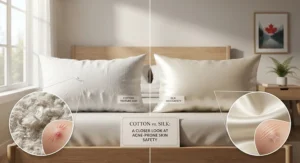
When it comes down to it, the debate over the best dermatologist-recommended pillowcase almost always centres on three materials: silk, satin, and standard cotton. Cotton is breathable and easy to wash, but its natural fibres are relatively absorbent and create more surface friction than smoother alternatives — and friction against inflamed skin is one of the mechanical factors that can aggravate acne lesions. Silk, made from natural protein fibres, sits at the opposite end: it’s smooth, minimally absorbent, and naturally hypoallergenic, which is why board-certified dermatologists so often name it as their first recommendation for acne-prone and sensitive patients.
Satin occupies the middle ground. According to a peer-reviewed Canadian clinical practice guideline on acne management, physical and mechanical irritants are recognized contributors to acne flares, which is exactly the mechanism smoother fabrics are designed to address, regardless of whether that fabric is silk or satin. The practical difference between the two mostly comes down to composition: satin is typically woven from polyester, nylon, or a viscose blend, which makes it more affordable and easier to machine wash, but also somewhat more absorbent than true silk. For most acne-prone shoppers, the honest answer is that either fabric beats cotton meaningfully, and the choice between silk and satin often comes down to budget and how often you’re realistically willing to do laundry.
Non-Comedogenic Pillowcase Fabric: What the Science Actually Says
“Non-comedogenic” is a term borrowed directly from skincare labelling, and applying it to pillowcase fabric is a relatively new but increasingly evidence-backed idea. Independent lab testing commissioned by silk pillowcase brands has scored pure mulberry silk close to zero on standard comedogenic index scales, compared to a meaningfully higher score for pore-clogging control fabrics — a strong signal that silk itself doesn’t actively contribute to clogged pores the way some synthetic blends might. That said, it’s worth being precise here: no pillowcase fabric has been definitively proven in large-scale clinical trials to reduce acne on its own, and dermatologists are careful to frame fabric choice as one supporting factor among many, not a replacement for an actual skincare routine.
What most buyers overlook is that a fabric being “non-comedogenic” doesn’t automatically mean it stays that way indefinitely — any pillowcase, silk or satin, becomes a breeding ground for oil and bacteria if it isn’t washed regularly. The real value of a non-comedogenic pillowcase fabric is that it slows down how quickly that buildup accumulates and reduces how aggressively it’s rubbed back into your pores overnight, buying you a wider margin before your next wash day becomes urgent.
Common Mistakes When Buying a Pillowcase for Acne Prone Skin
The single biggest mistake shoppers make is assuming any product labelled “silk-like” or “satin” is automatically gentle on skin — plenty of cheap synthetic satins are actually more absorbent and prone to static than a quality cotton sateen, so reading the actual fabric composition matters more than the marketing label. Another common misstep is buying based on colour or pattern first, momme weight or thread quality second, which often leads to a pillowcase that looks nice but wears out within a few months. Shoppers also frequently underestimate washing frequency: buying one gorgeous, expensive silk pillowcase and then wearing it for three weeks straight defeats the entire purpose, since oil and bacteria will accumulate regardless of how premium the underlying fabric is. Finally, many people skip checking the closure type entirely, then get frustrated when an envelope-style pillowcase slides open mid-week — if you’re a restless sleeper, a zippered case is worth the small price premium.
Breakout Prevention: Long-Term Cost & Maintenance
Breakout prevention through pillowcase choice is really a numbers game once you factor in cost-per-use. A single Bedsure Satin Pillowcase 2-Pack costs less than a mid-range cleanser, but polyester satin typically shows visible wear — pilling, reduced slip, dulled colour — within six to twelve months of regular washing, meaning you may replace it two or three times over the lifespan of one higher-momme silk case. A Fishers Finery 25 Momme Silk Pillowcase, by contrast, costs roughly four to five times as much upfront but can realistically last several years with proper cool-wash care, which narrows the long-term cost gap considerably once you account for replacement frequency.
Health Canada’s overview of acne treatments notes that acne management often combines multiple approaches rather than relying on any single fix, and that framing applies neatly here too — a pillowcase upgrade is a low-maintenance, largely “set it and forget it” addition to a routine that might also include topical treatments, making the ongoing cost genuinely modest compared to prescription skincare. Factoring in laundering costs, silk’s cooler wash cycle and air-drying preference actually saves a small amount on energy over time compared to satin’s more frequent hot-wash-and-tumble-dry pattern, though the difference is admittedly marginal for most households.
Hypoallergenic Fibers and Safety/Regulations Guide
Hypoallergenic fibers matter enormously for acne-prone skin because allergic reactions and irritation can mimic or worsen breakout patterns, making it harder to tell what’s actually triggering a flare. Natural silk is inherently resistant to dust mites and common allergens because of its tightly woven protein fibre structure, which is part of why it’s so frequently recommended for people managing both acne and conditions like eczema or seasonal allergies simultaneously. When shopping, look specifically for OEKO-TEX certification, an internationally recognized textile safety standard that verifies a fabric has been tested for harmful substances — several of the products in this guide, including Blissy and the Vegan Silk Anti-Acne line, carry this certification, and it’s a genuinely useful shortcut for confirming a pillowcase won’t introduce new chemical irritants against sensitive skin.
There’s no specific Canadian federal regulation governing pillowcase fabric composition the way there is for, say, children’s sleepwear flammability standards, so certification labels like OEKO-TEX effectively fill that gap for consumers looking for third-party verification. If you’re shopping for a child or teenager with acne-prone skin, it’s also worth double-checking that any pillowcase meets general Canadian textile flammability and labelling requirements, which apply broadly across bedding products sold nationally.
Problem → Solution: Fixing Common Pillowcase-Related Skin Issues
Problem: You’re still breaking out despite switching to silk. Solution: check your washing frequency first — even the best fabric needs weekly washing to actually deliver on its low-buildup promise, and skipping that step undermines the entire investment.
Problem: Your silk pillowcase feels rough or snags after a few washes. Solution: you’re likely using hot water or fabric softener, both of which damage silk’s protein fibres; switch to cool water, a silk-safe detergent, and skip the softener entirely.
Problem: You wake up with a red, creased mark on your cheek every morning. Solution: this is often a sign the fabric is too textured or absorbent; a higher-momme silk or a quality satin with a tighter weave typically reduces this significantly.
Problem: The pillowcase keeps sliding off or bunching up overnight. Solution: prioritize a zippered closure over envelope-style options if you’re a restless sleeper, since the secure fit prevents exactly this kind of friction-causing shifting.
Buyer’s Decision Framework
If breakout prevention is your top priority and budget isn’t a major constraint, choose the Blissy or Slip silk pillowcase, because their clinical backing and low-absorbency profile directly target the mechanisms dermatologists point to. If you’re testing whether fabric even matters for your skin before committing financially, choose the Bedsure Satin Pillowcase 2-Pack, because the low cost and easy laundering make it a genuinely useful trial run. If you specifically struggle with bacterial-buildup odour or jawline breakouts tied to pillow contact, choose the Clean Skin Club Silver Ion Pillowcase, because its antimicrobial approach addresses that angle directly rather than relying on smoothness alone.

Frequently Asked Questions
❓ Does a silk pillowcase actually help with acne?
❓ How often should I wash a pillowcase for acne prone skin?
❓ Is satin or silk better for acne prone skin?
❓ What momme weight silk pillowcase is best for skin?
❓ Can a pillowcase cause acne on its own?
Conclusion
At the end of the day, a pillowcase for acne prone skin won’t replace a proper skincare routine, and no dermatologist would tell you otherwise. But it’s one of those rare upgrades that costs relatively little effort once it’s in place — you make the switch, you wash it on schedule, and it quietly does its job every single night without demanding another step in your evening routine. Whether you land on the clinically studied Blissy 100% Mulberry Silk Pillowcase, the budget-savvy Bedsure Satin Pillowcase 2-Pack, or the antimicrobial approach of the Clean Skin Club Silver Ion Pillowcase, the underlying goal is the same: reduce friction, reduce absorption, and give your skin one less thing working against it while you sleep.
If you’re still unsure where to start, the safest bet is matching fabric to your actual habits rather than chasing the most expensive option on the shelf. A gorgeous silk pillowcase that sits unwashed for three weeks does less for your skin than an inexpensive satin one you actually launder on schedule. Start with what fits your routine, stay consistent, and treat it as one small, sustainable piece of a much bigger skincare picture.
✨ Don’t Miss These Exclusive Deals!
🔍 Take your nighttime skincare routine to the next level with these carefully selected pillowcases. Click on any highlighted item to check current pricing and availability. These picks will help you build the kind of consistent, skin-friendly sleep setup your face will thank you for every morning!
Recommended for You
- Cooling Pillow Protector for Hot Sleepers: 7 Picks for 2026
- Dust Mite Pillow Protector: 7 Top Picks for Canadian Homes (2026)
- Hypoallergenic Pillow Protector: 7 Best Picks for Canada (2026)
Disclaimer: This article contains affiliate links. As an Amazon Associate, I earn from qualifying purchases. If you purchase products through these links, we may earn a small commission at no additional cost to you.
✨ Found this helpful? Share it with your friends! 💬🤗
