In This Article
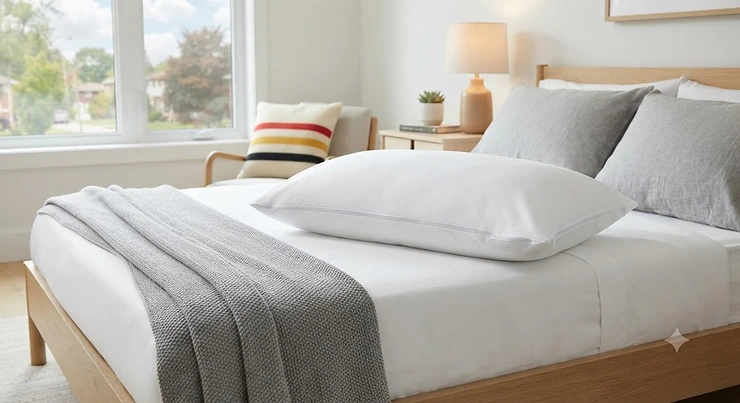
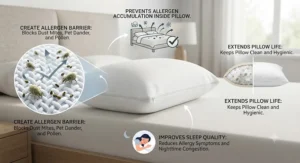
Somewhere between your third sneeze of the night and the moment you finally give up and reach for the antihistamines, you start wondering what, exactly, is living in your pillow. The honest answer is: dust mites, probably a lot of them, and they’ve been there for a while. A dust mite pillow protector is a zippered fabric barrier — usually tightly woven cotton or microfiber — that fully encases your pillow so mites, their waste, and other allergens can’t pass through the fibres or escape into the air you breathe. It’s not glamorous. It won’t show up in anyone’s bedroom tour. But if you’ve ever woken up congested despite a spotless bedroom, it might be the single cheapest fix you haven’t tried yet.
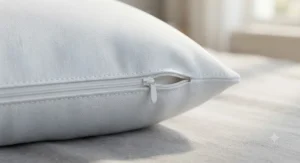
Here’s the thing nobody tells you at the store: not all “hypoallergenic” pillow covers are created equal. Some are genuinely tight-woven barriers tested to block microscopic allergens. Others are just regular pillowcases with a marketing budget. Health Canada notes that both dust and mites can trigger allergic reactions and worsen existing conditions like asthma, and specifically recommends encasing pillows and mattresses in house dust mite–impermeable covers as one of the practical steps for reducing exposure at home — which tells you this isn’t just a wellness-blog talking point, it’s public health guidance.
This guide walks through seven real, currently available dust mite pillow protector options sold on Amazon.ca, from budget-friendly multi-packs to medical-grade encasings recommended by allergists. We’ll compare tightly woven cotton against microfiber barrier fabric, break down what “dust mite proof” actually means on a label, and help you figure out which pick fits your budget, your allergies, and your actual sleeping habits — not just the marketing copy on the box.
Quick Comparison Table
| Product | Fabric Type | Closure | Best For |
|---|---|---|---|
| AllerEase Maximum Allergy + Bed Bug Protection | Woven polyester barrier | Zippered | Best all-around value |
| National Allergy Allersoft 100% Cotton | Tight-weave 300TC cotton | Zippered | Best tight-weave cotton pick |
| Utopia Bedding Waterproof Zippered (2 Pack) | Polyester jersey + TPU | Zippered | Best budget multi-pack |
| Mission: Allergy Premium Microfiber Encasing | 2-micron microfiber barrier | Zippered, double flap | Best medical-grade protection |
| SafeRest Premium Cotton Terry Waterproof | Cotton terry + waterproof membrane | Zippered | Best quiet, night-sweat option |
| AllerEase Ultimate Allergy + Comfort | Temperature-balancing woven fabric | Zippered | Best premium comfort upgrade |
| National Allergy Organic Cotton (GOTS) | GOTS-certified organic cotton | Zippered | Best eco-conscious premium pick |
Looking at the spread above, there’s a clear pattern: the tighter and more technical the weave, the higher the price climbs, but the jump from a basic woven barrier to a true medical-grade microfiber encasing like the Mission: Allergy Premium Microfiber Encasing isn’t just marketing — it reflects real differences in pore size and third-party allergen testing. Budget shoppers shouldn’t feel shortchanged, though; the AllerEase Maximum Allergy + Bed Bug Protection and Utopia Bedding Waterproof Zippered (2 Pack) both use genuinely tight-woven barrier fabric, just without the lab certification paperwork attached. If you’re outfitting a whole household on a budget, that distinction matters less than you’d think.
💬 Just one click — help others make better buying decisions too!😊
Top 7 Dust Mite Pillow Protectors: Expert Analysis
1. AllerEase Maximum Allergy + Bed Bug Protection Pillow Protector — best all-around value pick
The AllerEase Maximum Allergy + Bed Bug Protection Pillow Protector earns its “maximum” name honestly, at least on paper — it’s built from a tightly woven Allergy Defense Fabric designed to keep allergens from settling into your pillow in the first place. The fabric is independently lab tested and rated to block up to 99.9% of household allergens including dust mites, pollen, and pet dander, while the zippered closure fully encases the pillow so nothing sneaks in around the edges. Moisture-wicking properties and an antimicrobial fabric finish round it out, which in practice means less overnight sweat buildup and fewer odours between washes. Based on the spec comparison against similarly priced covers, this is one of the few budget options that pairs allergen blocking with genuine breathability rather than sacrificing one for the other. It’s a strong fit for families who want allergist-recommended protection across multiple bedrooms without a premium price tag, and it’s also a sensible starter pick for anyone testing whether pillow encasing actually helps their symptoms before investing further. Reviewers consistently report that the fabric stays soft and quiet after repeated washing, though a handful note the zipper quality can vary between batches — something to inspect on arrival rather than assume. Weighed against three pros and two cons, it still comes out as one of the more dependable entry points into allergen-barrier bedding.
Pros:
- ✅ Blocks up to 99.9% of common household allergens
- ✅ Moisture-wicking fabric keeps sleep surface cooler
- ✅ Antimicrobial finish resists odour between washes
Cons:
- ❌ Zipper quality reported as inconsistent by some buyers
- ❌ Polyester feel is less breathable than cotton alternatives
Typically priced in the C$25-C$40 range depending on size, the AllerEase Maximum Allergy + Bed Bug Protection Pillow Protector delivers strong value for anyone who wants proven allergen-blocking performance without stepping into medical-grade pricing.
2. National Allergy Allersoft 100% Cotton Zippered Pillow Protector — best tight-weave cotton pick
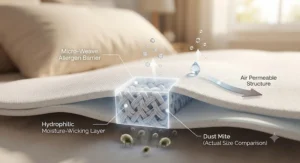
If “tightly woven pillow protector” is exactly what you searched for, this is the product built around that phrase. The National Allergy Allersoft 100% Cotton Zippered Pillow Protector uses a 300-thread-count, super-tight-weave cotton construction that’s Certified Friendly by the Asthma and Allergy Foundation of America — a designation that requires actual lab testing rather than a self-applied “hypoallergenic” sticker. The all-cotton build means no synthetic barrier coating, which matters to buyers who specifically want to avoid plastic-feeling encasings or chemical-treated fabrics. What most buyers overlook about tight-weave cotton is that the protection comes entirely from fibre density rather than any topical treatment, so it doesn’t degrade the way chemical barriers can after repeated hot washes. It’s an ideal match for people with sensitive skin, chemical sensitivities, or anyone who simply prefers natural fibres against their face all night. Reviewers consistently note that the cotton surface feels closer to a normal pillowcase than a plastic-feeling barrier product, which is a meaningful comfort win for anyone who’s tried — and rejected — a crinkly vinyl-style protector in the past. The primary trade-off is that cotton alone doesn’t offer waterproofing, so night sweats or spills will pass through to the pillow underneath.
Pros:
- ✅ AAFA Certified Friendly, independently lab verified
- ✅ 100% cotton feels like a normal pillowcase, not plastic
- ✅ No chemical coating to wear off over repeated washing
Cons:
- ❌ No waterproof layer for sweat or spill protection
- ❌ Requires more frequent washing to stay fully effective
Expect to pay in the C$20-C$35 range per pillow, making this one of the more affordable ways to get genuinely certified tight-weave cotton protection rather than a fabric that merely claims it.
3. Utopia Bedding Waterproof Pillow Protector Zippered (2 Pack) — best budget multi-pack
For households outfitting several beds at once, the Utopia Bedding Waterproof Pillow Protector Zippered (2 Pack) solves the cost-per-pillow problem better than almost anything else on this list. Constructed from a polyester knitted jersey with a TPU coating on all sides, it’s fully waterproof as well as dust mite and bed bug resistant, and the double-hemmed stitching around the zipper closes off the usual weak point where allergens sneak through. Here’s what the spec sheet won’t tell you, but user reports suggest: the TPU coating does add a faint crinkle sound compared to pure cotton, though it’s noticeably quieter than older-style vinyl protectors from a decade ago. Based on the spec comparison, this is a smart pick for kids’ rooms, guest beds, or anyone managing night sweats on a budget, since the waterproofing does double duty against both moisture and allergens in one product. Two protectors per pack also means you can rotate one in the wash while the other stays on the pillow, which matters more than people expect — a pillow sitting bare for a day defeats the whole purpose of consistent barrier coverage.
Pros:
- ✅ Two protectors per pack lowers the cost per pillow
- ✅ Fully waterproof TPU coating adds moisture protection
- ✅ Double-hemmed zipper seam blocks common allergen leak points
Cons:
- ❌ Slight crinkle texture compared to all-cotton options
- ❌ Polyester surface sleeps warmer than natural fibres
Priced around C$25-C$40 for the pair, the Utopia Bedding Waterproof Pillow Protector Zippered (2 Pack) is arguably the best cost-per-pillow option for multi-bed households that also want moisture protection.
4. Mission: Allergy Premium Microfiber Pillow Encasing — best medical-grade protection
When allergists specifically write a product into their patient recommendations, it’s worth paying attention, and the Mission: Allergy Premium Microfiber Pillow Encasing is exactly that kind of product — designed by a board-certified allergist and third-party tested by Indoor Biotechnologies to block 100% of dust mite and animal dander allergens. The barrier fabric has a mean pore size of roughly 2 microns, tight enough to stop allergen particles while remaining air- and water-vapour-permeable so the pillow doesn’t feel sealed in plastic. What most buyers overlook about this tier of product is the construction detail: bound seams plus interior and exterior zipper flaps mean allergens can’t escape through the zipper track itself, which is the single most common failure point in cheaper encasings. Based on the spec comparison against the rest of this list, it’s the closest thing to a clinical-grade barrier available for home use, and it’s the pick worth stretching your budget for if you or a family member has a diagnosed dust mite allergy rather than general seasonal sensitivity. The trade-off is straightforward: this level of engineering costs more, and the microfiber surface, while soft, isn’t for buyers who specifically want a cotton feel.
Pros:
- ✅ Third-party tested to block 100% of dust mite allergens
- ✅ Interior and exterior zipper flaps seal off the main leak point
- ✅ 2-micron pore size stays breathable, not stuffy
Cons:
- ❌ Premium pricing compared to standard woven barriers
- ❌ Microfiber texture, not a cotton feel
This one sits in the mid-C$40s to C$60 range depending on size, and for anyone managing a confirmed allergy, the Mission: Allergy Premium Microfiber Pillow Encasing is difficult to beat on verified performance.
5. SafeRest Premium Cotton Terry Waterproof Pillow Protector — best quiet, night-sweat option
Vinyl-style waterproof protectors have a reputation problem — that plastic rustle every time you shift in your sleep — and the SafeRest Premium Cotton Terry Waterproof Pillow Protector exists specifically to solve it. The surface is genuine cotton terry cloth, soft and absorbent like a bath towel, sitting over a breathable waterproof membrane that blocks sweat, drool, and spills without any of the noise associated with older waterproof designs. The “micro-zipper” closure is engineered as a barrier against dust particles specifically, not just a fastener, closing the gap that lets allergens slip in around most zippers. On paper this means you get two forms of protection in one product: allergen blocking from the tight terry weave, and moisture blocking from the membrane underneath, without the trade-off of sleeping on something that sounds like a shopping bag. Reviewers consistently report meaningful improvement in allergy symptoms after switching, and specifically call out the absence of noise as the deciding factor over cheaper waterproof alternatives. It’s a strong match for night sweats, guest rooms, kids’ beds, or anyone who’s tried a waterproof protector before and hated how it felt.
Pros:
- ✅ Cotton terry surface eliminates plastic-rustle noise
- ✅ Waterproof membrane blocks sweat and spills completely
- ✅ Micro-zipper closure specifically blocks dust particle entry
Cons:
- ❌ Takes longer to dry than thinner synthetic protectors
- ❌ Costs more than non-waterproof cotton alternatives
Typically found in the C$30-C$45 range, the SafeRest Premium Cotton Terry Waterproof Pillow Protector is the pick for anyone who wants waterproofing without sacrificing a quiet night’s sleep.
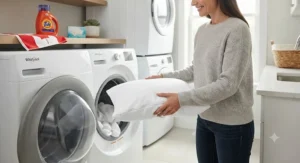
6. AllerEase Ultimate Allergy + Bed Bug + Comfort Pillow Protector — best premium comfort upgrade
The AllerEase Ultimate Allergy + Bed Bug + Comfort Pillow Protector takes the brand’s standard allergen-blocking fabric and adds patented temperature-balancing technology that adjusts continuously to your body heat through the night. Paired with an antimicrobial fabric finish that inhibits odour-causing bacteria, it’s built for buyers who want more than basic protection — people who run hot at night, wake up sweaty, or have struggled with previous protectors trapping heat against their face. Here’s what the spec sheet doesn’t emphasize enough: temperature regulation in bedding isn’t just a comfort feature for allergy sufferers, since overheating disrupts sleep quality independently of allergen exposure, so addressing both at once has a compounding benefit rather than two separate small wins. Based on the spec comparison with the standard AllerEase Maximum line, the Ultimate tier justifies its higher price primarily through this temperature technology rather than a meaningfully tighter allergen barrier, so it’s worth choosing specifically if comfort, not just allergen count, is your priority. It’s a sensible pick for hot sleepers, anyone in a warmer Canadian climate zone without central air, or buyers upgrading from a basic protector that felt stuffy.
Pros:
- ✅ Temperature-balancing fabric reduces overheating at night
- ✅ Antimicrobial finish keeps fabric fresher between washes
- ✅ Zippered full encasement blocks dust mites and bed bugs
Cons:
- ❌ Premium price for what is largely a comfort upgrade
- ❌ Allergen-blocking performance is similar to the standard AllerEase line
Expect to pay in the C$35-C$50 range, and for hot sleepers specifically, the AllerEase Ultimate Allergy + Bed Bug + Comfort Pillow Protector earns that premium through comfort as much as protection.
7. National Allergy Premium 100% Organic Cotton Pillow Protector (GOTS Certified) — best eco-conscious premium pick
Rounding out the list is the National Allergy Premium 100% Organic Cotton Pillow Protector, which carries Global Organic Textile Standard (GOTS) certification — meaning the cotton itself, not just the finished barrier weave, meets independently verified organic and processing standards from field to fabric. It uses the same tight-weave construction principle as the brand’s standard cotton line, relying on fibre density rather than chemical treatment to block allergens, but adds the additional layer of verified organic sourcing for buyers who are equally concerned about pesticide residue and synthetic dye exposure as they are about dust mites. What most buyers overlook here is that GOTS certification covers the entire supply chain, including social and environmental criteria, not just the finished product’s allergen performance — so this pick appeals as much to environmentally conscious shoppers as it does to allergy sufferers. It’s the natural choice for nurseries, buyers with chemical sensitivities beyond dust mite allergens, or anyone building a fully organic bedroom setup. Reviewers consistently describe the fabric as noticeably softer than standard cotton percale, likely a byproduct of the organic cotton processing methods used.
Pros:
- ✅ GOTS-certified organic cotton, verified supply chain
- ✅ Tight-weave barrier without any chemical treatment
- ✅ Softer hand-feel than standard cotton percale
Cons:
- ❌ Highest price point among cotton options on this list
- ❌ Limited colour options compared to synthetic alternatives
Positioned in the C$35-C$55 range, the National Allergy Premium 100% Organic Cotton Pillow Protector is the pick for buyers who want organic certification alongside allergen protection.
Practical Usage Guide: Setup, Care & Maintenance
Buying the right dust mite pillow protector is only half the job — how you install and maintain it determines whether it actually works. Start by fully unzipping the protector and sliding the pillow all the way to the seams before closing; a partially inserted pillow leaves slack fabric that bunches and can strain the zipper over time. Once installed, your regular pillowcase still goes on top as usual, so the protector should be invisible in daily use, not a replacement for your existing bedding.
Maintenance is where most people quietly sabotage their own investment. According to HealthLink BC’s guide to controlling dust mites, bedding — including pillowcases and mattress covers — should be washed weekly in hot water, since that temperature is what actually kills dust mites rather than just removing surface dust. Cooler washes leave the mites, and by extension their allergen-producing waste, largely intact. Tumble dry on high heat when the fabric allows it, and always check the specific product’s care label first, since waterproof membranes like the one in the SafeRest Premium Cotton Terry Waterproof Pillow Protector can degrade faster under excessive heat than a pure cotton barrier like the National Allergy Allersoft 100% Cotton Zippered Pillow Protector.
A common first-30-days mistake is skipping the initial wash entirely — new fabric barriers should be laundered once before use to remove manufacturing residue and confirm the zipper and seams hold up under normal washing stress before you’re relying on them nightly. Replace the protector itself roughly once a year for heavy daily use, sooner if the zipper stops sealing fully or the fabric develops visible wear, since a compromised seam defeats the entire barrier concept.
Real Sleepers, Real Solutions: Problem → Fix Guide
Problem: Waking up congested despite a clean bedroom. This is the classic sign that dust mite allergens are collecting where cleaning can’t reach — inside the pillow and mattress. The fix isn’t more vacuuming; it’s a certified barrier product like the Mission: Allergy Premium Microfiber Pillow Encasing, since general household cleaning simply can’t address allergens trapped inside the pillow’s fill.
Problem: Existing protector feels hot and sweaty. Standard vinyl or basic polyester barriers can trap heat against the face overnight. Switching to a temperature-regulating option such as the AllerEase Ultimate Allergy + Bed Bug + Comfort Pillow Protector, or a breathable cotton pick like the National Allergy Allersoft 100% Cotton Zippered Pillow Protector, solves the overheating without giving up allergen protection.
Problem: Managing allergies across a whole family on a tight budget. Buying premium medical-grade encasings for every bed in the house adds up fast. The Utopia Bedding Waterproof Pillow Protector Zippered (2 Pack) and AllerEase Maximum Allergy + Bed Bug Protection Pillow Protector both deliver genuine tight-weave protection at a lower per-pillow cost, making full-household coverage realistic.
Problem: Night sweats ruining pillows faster than they can be replaced. Standard cotton barriers don’t stop moisture. The SafeRest Premium Cotton Terry Waterproof Pillow Protector solves both problems simultaneously — allergen barrier plus waterproofing — without the noisy plastic feel of older waterproof designs.
Problem: Sensitivity to synthetic fabrics or chemical treatments. Some barrier fabrics rely on chemical finishes rather than weave density alone. The National Allergy Premium 100% Organic Cotton Pillow Protector (GOTS Certified) avoids this entirely, using certified organic fibre and tight-weave construction with no added chemical barrier treatment.
✨ Don’t Miss These Exclusive Deals!
🔍 Ready to sleep easier tonight? Take a closer look at any of the picks above to check current pricing and availability on Amazon.ca. A few dollars now on genuine allergen-barrier bedding can mean noticeably fewer congested mornings ahead. 🌙
How to Choose a Dust Mite Pillow Protector
Picking the right protector comes down to seven practical criteria, roughly in order of importance:
- Verify the certification, not just the label. Terms like “hypoallergenic” aren’t regulated, but certifications like AAFA Certified Friendly or third-party lab testing (as with the Mission: Allergy Premium Microfiber Pillow Encasing) actually mean something.
- Check the weave or pore size. Tighter weaves and smaller pore sizes physically block more allergen particles — this is the mechanism, not just a marketing claim.
- Decide if you need waterproofing. Night sweats or spill risk push you toward waterproof options like SafeRest; if not, a breathable cotton pick saves money and sleeps cooler.
- Match fabric to sensitivity level. Chemical-sensitive sleepers should lean toward untreated cotton barriers over synthetic-coated ones.
- Inspect the zipper design. Interior and exterior zipper flaps close the most common allergen leak point — cheaper protectors often skip this.
- Budget per pillow, not per package. Multi-packs like Utopia Bedding often beat single-unit premium options on real cost-per-pillow.
- Confirm the size matches your pillow, not your bed size. Standard, Queen, King, and body pillow dimensions differ enough that a mismatch leaves gaps in coverage.
Dust Mite Proof Pillow Covers vs Regular Pillowcases
A regular cotton pillowcase and a dust mite proof pillow cover look similar from across the room, but they solve completely different problems. Standard pillowcases are woven loosely enough for airflow and softness, which also means they’re loose enough for dust mite allergens to pass straight through — they protect the pillow from surface dirt and oils, not from what’s living inside the fill. A genuine dust mite proof pillow cover, like the National Allergy Allersoft 100% Cotton Zippered Pillow Protector, uses a measurably tighter weave specifically engineered to block particles in the size range of dust mite allergens, then fully zips shut around the pillow rather than just draping over it.
The practical difference shows up in results, not appearance. Reviewers consistently report reduced morning congestion after adding a true barrier protector underneath their regular pillowcase — the pillowcase stays for comfort and easy laundering, while the protector underneath does the actual allergen-blocking work. Buying a decorative pillowcase and assuming it offers allergy protection is one of the most common — and understandable — points of confusion in this category.
Tightly Woven Cotton vs Microfiber Barrier Fabric: What the Weave Actually Does
The two dominant barrier technologies in this category are tight-weave cotton and engineered microfiber, and each interprets “dust mite barrier fabric” a little differently. Tight-weave cotton, as used in the National Allergy Allersoft 100% Cotton Zippered Pillow Protector, achieves its barrier effect purely through thread count and weave density — no coatings, no synthetic layers, just cotton fibres packed tightly enough that allergen particles can’t pass through the gaps. What most buyers overlook is that this approach ages well: since there’s no chemical treatment to wear off, the barrier performance stays fairly consistent wash after wash, provided the fabric itself isn’t damaged.
Microfiber barrier fabric, as used in the Mission: Allergy Premium Microfiber Pillow Encasing, takes an engineered approach — ultra-fine synthetic fibres woven to a specific, lab-measured pore size (commonly around 2 microns), which can achieve tighter allergen blocking than cotton alone while remaining more breathable than a plastic-style laminate. Based on the spec comparison, microfiber barriers tend to edge out cotton on raw allergen-blocking performance in third-party testing, but cotton wins on natural-fibre preference and tends to feel less synthetic against the skin. Neither is objectively “better” — the right choice depends on whether you’re optimizing for maximum lab-verified blocking or for a more natural sleep surface, and both approaches meaningfully outperform a standard pillowcase either way.

Common Mistakes When Buying a Dust Mite Pillow Protector
The most frequent mistake is buying based on the word “hypoallergenic” alone without checking for any actual certification or tested pore size behind it — plenty of standard pillowcases use that word loosely. A close second is skipping the zipper detail entirely; a protector with a basic single-track zipper and no interior flap, unlike the double-flap design on the Mission: Allergy Premium Microfiber Pillow Encasing, leaves the single biggest allergen entry point wide open regardless of how tight the main fabric weave is.
Buyers also frequently underestimate wash frequency requirements, treating the protector as a set-it-and-forget-it purchase rather than something that needs weekly hot-water washing to stay effective — the barrier fabric blocks new allergens from entering, but it doesn’t eliminate what’s already trapped between washes. Another common misstep is choosing a non-waterproof cotton option for a child’s bed or a hot sleeper without considering moisture needs, then being surprised when night sweats shorten the pillow’s usable life anyway. Finally, some buyers assume any encasing works for bed bugs and dust mites equally — while most on this list handle both, always confirm bed bug protection specifically if that’s a separate concern, since the closure engineering required differs slightly between the two allergen types.
Certifications & Safety: What the Labels Actually Mean
Not every claim printed on pillow protector packaging carries the same weight, and knowing the difference saves money and disappointment. AAFA Certified Friendly, seen on products like the National Allergy Allersoft 100% Cotton Zippered Pillow Protector, requires independent laboratory testing against defined allergen and irritant thresholds set by the Asthma and Allergy Foundation of America — it’s a genuine third-party standard, not a self-issued label. Similarly, third-party allergen testing by an independent lab, as cited for the Mission: Allergy Premium Microfiber Pillow Encasing, means an outside organization actually measured allergen pass-through rather than the manufacturer simply asserting a percentage.
GOTS certification, carried by the National Allergy Premium 100% Organic Cotton Pillow Protector, is a different kind of standard entirely — it verifies organic fibre content and processing standards across the supply chain rather than allergen-blocking performance specifically, so it’s worth choosing for chemical-sensitivity reasons alongside, not instead of, weave-based allergen protection. In Canada specifically, there’s no dedicated CSA certification for pillow protectors the way there is for electrical or child-safety products, so buyers are largely relying on the same US-based certification bodies (AAFA, GOTS, independent lab testing) that apply across North America. When a label makes an allergen-blocking claim with no certification or testing body named at all, treat it as marketing language rather than a verified performance claim.
Dust Mite Pillow Protectors for Different Sleepers
Hot sleepers and people without central air conditioning should prioritize breathability alongside allergen protection — the AllerEase Ultimate Allergy + Bed Bug + Comfort Pillow Protector‘s temperature-balancing fabric or the naturally breathable National Allergy Allersoft 100% Cotton Zippered Pillow Protector both avoid the overheating problem that plagues cheaper laminated barriers.
Parents outfitting a nursery or kids’ room typically want waterproofing for accidents combined with a chemical-free barrier; the National Allergy Premium 100% Organic Cotton Pillow Protector fits that brief well, and the waterproof SafeRest Premium Cotton Terry Waterproof Pillow Protector works for older kids prone to night sweats.
Adults with a confirmed, diagnosed dust mite allergy generally benefit most from paying up for verified performance — the Mission: Allergy Premium Microfiber Pillow Encasing‘s third-party testing offers the strongest documented protection on this list, and for a medical condition, that documentation is worth the premium.
Budget-conscious households and renters managing general seasonal sensitivity rather than a diagnosed allergy can get meaningful relief from the Utopia Bedding Waterproof Pillow Protector Zippered (2 Pack) or AllerEase Maximum Allergy + Bed Bug Protection Pillow Protector, both of which offer genuine tight-weave protection without medical-grade pricing.
Indoor Allergen Control: What a Pillow Protector Can (and Can’t) Do
Indoor allergen control is bigger than any single product, and a pillow protector is one piece of a broader strategy rather than a complete fix on its own. Asthma Canada notes that Canadians spend roughly 90% of their time indoors, which is part of why indoor triggers like dust mites end up mattering as much as, or more than, outdoor allergens for many allergy and asthma sufferers. A pillow protector addresses one specific, high-exposure source — the few centimetres between your face and your pillow for roughly eight hours a night — but it won’t do anything about dust mites living in carpeting, upholstered furniture, or curtains.
For fuller indoor allergen control, pair your pillow protector with a matching mattress encasement, since mattresses harbour even larger dust mite populations than pillows simply due to surface area and years of accumulated skin cells. Keeping indoor humidity between 35-50%, vacuuming with a HEPA-filter vacuum, and washing bedding weekly in hot water all compound the benefit of the protector itself rather than replacing it. Think of the pillow protector as the highest-leverage single step, not the only step — it’s the one closest to your airway for the longest stretch of uninterrupted time each day.
Long-Term Cost & Maintenance: Is It Worth It?
Run the numbers and dust mite pillow protectors are one of the better value propositions in home allergen control. A single National Allergy Allersoft 100% Cotton Zippered Pillow Protector, priced in the C$20-C$35 range and expected to last roughly a year of nightly use before replacement, works out to well under a dollar a week — cheaper than most over-the-counter allergy medications used to manage symptoms the protector could have prevented in the first place. Multi-packs like the Utopia Bedding Waterproof Pillow Protector Zippered (2 Pack) push the cost-per-pillow even lower for multi-bed households.
The maintenance cost is mostly time, not money: weekly hot-water washing adds a load of laundry but no meaningful ongoing expense beyond normal detergent and utility costs already baked into your routine. Compare that to the alternative — replacing an unprotected pillow every year or two as it accumulates allergen buildup and loses loft, on top of ongoing allergy symptom management — and the total cost of ownership tips clearly in favour of prevention. Premium picks like the Mission: Allergy Premium Microfiber Pillow Encasing cost more upfront but often carry longer warranties, which factors into the real cost-per-year once you account for replacement frequency.
Frequently Asked Questions
❓ Do dust mite pillow protectors actually work?
❓ How often should I wash a dust mite pillow protector?
❓ Is 100% cotton or microfiber better for dust mite protection?
❓ Can I use a regular pillowcase instead of a dust mite protector?
❓ How long does a dust mite pillow protector last?
Conclusion
A dust mite pillow protector isn’t a flashy purchase, but it’s one of the rare home upgrades where the evidence, the cost, and the everyday payoff all point the same direction. Whether you land on the budget-friendly Utopia Bedding Waterproof Pillow Protector Zippered (2 Pack), the certified tight-weave National Allergy Allersoft 100% Cotton Zippered Pillow Protector, or the medical-grade Mission: Allergy Premium Microfiber Pillow Encasing, the underlying mechanism is the same: a physical barrier between you and the allergens that have been quietly collecting in your pillow for longer than you’d probably like to know.
As research published in the Canadian Medical Association Journal confirms, dust mite allergens are among the most common indoor triggers for worsening asthma, so washing bedding weekly in hot water alongside a genuine barrier protector gives you the best realistic shot at fewer congested mornings without overhauling your entire bedroom. Start with the pillow — it’s the cheapest, highest-leverage step in the whole indoor allergen control picture, and unlike swapping out furniture or ripping up carpet, you can have it done before bedtime tonight.
✨ Ready to Breathe Easier Tonight?
🌙 Check current pricing on any of the seven picks above and find the dust mite pillow protector that fits your budget, your allergies, and how you actually sleep. Small change, noticeably better mornings.
Recommended for You
- Hypoallergenic Pillow Protector: 7 Best Picks for Canada (2026)
- Zippered Pillow Protector Queen Size: 7 Best Picks for 2026
- Waterproof Pillow Protector: 7 Top Canadian Picks for 2026
Disclaimer: This article contains affiliate links. As an Amazon Associate, I earn from qualifying purchases. If you purchase products through these links, we may earn a small commission at no additional cost to you.
✨ Found this helpful? Share it with your friends! 💬🤗
