
In This Article
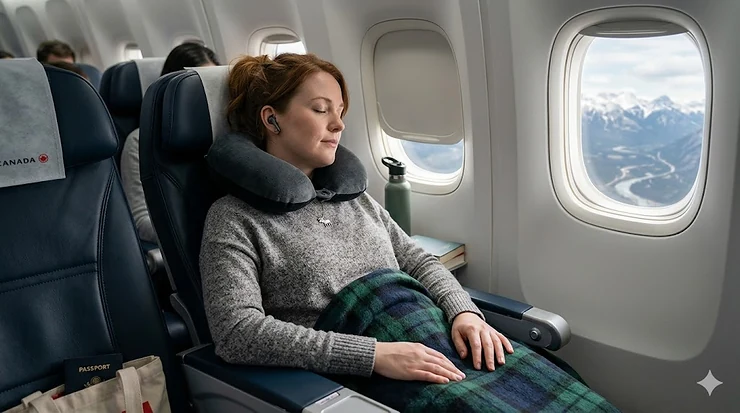
A memory foam travel pillow is a neck cushion made from viscoelastic polyurethane foam that softens with body heat and moulds to the shape of your head and neck, holding that shape until you shift position. That’s the textbook definition, but anyone who has tried to sleep upright on a Toronto–Vancouver red-eye knows the real question isn’t “what is it,” it’s “which one actually stops my head from bobbing forward over Saskatchewan.”

I’ve spent more red-eyes than I’d like to admit testing the U-shaped, J-shaped, and wrap-style options sold to Canadians, and the honest truth is that most of them are barely-rebranded foam blocks from the same handful of factories. A few, though, genuinely solve the problem. This guide focuses on those — seven memory foam travel pillows you can actually buy on Amazon.ca right now, with realistic CAD pricing, honest pros and cons, and commentary aimed specifically at how these pillows behave in Canadian conditions: cold cabins on prairie flights, dry winter air that stiffens foam, and the reality that most of us are flying Air Canada or WestJet economy, not lounging in business class.
Whether you’re a Calgary oil-and-gas commuter who lives on the Edmonton shuttle, a Halifax grandparent flying to see family twice a year, or a backpacker heading out of Pearson for a gap year, there’s a tier here that fits your travel frequency and your wallet.
Quick Comparison Table
| Pillow | Best For | Price Range (CAD) | Support Style | Amazon.ca |
|---|---|---|---|---|
| Heys Memory Foam Travel Pillow | Budget, occasional flyers | $20–$30 | Classic U-shape | ✅ Yes |
| Dot&Dot Twist | Versatility (neck, back, legs) | $30–$45 | Bendable twist core | ✅ Yes |
| J-Pillow | Side sleepers, window seats | $40–$60 | J-shaped chin cradle | ✅ Yes |
| BCOZZY | Front head-drop sleepers | $45–$65 | Double wraparound | ✅ Yes |
| Trtl Original 2.0 | Frequent flyers, packing light | $50–$85 | Internal hoodie-strap frame | ✅ Yes |
| Ostrichpillow Go | Eco-conscious, premium comfort | $65–$85 | Asymmetrical 360° foam | ✅ Yes |
| Cabeau Evolution S3 | Long-haul, overall best | $85–$110 | Seat-strap + 360° foam | ✅ Yes |
Looking at the spread above, there’s a clear pattern: price tracks how much engineering goes into keeping your head from falling in a specific direction. The Heys and Dot&Dot options are honest, simple foam — fine for a two-hour hop to Montreal but not built to fight an eight-hour overnight to Frankfurt. The Trtl and Cabeau sit at the top because they add a mechanical bracing system, not just denser foam, which matters more on long-haul routes where Canadian winters already mean stiffer joints and drier cabin air working against you.
💬 Just one click — help others make better buying decisions too! 😊
✨ Don’t Miss These Exclusive Deals!
🔍 Take your travel comfort to the next level with these carefully selected pillows. Click on any highlighted item to check current pricing and availability on Amazon.ca. These picks will help you actually sleep on your next flight!
Top 7 Memory Foam Travel Pillows: Expert Analysis
1. Cabeau Evolution S3
The standout feature here is the seat-strap system, a webbing loop that clips around an airline headrest so your head can’t slump forward once you fall asleep. The dual-density memory foam core is firmer at the base and softer at the edges, which in practice means it resists going flat on a 13-hour flight to Tokyo the way cheaper foam does after three hours. The quick-dry microsuede cover matters more than it sounds in winter — when you go from a -20°C jet bridge into a warm cabin, condensation builds on synthetic covers, and this one wicks it off instead of staying damp against your neck.
This is the pillow I’d recommend to anyone doing genuine long-haul out of Pearson, Vancouver, or Montreal-Trudeau, especially if you already have a tendency to wake up with your chin on your chest. It’s overkill for a one-hour commuter hop to Ottawa.
Canadian reviewers consistently flag the seat strap as the difference-maker versus a plain U-pillow, though a few mention the strap is fussy to attach on narrower regional-jet seatbacks.
Pros: Genuinely prevents head-drop · Dual-density foam holds shape on long flights · Compresses into included carry bag
Cons: Bulkier than wrap-style pillows · Strap can be awkward on smaller regional aircraft
At roughly $85–$110 CAD on Amazon.ca, this is the priciest pick on the list, but for anyone flying overseas more than twice a year, the cost-per-trip math works out in its favour.

2. Trtl Travel Pillow (Original 2.0)
The standout feature is an internal plastic-and-foam support frame sewn into a soft fleece wrap — it looks like a scarf, not a pillow, which means it folds flat in a coat pocket instead of eating carry-on space. The frame braces your head to one side rather than holding it centred like a U-pillow, which sounds limiting until you realize most of us sleep leaning toward the window or aisle anyway, not bolt upright.
What most Canadian commuters overlook about this one is the packability: at under 130 grams (4.6 oz), it’s the pillow that actually survives the cut when you’re trying to keep a carry-on under WestJet’s or Air Canada’s weight allowance for a quick Toronto–Calgary business trip.
Feedback from Canadian buyers is largely positive on the side-lean support, with the main complaint being that it offers no chin support if your head tends to fall forward rather than sideways — that’s a different problem, solved by the BCOZZY or J-Pillow below.
Pros: Extremely packable and light · Machine washable wrap · Genuinely better side-lean support than U-shapes
Cons: No forward/chin support · The Plus model (taller version) costs noticeably more
Pricing runs $50–$85 CAD depending on whether you get the Original or the taller Plus version, both sold through Amazon.ca with Prime shipping.
3. Ostrichpillow Go
The standout feature is the high-density memory foam developed with BASF, a denser, more resilient foam than what’s used in most budget pillows, paired with asymmetrical sides so one half sits higher than the other for sideways support. The modal fabric cover is also a genuine sustainability play — it’s a renewable, biodegradable fibre, not just marketing language slapped on polyester.
This is the pick for travellers who care about what they’re putting against their face for eight hours and don’t mind paying for it; think a Vancouver-based remote worker who flies to client meetings monthly and wants one pillow that lasts years rather than degrading after one ski season’s worth of trips.
Reviewers consistently praise how well it holds its shape after repeated compression, which is the actual failure point of cheaper memory foam — it stops springing back after a few dozen trips.
Pros: High-resilience BASF foam resists flattening · Sustainable modal cover · Compresses to 60% of size for packing
Cons: Asymmetrical shape takes a flight or two to get used to · Premium price for a relatively minimalist design
Expect $65–$85 CAD on Amazon.ca — positioned just under the Cabeau, and arguably the better buy if you don’t need the seat-strap feature.
4. J-Pillow Travel Pillow
The standout feature is the J-shaped design itself — instead of wrapping fully around your neck, one arm cradles your chin while the body supports the side of your head, a shape invented by a former flight attendant specifically for side sleepers in window seats. It won British Invention of the Year honours, which matters less than the fact that it actually addresses chin-drop, a complaint U-shaped pillows largely ignore.
If you’re a side sleeper who always books the window seat on flights out of Halifax or Winnipeg specifically so you can lean against the wall, this is the shape built for exactly that posture. It’s noticeably less useful in a middle or aisle seat with nothing to lean against.
Canadian buyers in mattress and travel-gear reviews note a short learning curve — there’s a “correct” way to wear it that isn’t obvious from the box — but once learned, it gets credit for being one of the few pillows that meaningfully supports the chin without bulk.
Pros: Genuinely solves chin-drop for side sleepers · Compact, attaches to luggage with a snap · Removable, washable cover
Cons: Takes a flight or two to learn correct positioning · Less effective without a window or wall to lean on
It typically runs $40–$60 CAD on Amazon.ca, often discounted from list price during sales events.
5. BCOZZY Travel Neck Pillow
The standout feature is its patented double-loop design — two soft tubes that cross at the front, letting you customize support for whichever direction your head tends to fall, forward, sideways, or a mix of both. Where most pillows pick one failure mode to solve, BCOZZY’s adjustability means a single pillow works for the inconsistent sleeper who slumps differently every flight.
This is a strong match for families travelling with kids on the Toronto–Calgary or Vancouver–Winnipeg runs, since the adjustable loop sizes mean one pillow design works across a wider range of neck sizes than a fixed U-shape, useful when you don’t want to buy three different pillows for three different family members.
Customer feedback frequently calls it solid value for the price tier, with most criticism aimed at the outer fabric on early variants feeling thinner than the foam-and-fleece competitors above it.
Pros: Adjustable for forward and side support · Good size range for kids through adults · Fully machine washable
Cons: Bulkier in a backpack than wrap-style options · Fabric feels less premium than pricier picks
Pricing sits around $45–$65 CAD on Amazon.ca, making it a reasonable middle option between the budget and premium tiers.

6. Dot&Dot Twist Memory Foam Travel Pillow
The standout feature is the internal twistable spine — unlike a fixed U-shape, you can bend and lock this one into a circle, an L-shape, or a flat roll, which means it doubles as lower-back support on long car drives between, say, Calgary and Banff, not just a neck pillow on planes.
What most buyers overlook is that the “twist” mechanic actually extends the pillow’s usefulness past flights: clipped to a backpack strap with its built-in snap, it becomes lumbar support for a long hiking day, then twists back into a neck pillow for the overnight bus home. For a Canadian road-tripper who alternates between driving and flying, that flexibility is the real selling point, not the memory foam itself.
Reviews are positive on versatility, with the most common knock being that, twisted into a tight neck loop, it’s noticeably firmer than the softer wrap-style pillows on this list.
Pros: Multi-purpose (neck, back, legs) · Snaps onto luggage or a backpack strap · Machine-washable cotton cover
Cons: Firmer feel than wrap-style competitors · Twist mechanism needs care to avoid kinking over time
You’ll typically find it for $30–$45 CAD on Amazon.ca, a fair price for a pillow that replaces two or three single-purpose travel accessories.
7. Heys Memory Foam Travel Pillow
The standout feature, frankly, is the price and the fact that it’s made by a Canadian company. Heys is a Toronto-founded luggage brand that’s been building travel gear domestically since 1986, and its basic memory foam neck pillow is exactly what it says: a classic U-shape with a cushioned, machine-washable cover and no frills.
For a Canadian buyer who flies once or twice a year — a winter trip south or one visit to family — there’s no reason to spend $80 CAD on seat straps and resilience foam you’ll use four times total. This is the pillow for that traveller, and supporting a domestic brand is a reasonable bonus rather than the main reason to buy it.
It won’t outlast years of weekly business travel the way the Cabeau or Ostrichpillow Go will, and the foam is noticeably softer with less rebound, but for occasional use that’s a non-issue.
Pros: Lowest price on this list · Canadian-founded company · Lightweight, simple, machine washable
Cons: Foam flattens faster under frequent use · No bracing mechanism for forward or side head-drop
Priced around $20–$30 CAD, it’s the pillow to grab if you’re buying for a once-a-year trip rather than a flying lifestyle.
Real Canadian Traveller Scenarios: Which Pillow Fits You
The Toronto consultant who flies weekly. Three or four short hops a week between Pearson and regional offices means packability matters more than maximum cushioning. The Trtl wins here — it folds flat enough to live permanently in a laptop bag side pocket, and the side-lean support handles a 45-minute nap on a Dash 8 just fine.
The Vancouver family flying to visit grandparents in the Maritimes. A cross-country flight with two kids means you need support that adapts to different head sizes and sleeping styles without buying three pillows. The BCOZZY‘s adjustable double loop covers a nine-year-old and an adult parent with the same product, and it’s cheap enough that losing one in an airport doesn’t sting.
The Ottawa retiree doing one long-haul trip to Europe per year. Comfort matters more than packed weight or price sensitivity for a once-a-year splurge. The Cabeau Evolution S3‘s seat strap and dual-density foam are worth the investment for eight-plus hours over the Atlantic, especially for anyone who already deals with neck stiffness from Canadian winters and cold-induced muscle tension.
The Calgary backpacker on a budget gap year. Multiple flights, buses, and overnight trains on a tight budget call for something cheap, multi-purpose, and replaceable if it’s lost or damaged. The Dot&Dot Twist or the Heys pillow both fit, with the Dot&Dot earning the edge for doubling as back support on long bus rides through Europe or Southeast Asia.
Caring for Your Travel Pillow Through Canadian Winters
Memory foam behaves differently in cold, dry Canadian air than it does in a humid climate, and a little care extends the life of any pillow on this list.
Storage between trips: Don’t leave a compressed travel pillow stuffed in its carry bag in a cold trunk or unheated garage all winter. Memory foam loses some resilience when compressed at low temperatures for long stretches, and it won’t fully spring back as quickly when you need it. Store it loosely, at room temperature, between trips.
Airport-to-cabin transitions: Going from a frigid Winnipeg or Edmonton jet bridge into a heated cabin causes the foam to warm and soften quickly; give it a minute to adjust before relying on it for support, rather than expecting full cushioning the second you sit down.
Washing in winter: Most covers are machine washable, but check the care tag before tossing memory foam itself (not just the cover) into a dryer — high heat can break down foam cells over time. Air-dry the foam insert and only machine-dry the removable fabric cover.
Salt and slush: If your pillow rides in a checked bag or gets set down on slushy, salted airport floors, the fabric cover picks up residue that can stain or degrade fibres faster than normal wear. A quick wipe-down before storage avoids this.

How to Choose a Memory Foam Travel Pillow in Canada
- Match the shape to your actual sleep posture, not the marketing. If your head drops forward, you need a J-Pillow or BCOZZY-style chin support, not a plain U-shape that does nothing for forward drop.
- Weigh flight frequency against price. Occasional flyers get little extra value from a $100 CAD pillow over a $25 CAD one; frequent flyers get real value from the durability and bracing systems in the premium tier.
- Check packed size against your usual carry-on. A bulky U-pillow eats space in a small backpack; if you travel light, wrap-style options like the Trtl matter more than foam density.
- Consider the cover fabric for Canadian climate swings. Quick-dry, moisture-wicking covers handle the cold-to-warm cabin transition better than plain cotton or polyester.
- Verify Amazon.ca availability and Prime eligibility before assuming a US listing applies. Pricing, stock, and even available colours can differ between Amazon.com and Amazon.ca.
- Factor in washability if you travel frequently. A pillow you can’t easily clean becomes unpleasant fast after a few trips through airports and overnight buses.
- Don’t ignore the return policy. Comfort is subjective; a pillow that looks perfect on paper might not suit your neck length, so buying from a retailer with an easy Amazon.ca return process matters.
Memory Foam vs Inflatable Travel Pillows
Memory foam and inflatable travel pillows solve the same problem with opposite trade-offs. Memory foam holds a consistent shape and provides real structural support, which is why every pillow on this list uses it, but that support comes from material that can’t be compressed flat — it takes up real space in a bag even when “compressed” into a carry case.
Inflatable pillows solve the packing problem by deflating to almost nothing, which backpackers and minimalist packers love, but the trade-off is real: air-filled chambers shift and deflate slightly over a long flight, and most provide noticeably less consistent support than foam by the six- or seven-hour mark. For a short hop between Calgary and Vancouver, that’s irrelevant. For an overnight flight to Europe or Asia, it’s the difference between actually sleeping and just resting your eyes.
The practical Canadian take: if you’re checking a bag anyway for a ski trip or a long visit, pack a memory foam pillow. If you’re carry-on only for a quick business trip, an inflatable might make more sense purely on space — just don’t expect it to perform like the Cabeau or Trtl on a long-haul leg.
Common Mistakes When Buying a Travel Pillow in Canada
Buying based on price alone. The cheapest U-shaped foam pillow on Amazon.ca often uses low-density foam that flattens within a few trips, meaning you end up replacing it more often than buying one mid-tier pillow that lasts years.
Ignoring your actual sleep posture. Buying a plain U-shape when your real problem is forward head-drop means the pillow does almost nothing useful — match the shape to the problem, covered above in the buying guide.
Assuming Amazon.com pricing and availability applies to Amazon.ca. Currency, stock, and sometimes even which colours or sizes are carried differ by storefront; always check the .ca listing directly before deciding.
Overlooking warranty and return coverage in Canada. Not every brand offers the same return window through Canadian retailers as through their own websites; checking this before buying saves a headache if the pillow doesn’t suit you.
Packing it somewhere it gets crushed flat for months. Long-term compression in a closet or under luggage degrades memory foam’s rebound — give it breathing room between trips.
Canadian Regulations and Safety Standards
Travel pillows sold in Canada fall under the federal Canada Consumer Product Safety Act, which sets minimum flammability standards for textile-filled consumer products, including bedding and cushion-style items like neck pillows. Separately, the Textile Labelling Act, enforced by the Competition Bureau, requires accurate fibre-content labelling on the products sold to Canadian consumers — so the cover material listed on an Amazon.ca product page should match what’s disclosed on the physical label.
Bilingual labelling is also a federal requirement for consumer goods sold in Canada, meaning legitimate retail packaging should display both English and French product information, not just English. If a listing or package you receive is missing this, it’s worth a closer look before assuming the product is being sold through fully compliant Canadian channels.
None of the seven pillows above raise red flags on these fronts, but it’s a useful checklist if you’re buying a lesser-known brand not covered in this guide.

Frequently Asked Questions
❓ Is memory foam better than microbead for a travel pillow?
❓ Do these travel pillows ship across Canada, including rural areas?
❓ What's the best travel pillow for someone who sleeps with their chin dropping forward?
❓ Can a memory foam travel pillow go in checked luggage during a Canadian winter flight?
❓ How often should I replace a memory foam travel pillow?
Conclusion
There isn’t a single best memory foam travel pillow for every Canadian traveller — there’s a best pillow for your travel frequency, your sleep posture, and your route. Someone flying Toronto to London twice a year should look at the Cabeau Evolution S3 or Ostrichpillow Go and treat it as a long-term investment. Someone hopping Calgary to Edmonton for work every other week is better served by the Trtl’s packability, and a family doing one big trip together will get more out of the BCOZZY’s adjustability than out of any premium-foam pillow built for solo long-haul comfort.
If you only take one thing from this guide, let it be this: match the pillow’s support style to where your head actually falls when you sleep upright, not to whichever pillow has the most five-star reviews. A perfectly engineered seat-strap system does nothing for you if your real problem is chin-drop, and the cheapest J-Pillow on this list will outperform the most expensive U-shape if it’s solving your specific problem.
Whichever you choose, check the current price and stock on Amazon.ca before booking your next flight — availability and pricing shift, sometimes within the same week.
✨ Ready to Travel in Comfort?
🔍 Browse the full lineup of memory foam travel pillows on Amazon.ca and pick the one that matches how you actually sleep. Your neck on the next red-eye will thank you.
Recommended for You
- Best Inflatable Travel Pillow in Canada 2026: 7 Expert Picks You’ll Actually Sleep On
- Best Neck Pillow for Airplane: 7 Top Picks for Canadian Travellers (2026)
- Best Travel Pillow Canada 2026: 7 Expert Picks for Neck Relief
Disclaimer: This article contains affiliate links. As an Amazon Associate, I earn from qualifying purchases. If you purchase products through these links, we may earn a small commission at no additional cost to you.
✨ Found this helpful? Share it with your friends! 💬🤗
