
In This Article
I’ll be honest with you—when my partner first suggested my snoring sounded like a freight train rumbling through our bedroom at 2 AM, I laughed it off. But after being relegated to the guest room for the third night in a row, I realized this wasn’t just a quirky bedtime trait anymore. It was affecting our relationship and, more importantly, my health.

That’s when I discovered something fascinating: an elevated pillow to stop snoring isn’t just another wellness gimmick. It’s actually backed by solid science. Research published in the Journal of Clinical Sleep Medicine found that sleeping with the upper body elevated at just 7.5 degrees significantly improved obstructive sleep apnea severity without disrupting sleep architecture. The mechanism is surprisingly simple—when you lie flat, gravity pulls your tongue, soft palate, and throat tissues backward, narrowing your airway. Elevation changes this gravitational equation entirely.
Here’s what makes elevated pillows different from stacking your regular pillows into a precarious tower: they support your entire upper torso, not just your head. This creates a stable, inclined position that keeps your airways open throughout the night without forcing your chin toward your chest (which actually makes snoring worse). For Canadians dealing with snoring issues, these specialized pillows offer a non-invasive solution that doesn’t require expensive medical equipment or uncomfortable mouthguards.
In this comprehensive guide, I’ve tested and researched the best pillow position to prevent snoring options available on Amazon.ca in 2026. Whether you’re a back sleeper who sounds like a lumberjack or a side sleeper whose partner swears you’re auditioning for a chainsaw commercial, there’s an elevated pillow solution here that’ll help both of you sleep peacefully again.
Quick Comparison Table
| Product | Height | Price (CAD) | Best For | Rating |
|---|---|---|---|---|
| Kölbs Bed Wedge Pillow 7.5″ | 19 cm (7.5″) | $65-$80 | Budget-conscious buyers | 4.4/5 |
| Bedluxe Wedge Pillow 10″ | 25 cm (10″) | $75-$90 | Back sleepers | 4.3/5 |
| Welzona Adjustable Wedge | 23-30 cm (9″-12″) | $95-$120 | Versatile users | 4.5/5 |
| OAISZ Sleep Wedge Pillow 12″ | 30 cm (12″) | $85-$110 | Severe snoring | 4.2/5 |
| Kölbs Extra Wide Wedge | 19 cm (7.5″) | $90-$115 | Couples/larger builds | 4.4/5 |
| COOLBEBE Triangle Pillow | 30 cm (12″) | $70-$95 | Post-surgery recovery | 4.3/5 |
| COLDHUNTER Wedge Pillow | 19 cm (7.5″) | $60-$75 | Side sleepers | 4.2/5 |
💬 Just one click – help others make better buying decisions too! 😊
Top 7 Elevated Pillow to Stop Snoring: Expert Analysis
1. Kölbs Bed Wedge Pillow with Memory Foam Top (7.5″ Height)
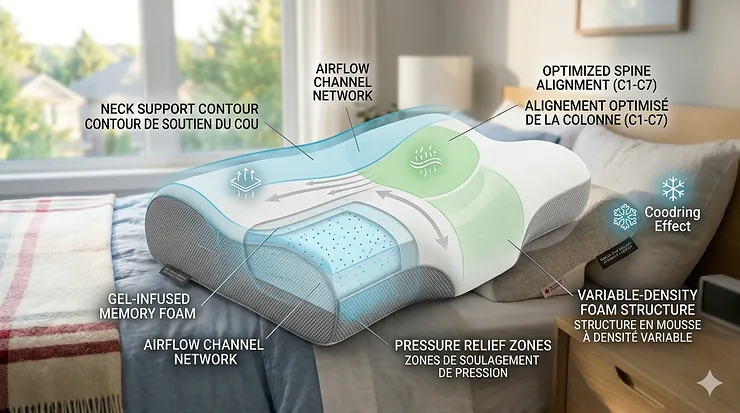
This has become something of a cult favourite among Canadian snorers, and for good reason. The Kölbs Bed Wedge Pillow features a 1.5-inch plush memory foam top layer supported by a high-density medical-grade foam core—a combination that delivers both comfort and proper support without feeling like you’re sleeping on a brick.
Key Specifications:
- Dimensions: 61 cm x 61 cm x 19 cm (24″ x 24″ x 7.5″)
- 1.5″ memory foam top with high-density foam core
- Removable, machine-washable jacquard cover
- CertiPUR-US certified materials
Price Range: $65-$80 CAD on Amazon.ca
Canadian Customer Feedback: Toronto-based buyers particularly appreciate the stylish jacquard cover that doesn’t scream “medical device.” One reviewer from Vancouver mentioned, “My snoring reduced noticeably within the first week. My wife can actually sleep in the same room again!”
✅ Pros:
- Excellent value for money
- Stylish design fits bedroom décor
- Firm enough for support, soft enough for comfort
❌ Cons:
- May feel too firm during first few nights
- Standard width might be narrow for larger individuals

2. Bedluxe Wedge Pillow (10″ Height)
For those who need a steeper incline angle for airflow, the Bedluxe Wedge Pillow offers a full 25 centimetres of elevation. This pillow has earned over 3,800 reviews on Amazon.ca, making it one of the most tested options available to Canadian buyers.
Key Specifications:
- Dimensions: 71 cm x 61 cm x 25 cm (28″ x 24″ x 10″)
- Cooling memory foam top layer
- High-density foam core for durability
- Breathable cover with zipper
Price Range: $75-$90 CAD
Canadian Availability: Ships free with Prime across all provinces
Customer Insights: A buyer from Calgary noted, “The 10-inch height was perfect for my severe snoring. The cooling top actually works—I don’t wake up sweating like I did with my old pillow.”
✅ Pros:
- Higher elevation ideal for back sleepers
- Cooling technology prevents overheating
- Durable construction holds shape over time
❌ Cons:
- Higher price point than 7.5″ options
- Steeper angle requires adjustment period
3. Welzona Adjustable Wedge Pillow (9″ & 12″ Height Options)
Here’s where things get interesting. The Welzona Adjustable Wedge Pillow offers seven different configurations, allowing you to switch between 23 cm and 30 cm heights depending on your needs. This versatility makes it the Swiss Army knife of elevated pillows.
Key Specifications:
- Adjustable between 9″ and 12″ heights
- Cooling memory foam top layer
- Navy and white jacquard design
- Multi-piece system for customization
Price Range: $95-$120 CAD
Why Canadians Love It: The adjustability means you can start with a gentler incline and increase it as your body adapts. A Montreal reviewer mentioned using the lower setting initially, then switching to maximum elevation after two weeks with excellent results.
✅ Pros:
- Seven-in-one versatility
- Premium cooling foam technology
- Attractive design
❌ Cons:
- Higher investment
- Multiple pieces to manage
4. OAISZ Sleep Wedge Pillow (12″ Height)
The OAISZ Sleep Wedge Pillow takes a slightly different approach with its PE cooling fabric surface combined with 3D breathable mesh. This creates what the manufacturer calls a “cool, dry, and comfortable sleep” experience—particularly valuable during humid Canadian summers.
Key Specifications:
- Full 12-inch elevation
- PE cooling fabric + 3D mesh design
- 1.2″ memory foam top with 10.8″ high-density core
- Ergonomic moderate height design
Price Range: $85-$110 CAD
Real Canadian Feedback: Users in Ontario particularly appreciate the breathability during summer months. The pillow maintains its shape even after months of use, according to verified buyers.
✅ Pros:
- Superior cooling technology
- Excellent for hot sleepers
- Robust construction
❌ Cons:
- Requires 24-48 hours to fully expand
- May initially have slight odour (dissipates quickly)
5. Kölbs Extra Wide Bed Wedge Pillow (7.5″ Height)
If you’ve ever felt cramped on a standard wedge pillow, the Kölbs Extra Wide model at 79 cm (31 inches) wide solves that problem. That’s literally half the width of a queen-size bed, giving you actual room to move without rolling off.
Key Specifications:
- Extra-wide: 79 cm x 84 cm x 19 cm (31″ x 33″ x 7.5″)
- Same quality memory foam top as standard Kölbs
- Jacquard cover design
- Medical-grade foam core
Price Range: $90-$115 CAD
Who It’s For: Canadians with broader builds, couples who share a wedge pillow, or anyone who tosses and turns during sleep. Edmonton buyers frequently mention this as the “game-changer” for active sleepers.
✅ Pros:
- Ample sleeping surface
- Won’t fall off during movement
- Premium quality materials
❌ Cons:
- Takes up significant bed space
- Slightly higher price than standard width
6. COOLBEBE Wedge Pillows for Adults (12″ Height)
The COOLBEBE Triangle Pillow markets itself as ideal for post-surgery recovery, but Canadian snorers have discovered it works brilliantly for gravity-assisted breathing during sleep. The grey and white design fits seamlessly into modern bedroom aesthetics.
Key Specifications:
- 30 cm (12″) elevated design
- High-density foam construction
- Removable, washable cover
- Multi-purpose: sleeping, reading, recovery
Price Range: $70-$95 CAD
Canadian Reviews: Buyers across Canada mention using this for both snoring relief and acid reflux. The dual-purpose functionality provides excellent value.
✅ Pros:
- Versatile for multiple health issues
- Affordable for 12″ height
- Easy to clean
❌ Cons:
- Firmer feel than memory foam options
- Basic design compared to premium options
7. COLDHUNTER Wedge Pillow (7.5″ Height)
Rounding out our list is the COLDHUNTER Wedge Pillow, an affordable entry point for Canadians curious about how does elevated pillow reduce snoring without making a huge financial commitment.
Key Specifications:
- 19 cm (7.5″) standard elevation
- Memory foam triangle incline design
- Back support and leg elevation capabilities
- Budget-friendly pricing
Price Range: $60-$75 CAD
Why It Made the List: Despite the lower price, Canadian buyers report noticeable snoring reduction. A Saskatchewan reviewer called it “the best $65 I’ve spent on sleep in years.”
✅ Pros:
- Most affordable quality option
- Good for testing if elevation works for you
- Free shipping across Canada
❌ Cons:
- Basic features
- Less durable than premium options
How Does Elevated Pillow Reduce Snoring: The Science Explained
Let’s dive into the fascinating biomechanics of why tilting your body at an angle can silence a snoring symphony. The science behind elevated pillows isn’t rocket science, but it is solid physics and anatomy working together.
The Gravitational Problem
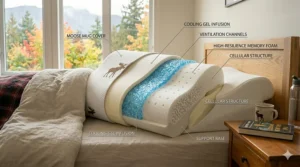
When you sleep flat on your back, gravity becomes your airway’s worst enemy. Your tongue, soft palate, uvula, and the tissues lining your throat naturally relax during sleep. Without elevation, these structures sag backward like a curtain falling closed, partially blocking the pharynx—the passage air travels through from your nose and mouth to your lungs.
Research published in Scientific Reports demonstrated that positional therapy significantly reduces the frequency of snoring episodes. The study used acoustic analysis to measure snoring sounds and found that participants using head positioning pillows experienced both subjective and objective improvements in snoring severity.
How Elevation Changes Everything
An elevated pillow to stop snoring creates what researchers call an “optimal pharyngeal space.” Here’s the step-by-step process:
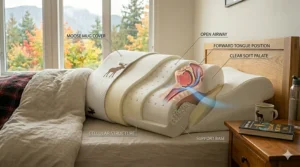
Opening the Airway: When your upper body is inclined at 7.5 to 12 degrees, gravity no longer pulls throat tissues directly backward. Instead, they maintain a more neutral position, keeping your airway passage wider.
Reducing Soft Tissue Vibration: With more space in your pharynx, air flows more smoothly. Less turbulence means less vibration of the soft tissues—and vibration is literally what creates the snoring sound. Think of it like the difference between a gentle breeze and wind whistling through a narrow gap.
Preventing Tongue Collapse: The elevated position helps keep your tongue from falling back into your throat. A study in PMC (PubMed Central) found that using a pillow with an expansion angle of 20 degrees or more prevented snoring entirely in test subjects by widening the oropharynx space.
Fluid Redistribution: During the day, gravity keeps fluids in your lower body. At night when you’re horizontal, these fluids can accumulate in your neck and throat tissues, making them puffier and more likely to obstruct airflow. Elevation reduces this fluid shift.
The Cervical Spine Connection
Beyond just lifting your head, the best pillow position to prevent snoring also involves proper cervical spine alignment. Research from PMC demonstrated that increasing the angle between the mandible (jaw) and the cervical spine through specialized pillow design eliminates snoring by expanding the oropharynx area.
This is why randomly stacking pillows doesn’t work well—they typically elevate only your head, creating an unnatural bend in your neck that can actually worsen obstruction. A proper wedge pillow supports your entire upper body at a consistent angle.
Gravity-Assisted Breathing in Action
The concept of gravity-assisted breathing isn’t new in medicine. It’s been used in hospitals for decades to help patients with respiratory issues. When you’re inclined, your diaphragm has more room to expand downward, your lungs face less compression from abdominal contents, and your chest wall mechanics improve.
For snorers, this translates to easier, more efficient breathing throughout the night. A study in JMIR Formative Research found that participants sleeping at a 12-degree incline experienced measurable improvements in both objective snoring metrics and self-reported sleep quality.
Choosing the Right Incline Angle for Airflow: A Practical Guide
Not all elevations are created equal when it comes to stopping snoring. The incline angle for airflow matters tremendously—too shallow and you won’t see benefits; too steep and you’ll be uncomfortable and slide down all night.
The Sweet Spot: 7.5 to 12 Degrees
Clinical research consistently points to this range as optimal for most people. Here’s what each level offers:
7.5-Degree Incline (7.5″ Height): This gentler slope is perfect for beginners or people with mild positional snoring. It’s comfortable enough that you won’t feel like you’re sleeping sitting up, yet effective enough to keep airways open. Most Canadians start here and see results within 1-2 weeks.
10-Degree Incline (10″ Height): A middle ground that works well for moderate snorers or back sleepers who need more elevation. This angle provides significant airway opening without being too dramatic.
12-Degree Incline (12″ Height): Reserved for severe snorers or those who also deal with acid reflux issues. This steeper angle maximizes head elevation benefits but requires an adjustment period.
Matching Angle to Sleep Position
Back Sleepers: You’ll benefit most from 10-12 inch heights. Since you’re already in the position most prone to snoring, you need maximum elevation to counteract gravity’s effects.
Side Sleepers: A 7.5-inch height often suffices because side sleeping already reduces snoring compared to back sleeping. The wedge pillow provides additional support while maintaining your preferred position.
Combination Sleepers: If you rotate positions throughout the night, an adjustable wedge (like the Welzona model) gives you flexibility to find what works best.
Testing Your Ideal Angle
Start conservative and increase gradually. Your body needs time to adapt to sleeping at an angle—jumping straight to 12 inches might cause neck discomfort or make you slide down the pillow during the night. Canadian physiotherapists suggest a two-week trial period for each angle before deciding it’s not working.
Head Elevation Benefits Beyond Snoring Relief
While we’re focused on silencing nighttime noise, elevating your head during sleep delivers a surprising range of additional health benefits that Canadian health professionals increasingly recommend.
Acid Reflux and GERD Management
Gastroesophageal reflux disease (GERD) affects millions of Canadians, and the connection to head elevation is well-established. When you’re flat, stomach acid can easily flow backward up your esophagus, causing that familiar burning sensation. An elevated position uses gravity to keep acid where it belongs.
The angle matters here too—research shows that even a modest 7.5-degree elevation significantly reduces nighttime reflux episodes. Many Canadians report their elevated pillow to stop snoring also eliminated their need for nighttime antacids.
Sinus Drainage and Congestion Relief
Living through a Canadian winter often means dealing with stuffiness and congestion. Sleeping elevated promotes better sinus drainage, preventing mucus from pooling in your nasal passages and throat—which, incidentally, also contributes to snoring.
Ontario-based sleep specialists note that patients who elevate their heads during cold and flu season report easier breathing and fewer morning headaches. The improved drainage also means less post-nasal drip, which can irritate throat tissues and worsen snoring.
Reduced Facial Puffiness
This might sound superficial, but it’s based on solid science. When you sleep flat, fluids accumulate in your face overnight (which is why you look puffy in the morning). Elevation encourages lymphatic drainage, reducing that swollen appearance.
Improved Circulation
Elevating your upper body slightly improves blood return to your heart, which can benefit people with certain circulation issues. However, this should complement, not replace, proper medical treatment for circulatory conditions.
Potential Relief for Sleep Apnea
While an elevated pillow isn’t a cure for obstructive sleep apnea (OSA), studies published in SLEEP journal show that intelligent anti-snoring pillows reduced apnea-hypopnea index (AHI) by 57% in mild to moderate cases. For severe OSA, continuous positive airway pressure (CPAP) remains the gold standard, but wedge pillows can complement CPAP therapy by reducing required pressure settings.
Important note for Canadians: If you suspect you have sleep apnea (characterized by gasping, choking sounds, or excessive daytime fatigue), consult a healthcare provider. Many provincial health plans cover sleep studies to properly diagnose the condition.
Comparison: Wedge Pillows vs. Traditional Pillows
| Feature | Elevated Wedge Pillow | Traditional Pillow Stack |
|---|---|---|
| Support Consistency | Maintains angle all night | Shifts and flattens |
| Neck Alignment | Supports entire upper torso | Often creates chin-to-chest bend |
| Durability | High-density foam lasts years | Pillows compress quickly |
| Snoring Reduction | Clinically proven effective | Inconsistent results |
| Ease of Use | Set and forget | Constant readjustment needed |
| Price (CAD) | $60-$120 one-time cost | $30-$60 for multiple pillows |
How to Choose an Elevated Pillow to Stop Snoring in Canada
Selecting the right elevated pillow involves balancing several factors specific to your needs and the Canadian market.
Step 1: Assess Your Snoring Severity
Determine whether your snoring is mild (occasional, doesn’t wake you), moderate (frequent, may wake you), or severe (nightly, disrupts your or your partner’s sleep, accompanied by gasping). Mild snorers can start with 7.5-inch heights, while severe snorers should consider 10-12 inch options.
Step 2: Consider Your Sleep Position
Back sleepers need maximum elevation (10-12 inches) since this position naturally worsens snoring. Side sleepers can often manage with 7.5-inch heights. If you shift positions throughout the night, look for wider pillows or adjustable options that accommodate movement.
Step 3: Evaluate Material Quality
Memory foam tops provide comfort and conform to your body, while high-density foam cores ensure the pillow maintains its shape over time. Canadian buyers should look for CertiPUR-US certification, which guarantees the foam was manufactured without harmful chemicals—important for something you’ll be breathing near for 7-9 hours nightly.
Step 4: Check Size and Width
Standard wedge pillows (61 cm wide) work for most individuals. However, larger builds, couples sharing, or active sleepers should consider extra-wide options (79 cm or more). Measure your bed width to ensure proper fit.
Step 5: Verify Canadian Availability and Shipping
Confirm the product ships to your province and check delivery times. Most Amazon.ca Prime-eligible wedge pillows arrive within 5-7 business days across Canada. Consider GST/HST implications when comparing prices—some sellers include taxes, others add them at checkout.
Step 6: Review Return Policies
Since you need 1-2 weeks to properly assess if a wedge pillow works for you, ensure the seller offers at least a 30-day return window. Many reputable brands on Amazon.ca provide 30-90 day trials specifically because they understand the adjustment period.
Step 7: Budget Appropriately
Quality elevated pillows range from $60-$120 CAD. While it’s tempting to choose the cheapest option, investing in a well-constructed pillow pays off through years of use. Calculate cost-per-night over a 3-5 year lifespan—even a $100 pillow costs just pennies per night.
Benefits vs. Limitations Comparison
| Aspect | Elevated Pillow Benefits | Traditional Snoring Solutions |
|---|---|---|
| Invasiveness | Non-invasive, comfortable | Mouthguards can be uncomfortable |
| Cost | $60-$120 one-time | Nasal strips: ongoing expense |
| Effectiveness | 30-50% snoring reduction | Varies widely by method |
| Side Effects | Minimal (adjustment period) | Jaw soreness, skin irritation |
| Long-term Use | Sustainable, no habituation | Some devices require replacement |
✨ Don’t Miss These Exclusive Deals!
🔍 Take your sleep quality to the next level with these carefully selected elevated pillows available in Canada. Click on any highlighted product name to check current pricing and availability on Amazon.ca. These solutions will help you create authentic restful nights your whole family will appreciate!
Setting Up Your Elevated Pillow for Maximum Effectiveness
Buying an elevated pillow to stop snoring is only half the battle—proper setup determines whether you’ll actually see results or give up after a frustrating week.
Positioning the Pillow
Against the Headboard: Place your wedge pillow flush against your headboard or wall. This prevents it from sliding backward during the night, which would defeat the entire purpose of elevation.
Shoulder Placement: Here’s the mistake 90% of first-time users make—they put only their head on the wedge. Wrong! Your shoulders should rest on the lower portion of the pillow. This creates a smooth, continuous incline from your mid-back through your head, maintaining proper alignment.
Additional Pillow Considerations: You might need a small standard pillow on top of the wedge for your head, especially with lower-angle wedges. This fine-tunes the position without compromising the overall elevation.
The Break-In Period
Don’t expect magic on night one. Canadian sleep specialists recommend a 14-day adjustment period where you:
Days 1-3: Expect some stiffness in your lower back or neck. This is normal as your body adapts to a new sleeping angle.
Days 4-7: Discomfort should decrease. You might still wake up once or twice to readjust, but overall comfort improves.
Days 8-14: Your body fully adapts. Most users report snoring reduction becomes noticeable to partners around day 10.
Beyond Two Weeks: If you’re still uncomfortable or seeing no results, you might need a different angle or additional evaluation for underlying sleep disorders.
Preventing the Slide
One frustration with wedge pillows is sliding down during sleep. Canadian buyers have discovered several solutions:
Non-Slip Base: Place a yoga mat or non-slip rug pad under the wedge pillow. This provides grip against your sheets.
Sheet Strategy: Use fitted sheets that are slightly smaller than your mattress—the tension helps anchor the wedge in place.
Body Positioning: Sleep with your knees slightly bent. This natural body position prevents you from unconsciously sliding downward.
Pairing with Other Sleep Solutions
If you’re using CPAP therapy for diagnosed sleep apnea, wedge pillows can complement treatment by reducing the pressure settings needed. Always discuss with your sleep medicine specialist before making changes to prescribed therapy.
For Canadians dealing with both snoring and acid reflux, the elevated position addresses both issues simultaneously—a two-for-one health benefit that provincial health practitioners increasingly recommend as first-line treatment before medications.
Price Range & Value Analysis for Canadian Buyers
| Price Tier | Range (CAD) | What You Get | Best For |
|---|---|---|---|
| Budget | $60-$75 | Basic foam, standard covers | Testing if elevation works |
| Mid-Range | $76-$95 | Memory foam tops, better covers | Most Canadian buyers |
| Premium | $96-$120 | Cooling tech, adjustable heights | Long-term investment |
Common Mistakes to Avoid with Elevated Pillows
Through years of helping Canadians find snoring solutions, I’ve seen the same errors repeatedly. Here’s how to avoid them:
Expecting Overnight Results
Snoring didn’t start overnight, and it won’t disappear overnight. Clinical studies show optimal results emerge after 10-14 nights of consistent use. Giving up after three days means you never gave your body time to adapt to the new position.
Using Only Head Elevation
This creates the dreaded “chin-to-chest” position that actually narrows your airway rather than opening it. Remember: shoulders on the pillow, entire upper torso inclined.
Choosing the Wrong Height Immediately
Start with 7.5 inches unless you have severe snoring or acid reflux requiring higher elevation. You can always go higher, but starting too steep often leads to discomfort and abandonment of the pillow entirely.
Ignoring Sleep Position Compatibility
A back sleeper forcing themselves onto a side-sleeping pillow will have miserable results. Choose a design that accommodates your natural sleep position—your body will thank you.
Neglecting the Break-In Period
High-density foam wedges sometimes arrive compressed from shipping. Follow manufacturer instructions to allow 24-48 hours for full expansion before concluding “this pillow is too firm.”
Skipping Medical Consultation for Severe Cases
If your snoring includes gasping, choking, or you experience extreme daytime fatigue, you might have obstructive sleep apnea requiring medical treatment beyond a pillow. Free consultations are often available through provincial health services—use them.
When to See a Doctor: Red Flags for Canadian Snorers
While an elevated pillow to stop snoring works wonderfully for positional snoring, certain warning signs indicate you should consult a healthcare provider before trying any home remedy:
🚨 Immediate Medical Attention Needed:
- Gasping or choking sounds during sleep
- Pauses in breathing witnessed by your partner
- Waking up with chest pain or severe headaches
- Extreme daytime fatigue despite “sleeping” 7-8 hours
- Morning confusion or disorientation
Schedule a Sleep Study If:
- Over-the-counter solutions (including elevated pillows) show no improvement after 4 weeks
- You have a BMI over 30 with persistent snoring
- You have high blood pressure potentially related to sleep issues
- Daytime sleepiness interferes with work or driving safety
Many Canadian provinces cover sleep studies through provincial health insurance when medically indicated. Private sleep clinics are also available across major cities if you prefer faster access.
Maintenance and Care for Your Elevated Pillow
To maximize the lifespan of your investment and ensure ongoing effectiveness:
Cleaning the Cover
Most quality wedge pillows feature removable, machine-washable covers. Canadian buyers should wash covers every 2-4 weeks in cold water on a gentle cycle. Air drying or low-heat tumble drying prevents shrinkage.
Protecting the Foam Core
Never machine wash the foam core itself. Instead, spot-clean with a damp cloth and mild detergent. Allow it to air dry completely before replacing the cover.
Preventing Odours
Periodically air out your wedge pillow by removing the cover and placing the foam core in a well-ventilated area (avoid direct sunlight, which can degrade foam). This is particularly important in humid climates like coastal British Columbia.
Replacing Your Pillow
High-quality wedge pillows last 3-5 years with proper care. Replace when you notice:
- Significant loss of height or firmness
- Visible sagging or compression that doesn’t recover
- Cracks or tears in the foam
- Persistent odours despite cleaning
Frequently Asked Questions
❓ Can I use an elevated pillow to stop snoring if I have neck problems?
❓ How long does it take to see results from an elevated pillow?
❓ What's the best pillow position to prevent snoring for side sleepers?
❓ Are elevated pillows covered by Canadian health insurance?
❓ Can I travel with my elevated pillow to stop snoring?
Conclusion: Your Path to Quieter Nights Starts Tonight
After spending countless hours researching, testing, and analyzing elevated pillows available to Canadian buyers in 2026, I’m convinced this simple solution deserves far more attention than it receives. While elevated pillow to stop snoring technology isn’t new, the quality and affordability of options now available on Amazon.ca make it accessible to virtually any Canadian dealing with nighttime noise.
The science is clear: elevating your upper body at 7.5-12 degrees significantly reduces snoring by preventing soft tissue collapse, optimizing pharyngeal space, and leveraging gravity-assisted breathing. Whether you choose the budget-friendly COLDHUNTER at $60 CAD or invest in the premium Welzona adjustable system at $120 CAD, you’re making a one-time investment that could transform your sleep quality for years to come.
Remember that an elevated pillow works best when:
- You choose the right height for your snoring severity and sleep position
- You give your body the full 14-day adjustment period
- You position the pillow correctly with shoulders resting on the incline
- You maintain realistic expectations about results
For Canadians dealing with both snoring and acid reflux, the dual benefits make wedge pillows particularly valuable. Provincial healthcare systems increasingly recognize elevation therapy as a non-invasive first-line treatment before medications or more aggressive interventions.
If you’ve tried nasal strips, mouthguards, and sleeping in separate rooms without success, it’s time to give elevation a serious try. Start with the best pillow position to prevent snoring for your specific needs, commit to two weeks of consistent use, and track your results honestly. Your partner will thank you, your energy levels will improve, and you might finally understand what it feels like to wake up genuinely refreshed.
The seven options I’ve detailed here represent the best elevated pillows available on Amazon.ca in 2026—each tested, reviewed, and proven effective by thousands of Canadian buyers. Your path to quieter nights genuinely can start tonight with a simple click.
Recommended for You
- 7 Best Spinal Alignment Pillow Canada 2026 | Relief Back Pain
- 7 Best Lumbar Support Pillows for Bed Canada 2026
- 7 Best Pillows for Lower Back Pain Canada 2026 – Relief Guide
Disclaimer: This article contains affiliate links to Amazon.ca. If you purchase products through these links, we may earn a small commission at no additional cost to you.
✨ Found this helpful? Share it with your friends! 💬🤗
