
In This Article
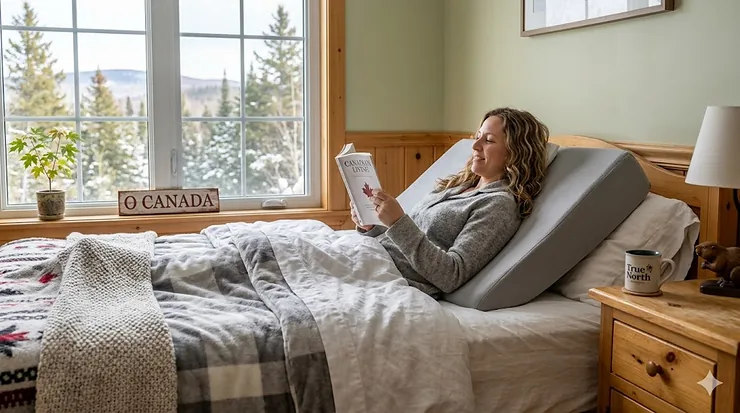
If you’ve ever woken up at 3 a.m. with that all-too-familiar burning sensation creeping up your throat, you know how acid reflux can sabotage your sleep. For Canadians dealing with gastroesophageal reflux disease (GERD), nighttime symptoms aren’t just uncomfortable—they’re exhausting. Gastroesophageal reflux disease is a chronic digestive disorder where stomach contents consistently reflux into the esophagus, causing irritation, inflammation, and troublesome symptoms including persistent heartburn and regurgitation.
The solution? An acid reflux pillow specifically designed to elevate your upper body and harness gravity’s natural power. Unlike stacking regular pillows (which actually worsens the problem by bending you at the waist), a proper wedge pillow supports your entire torso at the ideal angle. Wedge pillows help by elevating the head and upper torso, not just the head, using gravity to keep stomach acid from flowing back into the esophagus.
But here’s what most Canadian buyers don’t realize: not all wedge pillows available on Amazon.ca deliver equal relief. Some are too flat to make a difference, others so steep they leave you sliding down by midnight, and many use foam that compresses into uselessness after a few Canadian winters in storage. After researching dozens of products available to Canadian buyers and analyzing hundreds of reviews from fellow Canadians dealing with nighttime reflux, I’ve identified the seven best acid reflux pillows you can actually buy on Amazon.ca in 2026—with real-world performance insights the product listings won’t tell you.
Quick Comparison: Top Acid Reflux Pillows Available in Canada
| Product | Height | Memory Foam Top | Price Range (CAD) | Best For | Prime Eligible |
|---|---|---|---|---|---|
| MedSlant Wedge | 18 cm (7″) | Yes | $160-$200 | Side sleepers, full torso support | Yes |
| Cozymaker 7.5″ | 19 cm (7.5″) | Yes (cooling) | $90-$120 | Budget-conscious, back sleepers | Yes |
| Bedluxe 10″ | 25 cm (10″) | Yes (gel-infused) | $110-$145 | Higher elevation needs, snorers | Yes |
| Avana X-Large | 18 cm (7″) | Yes | $175-$225 | Premium comfort, bamboo cover | Yes |
| Gorilla Wedge | 19 cm (7.5″) | Yes (5 cm layer) | $95-$130 | Memory foam lovers, side sleepers | Yes |
| MedCline Reflux System | 25 cm (10″) | Yes | $350-$425 | Side sleepers, shoulder pain | Limited stock |
| Bedluxe 4-Piece Set | Adjustable (18-35 cm) | Yes | $140-$180 | Post-surgery, maximum flexibility | Yes |
💬 Just one click — help others make better buying decisions too!😊
Top 7 Acid Reflux Pillows: Expert Analysis for Canadian Buyers
1. MedSlant Acid Reflux Wedge Pillow with Memory Foam
The MedSlant stands out immediately for one reason most competitors miss: its 81 cm (32-inch) length provides full torso support from your hips through your head, preventing that fold-in-the-middle problem that actually increases abdominal pressure. The 18 cm (7-inch) elevation hits the medical recommendation sweet spot, and the memory foam top layer means you’re not sleeping on hard polyfoam all night.
What the Amazon.ca listing won’t mention: this pillow’s generous width (76 cm/30 inches) means it works beautifully for side sleepers without leaving you feeling like you’ll roll off the edge—crucial because sleeping on the left side could reduce nocturnal reflux and improve GERD-related quality of life. Canadian reviewers consistently note it maintains shape through humid summers and dry winter heating, unlike cheaper models that develop permanent body impressions after a season. The washable travel cover is a practical touch for snowbirds who split time between Canada and warmer climates.
Key specs with real-world meaning: The hypoallergenic polyurethane foam base stays firm year-round (no summer sagging in Toronto humidity), while the memory foam layer gives just enough give for shoulder comfort. One Canadian reviewer mentioned using it through a Calgary winter with bedroom temperatures dropping to 15°C—the foam remained supportive, unlike temperature-sensitive memory foam that turns rock-hard in cold rooms.
✅ Pros:
- Full torso length prevents waist-bending pressure
- Stable on Canadian beds (won’t slide on memory foam mattresses)
- Holds shape through seasonal temperature swings
❌ Cons:
- Higher price point in the $160-$200 CAD range
- Takes 24-48 hours to fully expand after shipping
Price verdict: Around $175-$190 CAD typically. Worth the investment if you’ve been cycling through cheaper wedges that compress within months—this one’s built for Canadian households where product longevity matters.

2. Cozymaker 7.5″ Bed Wedge Pillow for Sleeping
The Cozymaker delivers legitimate relief at a price that won’t make you wince when checking your credit card statement. At 19 cm (7.5 inches) tall and featuring a cooling viscose-from-bamboo memory foam topper, it punches well above its $90-$120 CAD weight class. What sets it apart in the Canadian market is its thoughtful anti-slip bottom—essential when you’re dealing with slippery Canadian winter bedding (think flannel sheets plus memory foam mattress toppers).
Here’s the insider detail: unlike budget wedges that use a thin memory foam veneer over hard polyfoam, Cozymaker’s 4 cm memory foam layer is thick enough to actually redistribute pressure when you’re on your side. This matters tremendously for Canadians who are side sleepers; you’re not waking up with a numb shoulder at 4 a.m. The cooling bamboo cover addresses a common complaint with wedge pillows—they trap heat around your upper body even when your bedroom is chilly.
Customer feedback from Canadian buyers: A Quebec reviewer noted it stayed cool even during humid summer nights in Montreal (where bedroom AC isn’t universal), while an Edmonton user mentioned the washable cover survived multiple winter static-electricity cycles without pilling. The 64 cm × 66 cm (25″ × 26″) dimensions fit comfortably on Canadian queen and king beds without dominating the entire sleeping surface.
✅ Pros:
- Cooling bamboo cover manages temperature year-round
- Anti-slip base stays put on Canadian bedding
- Budget-friendly without quality compromise
❌ Cons:
- Base foam slightly softer than premium models (may compress faster for heavier users over 90 kg)
- Cover zipper could be more robust (handle removal gently)
Price verdict: Usually $95-$115 CAD. The best value-per-dollar in this roundup—ideal for Canadians wanting to try wedge pillow therapy without a $200+ commitment.
3. Bedluxe 10 inch Bed Wedge Pillow
The Bedluxe 10″ takes elevation seriously with its 25 cm (10-inch) height—the upper end of the medically recommended range. Wedge pillows should be at least 6 to 8 inches high and up to 12 inches for proper elevation. This model targets Canadians who need aggressive elevation: severe GERD sufferers, chronic snorers, or those recovering from upper respiratory issues where post-nasal drip compounds reflux symptoms.
What makes this particularly relevant for Canadian buyers is the gel-infused memory foam top layer. Canadian bedrooms swing wildly in temperature—scorching in summer if you’re on an upper floor without AC, frigid in winter if your heating vents don’t reach the bedroom corners. Gel-infused foam regulates temperature better than standard memory foam, staying responsive whether your room is 16°C or 26°C. The triangular design includes slightly raised side edges that gently discourage rolling off—subtle but effective when you’re adjusting to elevated sleep.
Real-world performance: A Vancouver reviewer with chronic bile reflux (the kind that wakes you choking) reported this higher angle finally stopped nighttime episodes after two lower wedges failed. However, a Calgary user noted it took a week to adjust to the steep angle—your body needs time to adapt, and you might wake with slight lower back stiffness initially. The solution? Use your regular pillow on top for the first few nights to ease the transition.
✅ Pros:
- Higher elevation for severe reflux cases
- Gel foam adapts to Canadian temperature extremes
- Side edges reduce roll-off anxiety
❌ Cons:
- Steeper angle requires adjustment period (not ideal if you’re a stomach sleeper)
- Larger footprint may crowd smaller Canadian master bedrooms
Price verdict: Typically $125-$140 CAD. The premium you pay over 7.5″ models buys you that extra elevation crucial for moderate-to-severe GERD—worth it if lower wedges haven’t solved your nighttime reflux.
4. Avana X-Large Bed Wedge Memory Foam GERD Pillow
The Avana occupies the premium tier with good reason: it combines a 18 cm (7-inch) medical-grade elevation with a luxurious bamboo-rayon cover that actually feels pleasant against Canadian skin (important when you’re sleeping directly on the pillow surface). The X-Large designation isn’t marketing fluff—at 71 cm wide (28 inches), it provides genuine stability for restless sleepers who shift positions throughout the night.
Here’s what separates Avana from mid-range options: the urethane foam foundation is notably denser than competitors, meaning it won’t develop that concave “body crater” that cheaper wedges show after 6-8 months of nightly use. Canadian reviewers consistently mention multi-year durability, which changes the cost equation—$200 CAD for three years beats replacing a $100 pillow annually. The form-fitting bamboo cover zips off completely for washing, and unlike cheaper covers with metal zippers, Avana uses a quality zipper that won’t corrode from repeated washing in hard Canadian water.
Canadian-specific advantage: The bamboo-rayon cover wicks moisture exceptionally well, which matters if you live in humid regions like coastal BC or experience night sweats (common with GERD medication side effects). The cover also resists the static electricity buildup that plagues synthetic covers during prairie winters.
✅ Pros:
- Premium materials justify higher price point
- Multi-year durability (Canadian reviewers report 2-3+ years)
- Bamboo cover manages moisture in humid Canadian summers
❌ Cons:
- Premium pricing in the $180-$220 CAD range
- Takes up considerable bed real estate (measure your space first)
Price verdict: Around $195-$210 CAD typically. This is the “buy once, cry once” option—higher upfront cost but potentially better value over a 3-year ownership period than cheaper replacements.
5. Gorilla Wedge Pillow 7.5″ with 2″ Memory Foam
The Gorilla Wedge enters the Canadian market with a clever value proposition: a full 5 cm (2 inches) of memory foam topper—significantly more than competitors’ standard 3.8-4 cm layers. For side sleepers particularly, this extra memory foam depth means your shoulder sinks into comfort rather than pressing against firm base foam all night.
What Canadian buyers need to know: this pillow arrives vacuum-compressed, and it takes longer to fully expand than advertised. Give it a solid 48 hours in a warm room (not your frigid garage in January) to reach full height and softness. One Winnipeg reviewer mentioned it was still slightly flat after 24 hours but achieved proper loft by day three. Once fully expanded, though, the generous memory foam layer delivers genuine pressure relief—you’re sleeping on the pillow, not fighting it.
Practical detail nobody mentions: The 64 cm × 66 cm (25″ × 26″) footprint works beautifully on Canadian queen beds but may overwhelm a full/double bed common in older Canadian homes and condos. The soft bamboo viscose cover manages well in the washing machine (cold water, gentle cycle) without the shrinkage issues some synthetic covers develop.
Customer insight from Canadian reviews: A Halifax user with both GERD and sleep apnea reported the thicker memory foam allowed comfortable CPAP mask positioning—a real-world use case the product description doesn’t highlight. The pillow’s combination of elevation and pressure relief addressed both conditions simultaneously.
✅ Pros:
- Thickest memory foam layer in this price class
- Excellent for side sleepers and CPAP users
- Soft bamboo cover manages temperature well
❌ Cons:
- Requires patience for full expansion (don’t judge it on day one)
- Memory foam may feel too soft for strict back sleepers who prefer firmer support
Price verdict: Usually $100-$125 CAD. The sweet spot between Cozymaker’s budget-friendly approach and Avana’s premium pricing—ideal for Canadians who prioritize memory foam comfort but can’t justify $200+.
6. MedCline Reflux Relief System
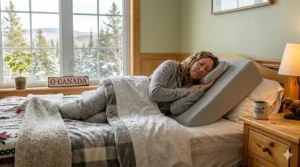
The MedCline isn’t just a wedge pillow—it’s a complete sleep positioning system engineered specifically for side sleepers with GERD. The genius lies in the patented arm pocket carved into the wedge, solving the age-old problem of where to put your lower arm when sleeping on your side at an incline. This matters because sleeping on your left side helps acid clear much faster from the esophagus, but standard wedge pillows make side-sleeping awkward and uncomfortable.
Canadian availability caveat: MedCline often shows limited stock on Amazon.ca, and availability fluctuates. When available, it ships from Canadian warehouses (check the seller details), but during stock shortages, you might face longer wait times or cross-border shipping. The system includes the wedge pillow, therapeutic body pillow, insert pillow, and removable washable covers—everything sized correctly for the small (122-163 cm height), medium (163-178 cm), or large (178 cm+) versions.
Real-world performance for Canadians: A Toronto user with severe nighttime reflux reported this was the only solution that allowed comfortable left-side sleeping for more than an hour. The body pillow component prevents rolling onto your back (where reflux worsens), while the arm pocket eliminates shoulder numbness. However, the system takes up significant bed space—if you share a queen bed, your partner might feel crowded. This works best for Canadians with king beds or those sleeping solo.
✅ Pros:
- Only system specifically designed for side-sleeping GERD sufferers
- Arm pocket eliminates shoulder/arm numbness
- Clinically proven effective (backed by independent trials)
❌ Cons:
- Premium pricing ($375-$415 CAD typically)
- Limited Amazon.ca availability (check stock before deciding)
- Large footprint requires king bed or solo sleeping arrangement
Price verdict: The highest investment in this roundup at $380-$400 CAD when available. Justified only if you’re a committed side sleeper whose GERD hasn’t responded to standard wedge pillows—this solves a very specific problem for a specific user profile.
7. Bedluxe Adjustable 4-Piece Bed Wedge Pillow Set
The Bedluxe 4-Piece Set takes a modular approach with two wedge pillows and two half-moon bolster pillows that stack and combine for adjustable heights from 18 cm to 35 cm (7 to 14 inches). This flexibility serves Canadians with fluctuating needs—post-surgical recovery, pregnancy-related reflux, or those who want different elevations for sleeping versus reading in bed.
Canadian-specific advantage: The hook-and-loop fastener system prevents the pieces from sliding apart, addressing a common complaint with multi-piece systems. This matters particularly on Canadian beds with memory foam mattresses or mattress toppers where pillows naturally migrate. The set ships with machine-washable covers (a must for long-term use), and the memory foam maintains resilience through Canadian seasonal temperature swings better than some cheaper modular systems that compress unevenly.
Practical application: A Montreal user recovering from hiatal hernia surgery started with the full 35 cm elevation, then gradually reduced height as recovery progressed. The modularity meant one purchase served the entire recovery journey rather than buying multiple fixed-height pillows. The half-moon bolsters work independently for knee elevation (helpful for lower back pain that often accompanies GERD), making this set genuinely multipurpose.
✅ Pros:
- Adjustable height serves multiple conditions and recovery stages
- Bolsters function independently for leg elevation
- Hook-and-loop fasteners prevent sliding (critical on modern Canadian mattresses)
❌ Cons:
- Assembly required (pieces must be stacked correctly)
- More expensive than single-piece wedges ($150-$175 CAD)
- Storage challenge when not in use (four separate pieces)
Price verdict: Typically $155-$170 CAD. The premium over a single wedge buys flexibility—worthwhile for Canadians with changing elevation needs or those wanting one system for multiple health conditions.
How to Choose Your Acid Reflux Pillow: A Canadian Buyer’s Framework
Selecting the right acid reflux pillow isn’t about finding the “best” model universally—it’s about matching features to your specific sleep style, body type, and Canadian living situation. Start by honestly assessing your primary sleeping position. If you’re a dedicated back sleeper, focus on firmness and elevation angle rather than memory foam thickness. Back sleepers need a stable platform that maintains the prescribed 30-40 degree incline without compressing under your torso weight. The Bedluxe 10″ or Cozymaker models excel here with their firm polyfoam bases.
Side sleepers face a different challenge entirely. You need both elevation and pressure relief where your shoulder contacts the pillow surface. This is where memory foam thickness becomes critical—anything less than 3.8 cm (1.5 inches) won’t provide adequate cushioning through a full night. The Gorilla Wedge’s 5 cm memory foam topper or the MedCline system (if budget permits) address this need specifically. Canadian side sleepers should particularly note the left-side sleeping research: the left lateral position is associated with significantly shorter nocturnal esophageal acid exposure time and faster esophageal acid clearance.
Height selection deserves careful thought. The medical consensus recommends 15-20 cm (6-8 inches), but where you land in that range depends on reflux severity and personal comfort. Start conservative—a 18 cm (7-inch) wedge like the MedSlant or Avana works for most moderate GERD cases. Severe reflux sufferers who wake choking or experience bile reflux symptoms (bitter taste, chronic throat clearing) may need the 25 cm (10-inch) elevation of the Bedluxe model. Remember that Canadian building codes and bedroom layouts often mean lower ceilings in older homes and condos; a steeper wedge might feel claustrophobic in a bedroom with 2.4-metre ceilings.
Material quality matters more in Canadian climates than buyers realize. Cheap polyfoam loses firmness during humid summer months (think Southern Ontario, coastal BC) and becomes brittle in dry winter heating. Look for CertiPUR-US certified foam that resists temperature-related degradation. The bamboo or cotton covers (Avana, Gorilla, Cozymaker) manage moisture better than synthetic polyester, crucial for Canadian summers without bedroom AC. Washability is non-negotiable—covers should remove completely via zipper, not just spot-clean, because reflux can cause night sweats and occasional regurgitation events that demand thorough washing.
Budget considerations for Canadian households: While cross-border shopping might seem appealing when you see U.S. prices, factor in shipping costs ($30-50), potential customs duties (5-20% of declared value), and the hassle of returns if the pillow doesn’t work. A $110 CAD pillow shipped from Amazon.ca with Prime beats a $75 USD pillow that costs $100 CAD by the time it clears customs, plus you’re stuck with it if returns mean shipping to a U.S. warehouse. The 15-25% Canadian price premium buys you hassle-free returns, faster shipping, and often Canadian-specific customer service that understands metric measurements and local concerns.
Test the sleep transition strategy. Many Canadians abandon wedge pillows during the first week because the elevated position feels unnatural. Smart approach: use your regular pillow on top of the wedge for the first 3-4 nights, gradually lowering it as your body adapts. Keep a body pillow or rolled towel behind your back initially to prevent rolling off. Your neck and shoulder muscles need time to adjust to the new sleeping geometry—mild morning stiffness during week one is normal and temporary.
What Most Canadians Get Wrong When Buying an Acid Reflux Pillow
Mistake #1: Choosing height based solely on Amazon.ca product descriptions. Sellers list heights in inches, but Canadian buyers often misinterpret what that means in practice. A 10-inch (25 cm) wedge sounds moderate until you realize it’s the height of three standard Canadian paperback novels stacked—that’s a steep angle requiring significant adjustment. Many Canadians would be better served by a 7-7.5 inch (18-19 cm) model but buy the “more is better” option and end up with an uncomfortable sleeping position they abandon within weeks. Match height to your GERD severity, not your assumption that maximum elevation equals maximum relief.
Mistake #2: Ignoring your mattress type in the purchase decision. Canadians sleeping on soft memory foam mattresses or pillow-tops face a hidden challenge: the wedge pillow sinks into the mattress surface, reducing effective elevation by 2-5 cm. The prescribed 18 cm wedge becomes a 13-15 cm wedge once your body weight compresses both the pillow and the mattress beneath it. If you have a soft mattress, you need either a firmer wedge pillow with a wider base (like the MedSlant’s 81 cm length that distributes weight) or you need to size up to maintain the medical recommendation. Firm mattresses don’t have this issue—the elevation you buy is the elevation you get.
Mistake #3: Expecting instant relief and abandoning the solution too quickly. The research is clear that wedge pillows work for acid reflux, but sleeping position adjustments will be most effective when paired with healthy lifestyle habits like avoiding eating within 2 to 3 hours before bedtime. Canadian buyers often purchase a wedge pillow while continuing to eat late dinners (common in our long summer daylight hours) or consuming reflux triggers before bed. The pillow creates the mechanical advantage, but you still need to address the acid volume in your stomach. Give the combination approach 2-3 weeks before judging effectiveness.
Mistake #4: Not considering seasonal storage logistics. Many Canadians seasonally migrate—snowbirds heading south, cottage country in summer, or simply switching between rooms in multi-story homes. Wedge pillows aren’t compact. The large models like Avana or MedSlant don’t compress back down after use. If you spend winters in Arizona or summers at a Muskoka cottage, factor in transportation and storage. The Bedluxe 4-piece set separates for easier packing, while single-piece wedges require dedicated trunk space or may need to stay behind (necessitating duplicate purchases for each location).
Mistake #5: Ignoring your partner’s sleep needs. A wedge pillow occupies 25-35% more vertical bed space than sleeping flat. On a Canadian queen bed (153 cm wide), your wedge pillow plus regular pillow arrangement can push into your partner’s sleeping area, especially if you’re naturally a sprawler. This leads to resentment and pillow abandonment. Canadians sharing beds should consider upgrading to a king size if the wedge pillow solves serious GERD issues, or explore side-sleeper-specific models like MedCline that have a smaller lateral footprint despite their elevation.
Mistake #6: Failing to verify Amazon.ca Prime eligibility and actual shipping origin. Some Amazon.ca listings show products that ship from U.S. warehouses, meaning longer delivery times (7-14 days versus 1-2 days), potential customs delays, and complicated return logistics. Always check the “Ships from” and “Sold by” details. “Ships from and sold by Amazon.ca” means Canadian warehouse stock; “Ships from and sold by [Third Party]” might mean cross-border shipping. For medical devices you need promptly for sleep quality, Prime-eligible Canadian stock is worth the sometimes-higher price.
Nighttime Reflux Management: Your Complete Canadian Sleep Strategy
Wedge pillows work best as part of an integrated approach to managing gastroesophageal reflux disease in the Canadian context. Start with your evening meal timing, particularly challenging during our long summer daylight when 9 PM still feels like afternoon. Stop eating at least three hours before bedtime to give your stomach time to empty, reducing the amount of acid available to reflux when you lie down. For Canadians on Eastern Time dining at 7 PM before a 10:30 PM bedtime, this works naturally. For those farther west or working late shifts, meal planning becomes more deliberate.
The Canadian dietary twist: Our food culture includes reflux triggers many of us don’t immediately recognize. Double-double coffees from Tim Hortons (caffeine plus cream), poutine’s high-fat gravy, Montreal-style bagels with cream cheese before bed, Prairie beef-heavy dinners, and BC wine—all common Canadian dietary patterns that aggravate GERD. Keep a food diary for two weeks, noting what you eat and when symptoms occur. Many Canadians discover their late-night Tim Hortons run correlates perfectly with 2 AM reflux episodes.
Clothing matters more than you think. Canadian winters mean layering, but tight-waisted pajama bottoms or compression leggings worn to bed increase abdominal pressure and promote reflux. Loose-fitting nightwear reduces pressure on the lower esophageal sphincter. Similarly, don’t go to bed immediately after removing tight winter clothing—the sudden pressure release can trigger a reflux episode. Give your body 20-30 minutes to adjust.
Bedroom environment optimization for Canadian conditions: Dry winter indoor air (from forced-air heating) irritates already-inflamed esophageal tissue. Run a bedroom humidifier targeting 40-50% relative humidity—this soothes your throat and may reduce the perception of reflux symptoms. However, don’t over-humidify (above 60%) as this promotes dust mite growth in your wedge pillow and bedding, potentially triggering allergies that worsen sleep quality.
Position training for stubborn side-switchers. If you’re a lifelong right-side sleeper trying to adopt the left-side position recommended by research, use strategic pillow placement. Place a firm pillow or body pillow against your back when lying on your left side—this prevents unconscious rolling onto your back or right side during sleep. A smaller pillow between your knees aligns your spine and hips, making the left-side position more comfortable long-term. Canadian physiotherapists often recommend this knee pillow technique for patients with both GERD and lower back pain (common comorbidities).
Medication timing coordination. Many Canadians take proton pump inhibitors (PPIs) or H2 blockers for GERD management. These work best when timed correctly relative to meals and sleep. PPIs like omeprazole reach peak effectiveness 30-60 minutes after taking them, so timing your dose before dinner (rather than at bedtime) provides maximum acid suppression during your overnight fasting period. Always consult your healthcare provider, but understanding medication pharmacokinetics helps optimize both pharmaceutical and positional therapy.
Monitoring your progress objectively. Keep a simple sleep journal for the first month with your new wedge pillow: rate your morning throat sensation (1-10 scale), note any nighttime awakening from reflux, and record overall sleep quality. Canadian buyers often report they “think” the pillow helps but can’t quantify improvement. A journal provides objective data—if you’re waking with reflux 2 times per week instead of 6, that’s measurable progress worth continuing the intervention.
Understanding the Science: Why Left-Side Sleeping and Elevation Work Together
The anatomical explanation behind wedge pillow effectiveness centers on the relationship between your stomach and esophagus. The reflux of stomach contents into the esophagus is a normal physiological phenomenon that becomes abnormal when it causes esophageal injury or produces persistent troublesome symptoms. When you lie flat on your back, the lower esophageal sphincter (the muscular valve between your stomach and esophagus) lies at approximately the same level as your stomach contents. Any relaxation of this sphincter—which happens normally during sleep—allows acid to flow freely upward.
Elevating your upper body creates a gravitational gradient. Your esophagus now slopes downward toward the stomach, meaning acid must work against gravity to reflux. This doesn’t prevent all reflux events (particularly if your stomach is overfull or you’ve consumed major triggers), but it significantly reduces both the frequency of reflux episodes and the duration acid remains in contact with esophageal tissue. Wedge pillows help by elevating the head and upper torso using gravity to keep stomach acid from flowing back into the esophagus, which reduces nighttime heartburn and reflux symptoms.
The left-side sleeping advantage adds a second mechanical benefit. Your stomach’s anatomy creates an asymmetric internal landscape. The gastroesophageal junction (where stomach meets esophagus) connects on the right side of your stomach when you’re standing upright. When you lie on your left side, the junction sits above the level of stomach acid, creating an additional barrier. When patients slept on their left sides they had less stomach acid in their esophagus compared to when they slept on their right sides or on their backs, and acid flowed from the esophagus back to the stomach more quickly.
Conversely, right-side sleeping positions the gastroesophageal junction below the acid level, effectively creating a funnel that encourages reflux. The research is unambiguous: sleeping in the left lateral position demonstrated significantly decreased acid exposure time and acid clearance time compared to right lateral decubitus and supine positions. For Canadian GERD sufferers, this means a wedge pillow used with left-side sleeping provides dual mechanical advantages—elevation plus optimal anatomical positioning.
Canadian winter sleeping positions create unique challenges. Many Canadians curl into a fetal position during cold nights, which flexes the torso and can increase abdominal pressure despite the wedge pillow elevation. If you’re prone to this, slightly warmer bedroom temperatures (19-20°C instead of 16-17°C) may help you maintain a more extended sleeping position that doesn’t compromise the wedge pillow’s effectiveness. Layer blankets strategically—heavier blankets on your lower body, lighter layers on your elevated torso to prevent overheating that can trigger night sweats and discomfort.
Canadian Regulations and Safety Standards for Sleep Products
Health Canada doesn’t specifically regulate wedge pillows as medical devices unless they make therapeutic claims requiring regulatory approval, but foam products sold in Canada must comply with federal safety standards. All polyurethane foam sold for bedding must meet Canadian flammability standards outlined in the Hazardous Products Act. When purchasing from Amazon.ca, verify that products carry CertiPUR-US certification (the North American standard) or similar attestation that the foam is free from harmful chemicals including formaldehyde, heavy metals, and certain flame retardants.
Cross-border shopping considerations: Americans and Canadians share many product standards, but labeling requirements differ. Products manufactured for the U.S. market alone may lack bilingual labeling (English and French) required for products officially sold in Canada. While this doesn’t affect the pillow’s performance, it indicates whether the manufacturer intended Canadian distribution. Products shipped from U.S. warehouses to Canadian buyers may arrive without French-language care instructions or safety information, which could complicate warranty claims or returns.
Provincial consumer protection laws apply to online purchases. In Quebec, the Consumer Protection Act provides strong buyer protections including mandatory warranties and extended return periods for defective products. Ontario’s Consumer Protection Act similarly covers distance sales (online purchases). If your wedge pillow develops manufacturing defects like zipper failure, foam separation, or cover tears within the first year, Canadian consumer protection laws may provide remedies even beyond the seller’s stated return policy. Always purchase from Amazon.ca accounts (not Amazon.com) to ensure Canadian jurisdiction applies to disputes.

❓ Frequently Asked Questions About Acid Reflux Pillows in Canada
❓ Can I use a wedge pillow if I'm pregnant and experiencing reflux?
❓ Will a wedge pillow work with my adjustable bed frame?
❓ How do I clean and maintain my acid reflux pillow through Canadian seasons?
❓ Can I travel with a wedge pillow, or do I need to buy a second one for my cottage?
❓ Is there a difference between pillows marketed for acid reflux versus snoring?
Sleep Better, Wake Refreshed: Your Path Forward
Nighttime acid reflux doesn’t have to control your sleep quality or dominate your thoughts as bedtime approaches. The seven acid reflux pillows detailed in this guide represent the best options available to Canadian buyers in 2026, each addressing specific needs within our unique climate, bedroom configurations, and budget realities. Whether you’re a budget-conscious student in a Toronto dorm managing occasional heartburn with the Cozymaker, a severe GERD sufferer in Vancouver finally finding relief with the MedCline system, or a Prairie family choosing the versatile Bedluxe 4-piece set for multiple health needs, there’s a proven solution available on Amazon.ca today.
Remember that wedge pillow therapy works best when integrated with comprehensive lifestyle modifications—proper meal timing, trigger food avoidance, left-side sleeping position, and coordination with any prescribed GERD medications. Sleeping position adjustments will be most effective when paired with healthy lifestyle habits, creating a multi-layered defense against reflux. Give your chosen pillow a fair trial of 2-3 weeks while simultaneously addressing evening eating patterns and bedroom environment.
The investment in an acid reflux pillow—whether $95 CAD or $400 CAD—pays dividends in improved sleep quality, reduced throat inflammation, decreased reliance on nighttime antacids, and mornings where you wake refreshed rather than battling residual heartburn. Canadian reviewers consistently report that proper wedge pillows deliver relief that makes them wonder why they waited so long to address the problem systematically. Your nighttime reflux has a mechanical cause that responds to mechanical solutions. Choose your wedge pillow based on your sleeping style, GERD severity, and budget, then commit to the full lifestyle approach that turns occasional relief into consistent results.
📚 Recommended for You
- 7 Best Elevated Pillow for GERD in Canada 2026
- 7 Best Wedge Pillows for Acid Reflux Canada 2026
- 7 Best Pillows for Sleep Apnea Side Sleepers Canada 2026
Disclaimer: This article contains affiliate links. As an Amazon Associate, I earn from qualifying purchases. If you purchase products through these links, we may earn a small commission at no additional cost to you.
✨ Found this helpful? Share it with your friends! 💬🤗
