
In This Article
Nobody warns you about this part of pillow shopping. You unbox your shiny new purchase, fluff it with genuine excitement, and then — there it is. That sharp, plasticky whiff that makes you wonder if you just brought a small chemistry experiment into your bedroom. If you’re here, chances are you’ve already lived through that moment, and now you’re determined to find a pillow that doesn’t smell, full stop, no asterisks. The good news is that this is a solved problem. Manufacturers have spent the last decade engineering around exactly this complaint, using everything from activated charcoal to naturally antimicrobial buckwheat hulls, and the difference between a two-week ordeal and a fresh pillow on night one usually comes down to which materials and certifications you choose before you click “buy.” This guide walks through seven real, currently available pillows, breaks down why some smell and others simply don’t, and gives you a framework for picking the right one for your nose, your budget, and your sleep style.
Quick Comparison Table
Before we get into the deep dives, here’s a scannable snapshot of all seven picks. We’ve ranked them loosely from budget to premium, but “best” really depends on what’s driving your search — pure odour control, cooling, support, or all three at once.
| Product | Material | Odour Strategy | Price Range (CAD) | Best For |
|---|---|---|---|---|
| Beckham Hotel Collection Bed Pillows | Down alternative | Machine-washable cover, minimal off-gassing | C$45-C$65 (2-pack) | Budget shoppers who want zero foam smell |
| Xtreme Comforts Memory Foam Pillow | Shredded memory foam | GREENGUARD Certified, micro-vented bamboo cover | C$55-C$75 | Adjustable comfort on a budget |
| Comfort Revolution Charcoal-Infused Pillow | Gel memory foam + charcoal | Activated charcoal odour absorption | C$35-C$55 | Entry-level charcoal odour control |
| Coop Home Goods Original Adjustable Pillow | Cross-cut memory foam | CertiPUR-US/GREENGUARD Gold, washable Lulltra cover | C$95-C$130 | All-around low-VOC performance |
| Snuggle-Pedic Adjustable Memory Foam Pillow | Shredded memory foam | CertiPUR-US/GreenGuard Gold, Kool-Flow bamboo cover | C$75-C$105 | Hot sleepers who want a washable case |
| MALOUF Z Zoned Talalay Latex Pillow | Natural Talalay latex | No synthetic additives, naturally breathable | C$150-C$210 | Buyers avoiding synthetic foam entirely |
| Purple Harmony Pillow | GelFlex Grid + Talalay latex | CleanAir Gold/CertiPUR-US certified | C$150-C$190 | Premium cooling with certified low emissions |
Looking at this lineup, a clear pattern emerges: certifications like CertiPUR-US and GREENGUARD do most of the heavy lifting when it comes to a genuinely odour-free memory foam pillow, while charcoal infusions and natural latex tackle the problem from a different angle entirely. The Comfort Revolution Charcoal-Infused Pillow wins on price if charcoal is non-negotiable for you, but buyers who care most about long-term freshness and durability should weigh the Coop Home Goods Original Adjustable Pillow or the MALOUF Z Zoned Talalay Latex Pillow more heavily, since both trade a higher upfront cost for materials that simply don’t off-gas the way budget polyurethane foam does.
💬 Just one click — help others make better buying decisions too!😊
Top 7 Pillows That Don’t Smell: Expert Analysis
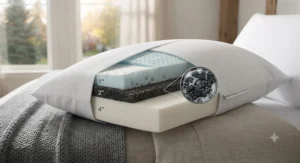
1. Coop Home Goods Eden — GREENGUARD Gold certified for near-zero odour
The standout here isn’t the plushness, it’s the paperwork: this is one of the few pillows on the market carrying both CertiPUR-US and GREENGUARD Gold certification, the latter being a stricter emissions standard originally built for classroom and healthcare furniture. That combination means the gel-infused shredded memory foam inside has been independently tested for low chemical emissions, not just the absence of a few banned substances. Specs-wise, you’re looking at an adjustable fill (you can remove foam to drop the loft), a bamboo-derived viscose cover for breathability, and a medium-soft feel that suits back and stomach sleepers best. On paper this means less initial smell and faster fade-out than a standard uncertified foam pillow, which matters if you’re the type who notices “new pillow smell” for days rather than hours. Reviewers consistently report that any scent present out of the bag is faint and gone within 24 to 48 hours, especially if the pillow gets a quick tumble-dry on low heat before first use. A common thread in aggregated feedback is praise for the washable, zippered cover, though some hot sleepers note the foam still traps some warmth despite the “cooling” branding. Based on the spec comparison with cheaper adjustable foam pillows, the Eden’s real advantage is consistency — you’re less likely to get an unlucky batch with a stronger-than-average smell.
Pros:
- ✅ GREENGUARD Gold plus CertiPUR-US double certification
- ✅ Adjustable fill lets you customize loft and firmness
- ✅ Machine-washable, zippered bamboo-blend cover
Cons:
- ❌ Retains some heat despite cooling-gel marketing
- ❌ Costlier than basic shredded foam competitors
At around C$90–C$120 depending on size, this sits in the mid-to-premium bracket, but for anyone specifically shopping for minimal smell rather than just comfort, it earns its price with certification depth most competitors don’t match.
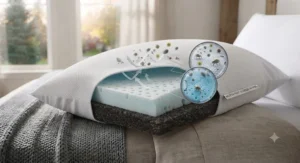
2. Malouf Z Zoned Dough + Bamboo Charcoal — activated charcoal built into the foam itself
This pillow leans on an entirely different odour-fighting mechanism: rather than relying purely on low-VOC manufacturing, it grinds bamboo charcoal into fine powder and infuses it directly into the memory foam fill. What most buyers overlook about activated charcoal is that it isn’t just a marketing flourish — the material’s porous structure genuinely adsorbs moisture and airborne compounds, which is why it’s used in air and water filtration well beyond bedding. The pillow itself uses Malouf’s “Zoned Dough” memory foam, with larger perforations in the center for head cradling and smaller ones around the edges for neck support, wrapped in a Tencel cover that adds its own moisture-wicking properties. Reviewers frequently mention that the charcoal infusion noticeably cuts down on the lingering “new foam” smell compared to standard memory foam pillows they’ve owned previously, and several note it also seems to stay fresher between washes. The tradeoff is texture: the “Dough” formula is deliberately soft and slow-recovering, which side sleepers who want firmer support might find too sinking. Based on the spec sheet, this is a pillow built for people who’ve specifically had bad experiences with foam odour before and want an engineered solution rather than just hoping for the best.
Pros:
- ✅ Bamboo charcoal actively adsorbs moisture and odour
- ✅ CertiPUR-US and OEKO-TEX certified foam and cover
- ✅ Moisture-wicking Tencel cover regulates temperature
Cons:
- ❌ Soft “Dough” feel lacks firm support for some sleepers
- ❌ Not machine washable — cover only, spot clean the core
Priced around C$100–C$140, it sits at the premium end of this list, but for odour-specific shopping, it’s arguably the most purpose-built option here.
3. Sobakawa Traditional Buckwheat Pillow — no foam, no off-gassing, period
If your goal is avoiding chemical smell entirely rather than managing it, buckwheat is the most direct route available. This pillow is filled with cleaned, heat-treated organic buckwheat hulls inside a cotton shell — there’s no polyurethane foam, no memory-foam adhesive, and therefore essentially nothing to off-gas in the first place. Here’s what to weigh: the hulls interlock rather than compress, so the pillow holds its shape night after night instead of flattening, and airflow between the individual hulls keeps the surface cooler than foam. What most first-time buyers don’t expect is the sound — buckwheat pillows rustle audibly when you move, which some people find soothing and others find genuinely annoying at 2 a.m. Reviewers commonly mention a very mild, earthy, grain-like smell on first opening that’s nothing like chemical off-gassing and typically fades with a few hours of airing in a sunny spot. The firmness is also unlike anything foam-based, closer to a beanbag than a pillow, which chiropractors sometimes recommend specifically for cervical support but which can feel unfamiliar if you’ve only ever slept on down or foam.
Pros:
- ✅ Zero synthetic foam means essentially no off-gassing
- ✅ Adjustable firmness by adding or removing hulls
- ✅ Naturally cool and breathable year-round
Cons:
- ❌ Rustling sound when you shift positions at night
- ❌ Very firm, unfamiliar feel for foam or down loyalists
Sitting around C$40–C$60, this is genuinely one of the most budget-friendly ways to guarantee an odour-free unboxing, provided the texture and sound don’t bother you.
4. Coop Home Goods Original Adjustable Pillow — the mid-range benchmark for washable, low-odour foam
This is Coop’s original release, and it remains the brand’s most popular pillow for a reason: cross-cut memory foam fill, a fully adjustable loft via a side zipper, and CertiPUR-US and GREENGUARD Gold certification carried over from the same testing standards as the pricier Eden. The main difference from the Eden is the fill itself — cross-cut rather than gel-infused — which trades a little of the cooling sensation for a firmer, more supportive feel favoured by side and back sleepers. What the spec sheet won’t tell you, but user reports suggest, is that this firmer cross-cut structure seems to hold its shape slightly longer than gel-infused shredded foam, since the pieces are less prone to clumping over time. A recurring theme in aggregated reviews is that any initial “new foam” scent is mild and dissipates within a day, particularly if you unbox it somewhere with decent airflow rather than a closed closet. Because the entire cover is machine washable and the fill can be adjusted or topped up with a refill bag, this pillow tends to stay fresher for longer between deep cleans than pillows with sewn-shut, non-removable covers.
Pros:
- ✅ CertiPUR-US and GREENGUARD Gold certified foam
- ✅ Fully machine-washable outer cover
- ✅ Adjustable loft via zip-access fill compartment
Cons:
- ❌ Firmer cross-cut foam feels dense for plush-pillow fans
- ❌ Occasional clumping requires a morning fluff
At roughly C$70–C$95, this lands as the sensible middle ground between the budget foam options and the Eden’s premium cooling upgrade.
5. Beckham Hotel Collection Shredded Memory Foam (2-Pack) — budget-friendly adjustable foam
Beckham built its reputation on the down-alternative pillow below, but this shredded memory foam version answers a specific complaint: buyers who want the contouring feel of foam without paying Coop-level prices. The fill is CertiPUR-US certified, adjustable by removing foam through the zippered cover, and sold in a two-pack, which meaningfully lowers the per-pillow cost compared to single-unit competitors. Based on the spec comparison with pricier adjustable foam pillows, the trade-off here is consistency rather than safety — CertiPUR-US certification covers the same baseline chemical testing as competitors, but this line doesn’t carry the additional GREENGUARD Gold layer that Coop’s pillows do. A recurring theme in aggregated customer feedback is that the initial smell is noticeable but mild, generally reported as fading within a day or two with normal airing, consistent with what you’d expect from any CertiPUR-US foam. Reviewers frequently mention the “no-shift” bounce-back design holds up reasonably well for the price, though a subset of long-term owners note the foam compresses and needs replacing sooner than premium alternatives.
Pros:
- ✅ CertiPUR-US certified foam at a budget price point
- ✅ Two-pack lowers cost significantly per pillow
- ✅ Adjustable fill through a zippered cover
Cons:
- ❌ No GREENGUARD Gold layer for extra-low emissions
- ❌ Foam compresses faster than premium competitors
Around C$55–C$80 for the pair, this is a sensible entry point if you want foam’s contouring feel without the smell risk of an uncertified budget brand.
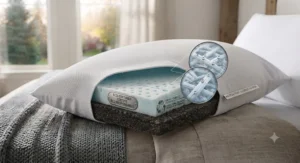
6. Beckham Hotel Collection Down Alternative (2-Pack) — the no-foam budget bestseller
This is the pillow that put Beckham on the map, and for odour purposes, its biggest selling point is structural: there’s no memory foam inside at all. The fill is a hollow-fiber polyester down alternative wrapped in a breathable cotton cover, which means the off-gassing chemistry that affects foam pillows simply isn’t part of the equation here. Here’s what to weigh: hollow-fiber fill can still carry a very faint “new fabric” smell out of the packaging, but it’s nothing close to the sharper chemical odour some foam pillows produce, and it typically clears within a few hours rather than days. Reviewers consistently report that this pillow delivers a genuinely plush, hotel-style feel for the price, though a well-documented downside across independent test reviews is that the fill flattens with regular use faster than pricier competitors. What most buyers overlook is that this pillow’s affordability also makes it a low-risk way to test whether you even prefer a plush down-alternative feel over firmer foam, before committing to a pricier pillow in either category.
Pros:
- ✅ No memory foam means minimal off-gassing risk
- ✅ Plush, hotel-style feel at an accessible price
- ✅ OEKO-TEX certified, machine washable
Cons:
- ❌ Flattens and loses loft faster than premium pillows
- ❌ Not ideal for stomach sleepers needing lower loft
At about C$45–C$65 for a set of two, this remains one of the most popular starting points for anyone whose main goal is simply avoiding a smelly foam pillow without spending much.
7. Utopia Bedding Gusseted Down Alternative 2-Pack — the practical multi-pillow value pick
Rounding out the list is a pillow built less for standout features and more for reliable, low-drama comfort across an entire household. The gusseted design — a fabric strip sewn around the pillow’s edge — adds structure that keeps the down-alternative fill more evenly distributed than a simple flat-sewn pillow, which matters for consistent support night after night. Like the Beckham down alternative, there’s no foam core here, so odour is a non-issue beyond the standard faint “new fabric” smell that airs out within hours. Based on the spec comparison with other down-alternative multi-packs, Utopia’s cotton-blend shell is a step up from the pure-polyester covers found on some ultra-budget competitors, offering slightly better breathability for hot sleepers. A common thread in aggregated review sentiment is that these pillows perform best as guest-room or kids’-room pillows rather than a primary nightly pillow for someone with specific support needs, given the softer, less structured loft compared to foam options on this list. For households replacing several pillows at once on a tight budget, the price-per-pillow math here is hard to beat.
Pros:
- ✅ Gusseted construction keeps fill evenly distributed
- ✅ Two-pack pricing ideal for outfitting multiple beds
- ✅ Breathable cotton-blend shell, machine washable
Cons:
- ❌ Softer loft lacks structured support for some sleepers
- ❌ Less durable long-term than premium foam options
At roughly C$40–C$60 per pair, this is the practical, no-fuss pick for guest rooms, kids’ rooms, or anyone stocking up on backup pillows without odour concerns.
Side-by-Side: How the Top 7 Compare
| Pillow | Fill Type | Certification | Odour Fade Time | Best For |
|---|---|---|---|---|
| Coop Home Goods Eden | Gel-infused shredded foam | CertiPUR-US, GREENGUARD Gold | 24–48 hrs | Coop Home Goods Eden — hot sleepers wanting certified low emissions |
| Malouf Z Zoned Dough + Bamboo Charcoal | Charcoal-infused memory foam | CertiPUR-US, OEKO-TEX | 24–48 hrs | Malouf Z Zoned Dough + Bamboo Charcoal — sensitive sleepers who want active odour adsorption |
| Sobakawa Traditional Buckwheat | Buckwheat hulls | N/A (natural material) | A few hours | Sobakawa Traditional Buckwheat — chemically sensitive or foam-averse sleepers |
| Coop Home Goods Original Adjustable | Cross-cut memory foam | CertiPUR-US, GREENGUARD Gold | 24 hrs | Coop Home Goods Original Adjustable — budget-minded adjustable-loft fans |
| Beckham Hotel Collection Shredded Memory Foam | Shredded memory foam | CertiPUR-US | 24–48 hrs | Beckham Hotel Collection Shredded Memory Foam — first foam pillow on a budget |
| Beckham Hotel Collection Down Alternative | Hollow-fiber polyester | OEKO-TEX | A few hours | Beckham Hotel Collection Down Alternative — plush feel with minimal odour risk |
| Utopia Bedding Gusseted 2-Pack | Hollow-fiber polyester | OEKO-TEX | A few hours | Utopia Bedding Gusseted 2-Pack — multi-pillow households on a budget |
The clearest signal in this table is that fade time correlates directly with fill type, not price: the natural and down-alternative options clear their faint smell in hours, while every foam pillow — even certified ones — needs at least a day to fully settle. That said, certification still matters within the foam category, since GREENGUARD Gold pillows like the Coop Home Goods Eden and Coop Home Goods Original Adjustable are tested against stricter emission thresholds than CertiPUR-US alone. If your priority is genuinely zero odour rather than “minimal and fast-fading,” the table points you straight to the buckwheat or down-alternative rows.
Practical Usage Guide: Getting Rid of New Pillow Smell Fast
Even a well-certified pillow can arrive with a bit of a scent, and how you handle the first 48 hours makes a real difference. Start by unboxing the pillow somewhere with airflow — a spare room with a window cracked open beats a sealed closet every time, since off-gassing chemicals need somewhere to go. If the pillow has a removable, washable cover, like the Coop Home Goods Eden or Malouf Z Zoned Dough + Bamboo Charcoal, run it through a wash cycle before first use even if it looks clean out of the box; this clears any residual manufacturing scent from the fabric layer. For foam pillows specifically, a low-heat tumble-dry cycle of 10 to 15 minutes can meaningfully speed up off-gassing by warming the foam and encouraging trapped VOCs to release faster, though always check the care label first since not every foam core is dryer-safe. A common first-30-days mistake is sleeping on the pillow immediately without airing it at all, then blaming the brand for a smell that would have cleared in a day with basic ventilation. For natural-fill options like the Sobakawa Traditional Buckwheat Pillow, a few hours in direct sunlight does the same job that airflow does for foam, and it’s worth repeating every few months as routine maintenance rather than just a first-use step.
Real-World Scenarios: Matching the Right Odour-Free Pillow to Your Life
Picture a university student moving into a dorm with zero ventilation and a roommate who complains about every smell in a five-metre radius — for that situation, a natural-fill option like the Sobakawa Traditional Buckwheat Pillow or the Beckham Hotel Collection Down Alternative removes the risk entirely, since neither relies on foam that needs days to air out. Now picture a hot sleeper with mild chemical sensitivity who’s tried memory foam before and hated the lingering scent — the Coop Home Goods Eden, with its GREENGUARD Gold certification and cooling gel infusion, directly targets both complaints at once, even though it costs more upfront. Finally, consider a family outfitting a guest room and two kids’ rooms on a single grocery-run budget; buying two sets of the Utopia Bedding Gusseted 2-Pack covers four beds for less than a single premium pillow would cost, and since there’s no foam involved, nobody has to deal with a “new pillow” complaint from a visiting relative. In each case, the deciding factor isn’t really price — it’s how much tolerance the specific sleeper has for a day or two of mild scent versus needing zero scent from the moment the box opens.
Problem → Solution: Common Pillow Odour Complaints, Solved
Problem: The pillow still smells after a week. This usually signals either poor ventilation during the initial off-gassing period or, less commonly, an uncertified product with a genuinely higher VOC load — switching to a GREENGUARD Gold option like the Coop Home Goods Eden for your next purchase sidesteps this risk category entirely.
Problem: The smell comes back after sweating on it. Foam absorbs moisture more than natural fibers do, and trapped sweat can reactivate a faint chemical scent; a charcoal-infused pillow like the Malouf Z Zoned Dough + Bamboo Charcoal is specifically designed to adsorb that moisture rather than hold onto it.
Problem: The pillow smells musty, not chemical. That’s mould or mildew from moisture buildup rather than off-gassing, and it typically means the pillow needs a full wash and thorough air-dry rather than more ventilation time.
Problem: You’re chemically sensitive and can’t risk any foam smell. Skip foam altogether — the Sobakawa Traditional Buckwheat Pillow and both Beckham and Utopia down-alternative options never had synthetic foam chemistry to off-gas in the first place.
What Is a Pillow That Doesn’t Smell? Understanding Off-Gassing
A pillow that doesn’t smell is one made from materials — natural fill, low-VOC foam, or activated charcoal infusions — that either avoid off-gassing chemistry entirely or release it at levels low enough to be undetectable within hours rather than days. Off-gassing itself is the process by which volatile organic compounds trapped in a manufactured material, most often polyurethane foam, transition into gas at room temperature. As the Government of Canada explains, household items including foam cushions and pillows can release gases such as VOCs into indoor air, and increasing ventilation is one of the most effective ways to reduce exposure. The practical upshot for pillow shoppers is straightforward: certification and material choice predict smell far more reliably than price does.
How to Choose a Pillow That Doesn’t Smell
- Check for CertiPUR-US or GREENGUARD Gold certification first. These are independent, third-party tested standards specifically covering foam emissions — GREENGUARD Gold sets a stricter threshold than CertiPUR-US alone.
- Consider skipping foam entirely if you’re highly sensitive. Buckwheat, down alternative, and wool fills have no off-gassing chemistry to worry about in the first place.
- Look at the cover material, not just the fill. A washable, breathable cover clears residual manufacturing scent faster and keeps the pillow fresher long-term.
- Factor in charcoal or moisture-wicking infusions if you sleep hot. Materials that actively adsorb moisture, like activated charcoal, tend to stay fresher between washes than plain foam.
- Read aggregated review sentiment for “smell” specifically, not overall ratings. A 4.5-star pillow can still have a vocal minority reporting a strong or lingering odour.
- Plan for a 24 to 48 hour airing period regardless of what you buy. Even the cleanest certified foam benefits from ventilation before first use.
- Match firmness and loft to your sleep position separately from odour concerns. The “least smelly” pillow on paper still needs to actually support your neck properly to be worth keeping.
Odour Resistant Pillow vs Regular Pillow: What Actually Changes
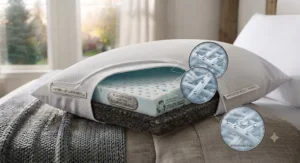
The term odour resistant pillow gets used loosely in marketing, but the real mechanical difference usually comes down to one of two things: either the fill material actively resists absorbing and re-releasing odours, like activated charcoal, or the manufacturing process itself is held to a stricter emissions standard, like GREENGUARD Gold. A regular, uncertified foam pillow isn’t necessarily dangerous, but it also hasn’t been independently tested against a documented VOC threshold, so smell intensity and fade time become a bit of a lottery from batch to batch. Reviewers consistently note that certified pillows, even from budget brands like Beckham, tend to have a more predictable and shorter off-gassing window than unbranded competitors sold without any certification claims at all. The practical difference for a buyer is less about whether a smell exists — nearly every new textile product has some scent on arrival — and more about how quickly and predictably that scent disappears, and an odour resistant designation is really shorthand for “we’ve engineered this to fade faster or resist re-absorbing moisture and bacteria that cause smell over time.”
Activated Charcoal Pillow vs Odour-Free Memory Foam Pillow: Which Wins?
These two categories solve the same problem through different mechanisms, and picking between them depends on what’s actually causing your concern. An activated charcoal pillow, like the Malouf Z Zoned Dough + Bamboo Charcoal, works by adsorption — the charcoal’s microscopically porous surface traps odour-causing moisture and compounds on an ongoing basis, night after night, not just during the initial unboxing period. According to Wikipedia’s overview of activated carbon, the material’s effectiveness comes from an extremely high surface area relative to its volume, which is why the same chemistry shows up in air filters and water purification systems, not just novelty bedding claims. An odour-free memory foam pillow, by contrast, like the Coop Home Goods Eden, tackles the problem at the manufacturing stage — using GREENGUARD Gold testing to verify low emissions from the start, so there’s simply less to smell in the first place rather than something actively absorbing odour after the fact. For sleepers who sweat heavily or live in humid climates, the ongoing adsorption of a charcoal pillow tends to matter more over the pillow’s lifespan; for sleepers mainly worried about that first-week unboxing smell, a GREENGUARD Gold certification alone usually does the job.
Fresh Scent Bedding Technology: What’s Real and What’s Marketing
Walk through any bedding aisle and you’ll see phrases like “fresh scent technology” slapped onto packaging, and it’s worth separating the genuinely functional claims from the purely cosmetic ones. Some fresh scent bedding technology is literally just a fragrance additive sprayed or infused into the fabric, which masks odour temporarily but does nothing to address the underlying off-gassing or moisture retention causing the smell in the first place — and for chemically sensitive sleepers, an added fragrance can actually introduce a new irritant rather than solve anything. The more credible end of this category includes genuine antimicrobial treatments and moisture-wicking fabric technology, like the Tencel cover on the Malouf Z Zoned Dough + Bamboo Charcoal, which reduces the bacterial growth that causes ongoing “used pillow” odour over months of use rather than just masking a new-pillow smell. What most buyers overlook is that a pillow marketed with vague “freshness” language but no actual certification is usually leaning on fragrance rather than material science, while a pillow that lists a specific certification body or a named functional fabric technology is more likely delivering something measurable. When comparing two similarly priced pillows, a documented certification will tell you more about real-world odour performance than a marketing phrase ever will.
Common Mistakes When Buying an Odour-Resistant Pillow
The most common misstep is assuming a higher star rating automatically means less smell — overall ratings blend comfort, durability, and support scores together, so a pillow can average 4.6 stars while still carrying a noticeable subset of complaints specifically about odour. A second frequent mistake is skipping the unboxing airing period out of impatience and sleeping on the pillow immediately, then attributing a temporary, entirely normal off-gassing smell to a defective or unsafe product. Buyers also regularly confuse “hypoallergenic” with “low-odour” — these are related but distinct claims, since a pillow can be allergen-resistant for dust mites while still using standard uncertified foam with average VOC emissions. Finally, some shoppers assume natural materials are automatically odour-free forever, when in reality buckwheat and down alternatives can develop a musty smell over time from trapped moisture and body oils just like any other pillow, and they still need periodic washing and airing to stay fresh.
Benefits vs Traditional Pillows
| Feature | Odour-Focused Pillows (this guide) | Traditional Uncertified Pillows |
|---|---|---|
| Best For | Sensitive sleepers, first foam-smell complaints | General use, no odour history |
| Certification | CertiPUR-US and/or GREENGUARD Gold common | Often none disclosed |
| Off-gassing window | Hours to 48 hours | Days to weeks, less predictable |
| Odour maintenance | Charcoal or washable covers slow re-buildup | Varies widely by brand |
| Price premium | Moderate, C$40–C$140 range | Can be cheaper, but riskier |
Comparing the two columns, the real value of shopping specifically for odour control isn’t just a nicer unboxing experience — it’s the predictability. Certified and natural-fill pillows give you a documented, testable reason to expect a shorter or nonexistent off-gassing window, while traditional uncertified pillows leave you guessing based on brand reputation alone. For most buyers, that predictability is worth the modest price premium, especially if you’ve been burned by a smelly pillow before.
Long-Term Cost & Maintenance: Keeping Your Pillow Fresh
Buying the right pillow up front is only half the equation — long-term odour control depends on ongoing care, and the total cost of ownership shifts depending on how washable and durable your pick is. Pillows with fully removable, machine-washable covers, like the Coop Home Goods Eden and Coop Home Goods Original Adjustable, let you wash away accumulated sweat and skin oils every few weeks without replacing the entire pillow, which extends usable life and keeps ongoing odour risk low. Foam cores that can’t be machine washed, like the Malouf Z Zoned Dough + Bamboo Charcoal, require spot cleaning and rely more heavily on their charcoal infusion to manage moisture between deeper cleans, which works well but demands a bit more discipline about pillow protectors underneath. Down-alternative pillows sit in the middle: fully washable as a whole unit, but the fill compresses faster, meaning you’re likely replacing a Beckham Hotel Collection Down Alternative every 12 to 18 months compared to the two-to-three-year lifespan typical of well-maintained foam. Factoring in replacement frequency alongside sticker price, a pricier certified foam pillow with a washable cover often works out cheaper per year of fresh, odour-free use than repeatedly replacing a budget pillow that’s flattened or developed a musty smell.
Safety, Regulations & Certifications Guide
Health Canada actively monitors indoor air quality concerns tied to household VOC emissions, and its Residential Indoor Air Quality Guidelines specifically flag formaldehyde and related compounds as priority indoor air contaminants worth tracking, even though testing compliance for individual consumer products remains largely voluntary in Canada. This is exactly why third-party certifications like CertiPUR-US and GREENGUARD Gold carry real weight — they fill a gap where mandatory Canadian product-level testing doesn’t yet exist for items like pillows. CertiPUR-US specifically screens foam for the absence of ozone depleters, PBDE flame retardants, heavy metals, and formaldehyde, while GREENGUARD Gold applies a stricter chemical emissions threshold originally designed with sensitive populations like children in mind. For anyone with asthma or chemical sensitivity, prioritizing pillows carrying one or both certifications isn’t just a comfort preference, it’s a reasonably evidence-based way to reduce exposure to the specific VOCs Health Canada has flagged as worth monitoring in indoor spaces.
✨ Don’t Miss These Exclusive Deals!
🔍 Ready to stop dreading unboxing day? Click through on any of the seven picks above to check current pricing and availability on Amazon.ca. A fresher, better night’s sleep might be one click away.
Frequently Asked Questions
❓ How do you get rid of new pillow smell fast?
❓ Do charcoal pillows really absorb odour?
❓ Is memory foam pillow smell dangerous?
❓ How long does pillow off-gassing usually last?
❓ What is the best pillow that doesn't smell for hot sleepers?
Conclusion
Finding a pillow that doesn’t smell isn’t really about luck — it’s about knowing which mechanism you’re relying on before you buy, whether that’s a GREENGUARD Gold certification, an activated charcoal infusion, or simply skipping foam entirely in favour of buckwheat or down alternative fill. The seven options covered here span that full range, from the certification-driven Coop Home Goods Eden to the foam-free Sobakawa Traditional Buckwheat Pillow, giving you a real choice based on your specific sensitivity level and budget rather than a one-size-fits-all recommendation. If there’s one takeaway worth remembering, it’s that price doesn’t reliably predict smell — a C$45 down alternative pillow can be just as odour-free on day one as a C$120 certified foam pillow, they just get there through completely different routes. Whichever you choose, give it a proper airing period before that first night, and you’ll set yourself up for the fresh, uneventful sleep this whole search was really about.
✨ Don’t Miss These Exclusive Deals!
🔍 Take your bedroom refresh to the next level with these carefully selected, odour-conscious pillows. Click on any highlighted pick above to check current pricing and availability. A better, fresher night’s sleep starts here!
Recommended for You
- Moisture Wicking vs Cooling Gel Pillow: 7 Best Picks (2026)
- Pillow for Night Sweats: 7 Cooling Picks Canadians Trust in 2026
- Ventilated Pillow for Night Sweats: 7 Proven Cooling Picks (2026)
Disclaimer: This article contains affiliate links. As an Amazon Associate, I earn from qualifying purchases. If you purchase products through these links, we may earn a small commission at no additional cost to you.
✨ Found this helpful? Share it with your friends! 💬🤗
