In This Article
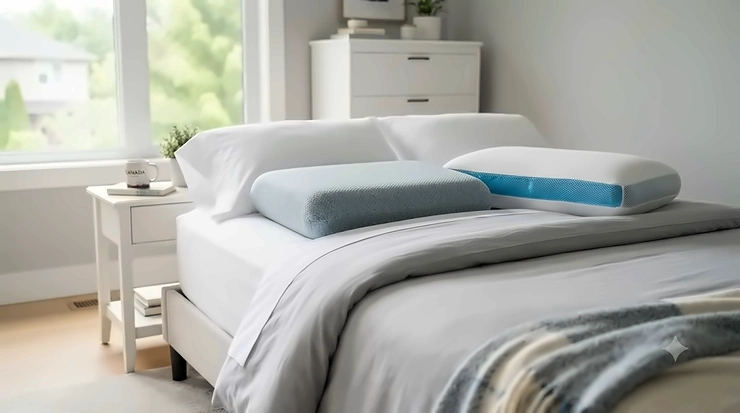
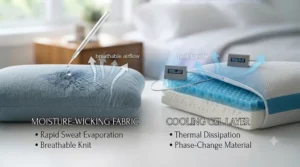
Somewhere around 2 a.m., you flip your pillow over for the third time, hunting for a cool patch that no longer exists. That’s the exact moment most Canadians start Googling moisture wicking vs cooling gel pillow, usually half-asleep and fully annoyed. The two technologies solve the same problem — a hot, damp head — but they go about it in almost opposite ways. Cooling gel pillows absorb and disperse heat through a gel layer or gel-infused foam, giving you that initial “ahh” sensation the moment your head lands. Moisture wicking pillows, built from hydrophilic fibres like TENCEL lyocell or soy-based memory foam covers, focus less on cold-to-the-touch drama and more on pulling perspiration away from your skin so it can evaporate before it turns your pillowcase into a swamp.
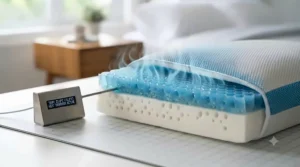
Neither one is objectively “better” — they’re built for different flavours of overheating. If you run hot because your body radiates heat fast, gel wins the first hour or two. If you run hot because you sweat, a moisture-wicking fibre will outlast it all night. This guide breaks down seven real, currently available pillows sold on amazon.ca, weighs their specs against genuine aggregated review sentiment, and walks through exactly how to match the right technology to your particular flavour of restless night. We’ll also dig into the hydrophilic fibre science, sleep temperature control research, and why humidity — not just heat — might be the real culprit keeping you up.
Quick Comparison Table
| Pillow | Cooling Technology | Best For | Price Range (CAD) |
|---|---|---|---|
| Coop Home Goods Eden Cool Adjustable Pillow | Gel-infused memory foam + microfiber | Adjustable loft, hot & cold sleepers | C$90-C$120 |
| EGOHOME Cooling Gel Memory Foam Pillow | Reversible gel layer | Budget-conscious hot sleepers | C$40-C$60 |
| Malouf Z Zoned Gel Dough + Z Gel Pillow | Liquid gel top layer + gel-infused foam | Maximum surface cooling | C$110-C$150 |
| Silk & Snow Eco Soy Pillow | TENCEL moisture-wicking cover + soy foam | Canadian-made, balanced comfort | C$80-C$100 |
| Casper Foam Pillow with Snow Technology | Phase-change material bands | Aggressive night sweats | C$150-C$190 |
| Sealy Sterling Collection Down-Alternative Pillow (2-pack) | TENCEL/cotton moisture-wicking cover | Soft-pillow lovers, couples | C$45-C$65 |
| Canadian Down and Feather Gel Microfibre Pillow | Gel-coated microfibre | Budget shoppers wanting a Canadian brand | C$40-C$55 |
Looking at the spread above, the split isn’t really budget versus premium — it’s technology versus technology. The Casper Foam Pillow with Snow Technology and Malouf Z Zoned Gel Dough + Z Gel Pillow sit at the top of the price range because phase-change material and liquid gel layers are genuinely more expensive to manufacture than a woven fibre cover. Meanwhile, Silk & Snow Eco Soy Pillow and the Sealy Sterling Collection Down-Alternative Pillow prove that moisture-wicking comfort doesn’t require a premium price tag, since the wicking happens in the fabric weave rather than an active cooling material.
💬 Just one click — help others make better buying decisions too!😊
Top 7 Moisture Wicking and Cooling Gel Pillows: Expert Analysis
Picking a pillow off a listing page is a bit like picking a car by the colour of the paint. Specs only tell half the story — the other half is how that spec plays out at 3 a.m. when your body temperature dips and your sheets are already damp. Below, each pillow gets an honest look at what it does well, who it’s actually built for, and where it falls short, based on manufacturer specifications and aggregated Canadian buyer sentiment.
1. Coop Home Goods Eden Cool Adjustable Pillow — best adjustable hybrid for indecisive sleepers
The Coop Home Goods Eden Cool Adjustable Pillow solves the “too flat or too fluffy” problem by literally letting you remove or add fill until it’s right. Inside is a blend of gel-infused, cross-cut memory foam and microfiber, wrapped in a breathable Lulltra cover with a 2-inch gusset that keeps the fill from bunching at the edges. In practice, that gel infusion is less about a dramatic cold shock and more about improving airflow through the fill itself, so heat doesn’t pool the way it does in a solid memory foam block. Based on the spec comparison with other adjustable pillows in this guide, the Eden earns its spot for people who genuinely don’t know whether they’re a soft-pillow or firm-pillow sleeper, since you can dial it in without buying a second pillow. Reviewers consistently report that the adjustability is the standout feature, with many mentioning they removed a handful of fill to get a flatter profile for stomach sleeping; a recurring complaint is a faint off-gassing smell for the first day or two out of the packaging, which is typical of fresh memory foam and usually fades with airing out.
Pros:
- ✅ Fully adjustable loft with bonus fill included
- ✅ CertiPUR-US and GREENGUARD Gold certified for safety
- ✅ Removable, machine-washable cover
Cons:
- ❌ Noticeable new-foam smell on unboxing
- ❌ Heavier than fibre-only alternatives
At around C$90-C$120, the Coop Home Goods Eden Cool Adjustable Pillow sits in the mid-range and earns it, since you’re essentially buying two firmness options in one pillow.
2. EGOHOME Cooling Gel Memory Foam Pillow — best budget reversible design
The EGOHOME Cooling Gel Memory Foam Pillow takes a simple, effective approach: one side of the memory foam core carries a cooling gel layer, and the other is standard memory foam, so you flip based on the season or your mood. Its 15x23x5-inch profile is fairly standard, and the removable cover is machine washable, which matters more than people expect since pillow covers absorb the bulk of nightly sweat. What most buyers overlook about a reversible design like this is that it’s really a two-pillows-in-one value proposition — you get the plush support side for winter and the gel side for July without spending twice. Aggregated review sentiment from Canadian buyers points to strong satisfaction with the neck support for combination sleepers, though a subset of reviewers note the gel side cools noticeably less than the marketing copy implies once the foam warms to body temperature after an hour or so — a limitation shared by essentially every gel-layer pillow, not unique to this one.
Pros:
- ✅ Reversible gel and standard memory foam sides
- ✅ Machine-washable, breathable outer cover
- ✅ Solid neck support for side and back sleepers
Cons:
- ❌ Gel cooling effect fades after the first hour
- ❌ Firmness runs on the medium-firm side for some
Priced around C$40-C$60, the EGOHOME Cooling Gel Memory Foam Pillow is one of the most accessible entry points into gel cooling technology in this whole lineup.
3. Malouf Z Zoned Gel Dough + Z Gel Pillow — most advanced dual-gel cooling layer
If cooling gel pillows had a flagship model, the Malouf Z Zoned Gel Dough + Z Gel Pillow would be a strong contender. It layers a liquid Z Gel pad directly on top of Malouf’s proprietary Gel Dough memory foam, then wraps the whole thing in a TENCEL cover — meaning it actually blends both technologies this article is comparing, gel conduction plus fibre-level moisture management. The liquid gel layer captures body heat on contact rather than gradually absorbing it the way gel-infused foam does, and Zoned Technology cuts columns into the foam core to boost airflow around the head and neck. Here’s what to weigh: this is genuinely one of the more advanced constructions on the market, but that complexity shows up in the price tag. Reviewers on Amazon.ca and Malouf’s own site consistently cite the “instant cool” sensation as the standout, with the TENCEL cover getting specific praise for staying dry-feeling through the night rather than just cold-to-the-touch; a smaller number of reviewers mention the pillow runs firmer than expected for a “dough” foam.
Pros:
- ✅ Liquid gel layer plus gel-infused Zoned Technology foam
- ✅ TENCEL cover adds genuine moisture-wicking on top of gel cooling
- ✅ Backed by a 5-year manufacturer warranty
Cons:
- ❌ Premium price point compared to single-technology pillows
- ❌ Firmer feel than some memory foam fans expect
At C$110-C$150, the Malouf Z Zoned Gel Dough + Z Gel Pillow is a legitimate hybrid pick for anyone who wants both technologies working together instead of choosing sides.
4. Silk & Snow Eco Soy Pillow — best Canadian-made moisture-wicking option
The Silk & Snow Eco Soy Pillow approaches temperature control almost entirely from the fibre side rather than the gel side, which makes it the cleanest moisture-wicking example in this comparison. Its cover is TENCEL lyocell, a hydrophilic fibre derived from eucalyptus wood pulp, wrapped around a supportive core of soy-infused memory foam. Silk & Snow is a Canadian bedding company, and this pillow is a favourite recommendation among Canadian sleep retailers for hot sleepers who find gel pillows too aggressive or too warm-up-fast. Based on the spec comparison, soy-infused foam tends to have a slightly more open cell structure than standard memory foam, which — paired with a wicking cover — creates a more gradual, all-night cooling effect rather than gel’s quick-then-fading chill. What reviewers consistently note is that the pillow “never needs flipping” for the cool side, which is the classic sign of a properly functioning moisture-wicking fibre doing its job continuously instead of front-loading the cooling sensation.
Pros:
- ✅ TENCEL moisture-wicking cover works all night, not just at contact
- ✅ Sustainably sourced soy-infused memory foam core
- ✅ Canadian company with accessible customer support
Cons:
- ❌ Less dramatic “instant cool” feel than gel pillows
- ❌ Firmness may feel too soft for strict back sleepers
At roughly C$80-C$100, the Silk & Snow Eco Soy Pillow delivers strong value for anyone who wants a genuinely Canadian option built around hydrophilic fibre technology rather than gel.
5. Casper Foam Pillow with Snow Technology — top pick for aggressive night sweats
For the sleepers who wake up with a damp pillowcase no matter what they try, the Casper Foam Pillow with Snow Technology goes further than most gel pillows by combining HeatDelete bands with phase-change material (PCM), a substance engineered to absorb heat and change state to keep the surface temperature more stable than standard gel. Where gel-infused foam eventually reaches thermal equilibrium and warms up, PCM is specifically designed to resist that plateau for longer, which is the technical reason Casper markets this as their most aggressive cooling option. The pillow-inside-a-pillow build gives you a soft microfiber outer layer over a firmer support core, and it’s available in low-loft and mid-loft versions depending on sleep position. On paper this means better performance for people whose heat problem is closer to a medical-grade night sweat than a mild summer discomfort. Aggregated reviewer sentiment backs this up, with consistent praise for the cooling lasting “the whole night” rather than the first hour — a genuine differentiator from basic gel-infused foam — though the premium price draws frequent comment as a drawback.
Pros:
- ✅ Phase-change material resists heat plateau longer than standard gel
- ✅ Pillow-in-pillow design offers adjustable support feel
- ✅ Available in two loft heights for different sleep positions
Cons:
- ❌ Highest price point in this comparison
- ❌ Some reviewers find the low-loft version too flat for side sleeping
Expect to pay in the C$150-C$190 range for the Casper Foam Pillow with Snow Technology, positioning it as the splurge pick for anyone who has already tried basic gel and found it insufficient.
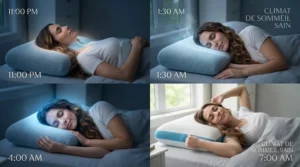
6. Sealy Sterling Collection Down-Alternative Pillow — best soft moisture-wicking two-pack
The Sealy Sterling Collection Down-Alternative Pillow is proof that moisture-wicking comfort doesn’t require foam at all. This 2-pack uses a 400-thread-count TENCEL and cotton cover blend around a down-alternative fiberfill, so instead of gel conduction or memory foam contouring, you get the soft, compressible feel of a traditional pillow with a cover engineered to pull moisture away rather than trap it. Reviewers consistently report this as the closest thing to a “regular pillow that just happens to sleep cooler,” which makes sense given the construction — there’s no active cooling material, just a smarter fabric doing quiet, continuous work all night. What most buyers overlook here is that a down-alternative fill actually breathes better than solid memory foam by design, since air moves between the fibres more freely; pairing that natural airflow with a wicking cover compounds the effect rather than fighting it. The trade-off is support: this pillow won’t offer the contouring or neck alignment that memory foam provides, so side sleepers with neck pain may want to look elsewhere in this list.
Pros:
- ✅ 400TC TENCEL and cotton cover wicks moisture continuously
- ✅ Soft, traditional pillow feel — no foam adjustment period
- ✅ Two pillows included, ideal for couples
Cons:
- ❌ Minimal contouring support for side sleepers
- ❌ Fill compresses faster than foam over time
At C$45-C$65 for the pair, the Sealy Sterling Collection Down-Alternative Pillow is one of the best per-pillow values for buyers who prioritize a soft feel with genuine hydrophilic fibre technology in the cover.
7. Canadian Down and Feather Gel Microfibre Pillow — most affordable Canadian-made pick
Rounding out the list is the Canadian Down and Feather Gel Microfibre Pillow, a budget-friendly hybrid that coats microfibre fill with a gel treatment rather than using solid gel-infused foam. Canadian Down and Feather is a domestic manufacturer, which appeals to buyers specifically looking to keep their purchase Canadian-made, and the microfibre construction keeps the pillow lightweight and machine washable in a way memory foam pillows generally aren’t. Here’s what to weigh: gel-coated microfibre won’t deliver the same cooling intensity as a thick gel-infused foam layer or a PCM band, but it also avoids the “sleeping on a brick” feel some buyers associate with foam pillows, making it a reasonable entry point for anyone easing into cooling bedding for the first time. Reviewers consistently mention the lightweight, down-like feel as the standout quality, with a common note that this pillow flattens faster than foam alternatives and may need replacing sooner — a known trade-off with fibre-fill pillows generally, not a flaw unique to this model.
Pros:
- ✅ Genuinely Canadian-manufactured product
- ✅ Lightweight, down-like feel with easy care
- ✅ Most affordable price point in this guide
Cons:
- ❌ Flattens faster than foam-based options
- ❌ Cooling effect is mild compared to gel-infused foam
At approximately C$40-C$55, the Canadian Down and Feather Gel Microfibre Pillow is the easiest low-risk way to try cooling bedding without committing to a foam pillow’s learning curve.
Practical Usage Guide: Getting the Most Out of Your Cooling Pillow
Buying the right pillow is only half the job — how you set it up in the first 30 days determines whether you actually feel the difference. Fresh out of the packaging, most foam pillows (including the Coop Home Goods Eden Cool Adjustable Pillow and Malouf Z Zoned Gel Dough + Z Gel Pillow) need 24 to 48 hours to fully expand and off-gas that new-foam smell in a well-ventilated room, ideally not the bedroom you’re trying to sleep in that first night. A common mistake is judging a gel pillow’s performance on night one, before the foam has finished expanding to its intended loft — give it three to four nights before deciding it’s too flat, too firm, or not cooling enough.
For moisture-wicking picks like the Silk & Snow Eco Soy Pillow or Sealy Sterling Collection Down-Alternative Pillow, maintenance matters more long-term than break-in period. Wash the removable cover every one to two weeks, since TENCEL and cotton blends lose some of their wicking efficiency when body oils and skin cells build up in the fibres — this is basic textile science, not a marketing claim. Fluff foam pillows daily and fibre-fill pillows after every wash to prevent lumping. One optimization trick Amazon listings rarely mention: pairing any pillow, gel or fibre, with a separate moisture-wicking pillowcase compounds the cooling effect, since the pillowcase is the layer actually touching your skin.
Real-World Scenarios: Who Should Buy Which Pillow
Picture three different Canadian sleepers. First, a university student in a non-air-conditioned Toronto apartment, sweating through July with a tight budget — the EGOHOME Cooling Gel Memory Foam Pillow or Canadian Down and Feather Gel Microfibre Pillow makes sense here, since both stay under C$60 and deliver noticeable relief without a big investment. Second, a shift worker sleeping during daylight hours who runs consistently hot regardless of season and has already tried a basic gel pillow with limited success — the Casper Foam Pillow with Snow Technology is built for exactly this persistent-heat scenario, since PCM resists the equilibrium point that basic gel eventually hits.
Third, a couple sharing a bed where one partner sleeps hot and the other sleeps cold — this is trickier, and the honest answer is that a reversible or hybrid pillow solves it best. The EGOHOME Cooling Gel Memory Foam Pillow‘s two-sided design lets each partner flip to their preference, while the Sealy Sterling Collection Down-Alternative Pillow 2-pack means both people get their own pillow with the same wicking cover, sidestepping the debate entirely. Matching the pillow to the actual cause of overheating — ambient room temperature, sweat volume, or just personal preference for a cold-to-the-touch surface — matters more than chasing whichever pillow has the most five-star reviews.
✨ Not sure which category fits your sleep style? Scroll back up and compare the Quick Comparison Table against your own symptoms.
Buyer’s Decision Framework: A Simple Checklist
If you’re still torn between moisture wicking vs cooling gel pillow options, run through this quick framework before you check out on amazon.ca:
- If you sweat through your pillowcase most nights, choose a moisture-wicking fibre pillow like the Silk & Snow Eco Soy Pillow, because fibre technology manages ongoing moisture better than gel manages ongoing heat.
- If you just want that first-minute cold-pillow feeling, choose a gel pillow like the EGOHOME Cooling Gel Memory Foam Pillow, since gel conduction is fastest at initial contact.
- If your heat problem persists for hours, not minutes, choose a phase-change pillow like the Casper Foam Pillow with Snow Technology, because PCM is engineered specifically to resist the warm-up plateau basic gel hits.
- If you and your partner disagree on temperature preference, choose a reversible or two-pack option so you’re not compromising on either side of the bed.
- If budget is the deciding factor, start with a fibre-fill or microfibre option under C$60 before investing in premium foam-and-gel hybrids.
How to Choose Between a Moisture Wicking Pillow and a Cooling Gel Pillow
Choosing correctly comes down to diagnosing why you’re actually overheating, not just grabbing whatever pillow has “cooling” in the title. Follow these criteria in order:
- Identify your heat source. Ambient room heat responds well to gel’s fast conductive cooling, while sweat-driven heat responds better to hydrophilic fibre technology that manages moisture, not just temperature.
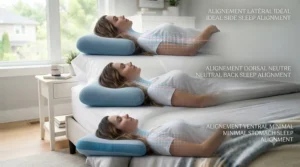
- Consider your sleep position. Side sleepers generally need more loft and contouring, which favours foam-based gel pillows like the Malouf Z Zoned Gel Dough + Z Gel Pillow; back and stomach sleepers can often get away with softer fibre-fill options.
- Check the certification labels. CertiPUR-US and GREENGUARD Gold, both present on the Coop Home Goods Eden Cool Adjustable Pillow, indicate independent testing for off-gassing and chemical safety — worth prioritizing if you have allergies or sensitivities.
- Factor in maintenance tolerance. Fibre-fill and down-alternative pillows are easier to machine wash in full but flatten faster; foam pillows need spot cleaning of the cover but hold their shape longer.
- Match your budget to realistic expectations. Sub-C$60 pillows deliver real, honest improvement over a standard pillow, but the more dramatic all-night effect tends to show up at the C$100-plus tier where PCM and liquid gel layers become financially viable to manufacture.
- Think about season, not just climate. Canadian winters with forced-air heating dry out bedrooms significantly, which can make a pure moisture-wicking pillow feel unnecessary for half the year — a reversible or gel option may offer better year-round value.
- Read for consistency in review themes, not star averages. A 4.3-star pillow where every negative review mentions the same flattening issue tells you more than a 4.6-star pillow with scattered, unrelated complaints.
Common Mistakes When Buying a Cooling Pillow
The most common mistake is treating “cooling” as one single feature instead of a spectrum of technologies with different strengths. Buyers frequently purchase a gel pillow expecting all-night relief, then feel disappointed when the gel reaches thermal equilibrium after an hour or two — that’s not a defective product, that’s how gel-infused foam physically works, and it’s worth knowing going in.
A second mistake is skipping loft and firmness research entirely and shopping purely on the word “cooling.” The Casper Foam Pillow with Snow Technology, for example, comes in two lofts specifically because a mismatched loft undermines even the best cooling technology by causing neck strain that disrupts sleep regardless of temperature. A third, sneakier mistake is ignoring the cover material. Buyers sometimes assume any pillow marketed for hot sleepers includes a moisture-wicking cover, when in reality many gel pillows use standard polyester covers that trap moisture even while the gel core stays cool — check the material list, not just the marketing headline, before adding to cart.
Moisture Wicking vs Cooling Gel Pillow: The Detailed Comparison
| Factor | Cooling Gel Pillows | Moisture Wicking Pillows |
|---|---|---|
| Cooling mechanism | Conductive heat absorption | Evaporative moisture management |
| Speed of effect | Fast, noticeable at contact | Gradual, sustained through the night |
| Longevity of cooling | Fades as gel reaches equilibrium | Continues as long as fabric stays clean |
| Best for | Ambient heat, quick discomfort | Sweat-driven overheating |
| Example in this guide | EGOHOME Cooling Gel Memory Foam Pillow | Silk & Snow Eco Soy Pillow |
Looking at the table, the core distinction isn’t really about which technology is “stronger” — it’s about timing. Gel wins the first hour of sleep, when falling asleep faster matters most, since research on sleep onset shows the brain benefits from a small drop in head and neck temperature to initiate sleep. Moisture-wicking fibres, by contrast, win hours three through eight, which is exactly when a sweat-soaked gel pillow would otherwise start working against you. For genuinely hot or humid Canadian summer nights, hybrid picks like the Malouf Z Zoned Gel Dough + Z Gel Pillow that combine both technologies address this timing gap directly rather than forcing a choice.
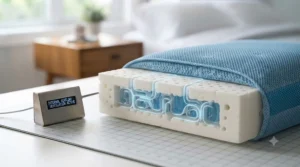
Hydrophilic Fiber Technology Explained
Hydrophilic fiber technology is the actual science behind most moisture-wicking pillows, and it’s worth understanding because it explains why fibre-based cooling doesn’t fade the way gel does. TENCEL lyocell, used in the Silk & Snow Eco Soy Pillow and the Sealy Sterling Collection Down-Alternative Pillow, is made from eucalyptus wood pulp cellulose dissolved through a closed-loop solvent process and extruded into fibres. According to comparative fibre testing, TENCEL absorbs moisture directly into the fibre structure itself rather than simply letting it sit on the surface, which is what allows it to pull sweat away from skin faster than cotton or polyester and release it into the air before it saturates the fabric. This internal-absorption property is described as lyocell’s characteristic wet-strength and moisture-regain behaviour, a well-documented textile science distinction from synthetic fibres like polyester, which are hydrophobic and simply push moisture around rather than absorbing it.
The practical upshot for a pillow buyer: hydrophilic fiber technology doesn’t need an external heat source or a phase change to work, so it doesn’t have a “warm-up” period the way gel does. What most buyers overlook is that this also means fibre-based moisture wicking keeps working even after months of use, provided the cover is washed regularly — unlike gel, which can’t really be “recharged” once its cooling capacity per session is used up. The trade-off, honestly, is that hydrophilic fibres won’t deliver the dramatic cold-to-the-touch sensation gel provides, which is why so many premium pillows now combine both, layering a wicking cover over a gel or PCM core.
Sleep Temperature Control: What the Science Says
Sleep temperature control isn’t just comfort talk — it’s grounded in actual sleep physiology. Research on thermoregulation and sleep has found that skin warmth signals interact with the brain’s sleep-regulating circuitry, meaning local temperature changes at the head and neck can meaningfully affect how quickly you fall asleep and how deeply you stay there, a connection detailed in a peer-reviewed review on sleep and thermoregulation. Since your head accounts for a disproportionate share of your body’s heat loss during sleep, the pillow directly under it plays a bigger role in sleep temperature control than most people assume when they’re focused entirely on mattress or bedroom AC settings.
This is also where Canadian climate specifics matter. Health Canada’s guidance on indoor temperature limits notes that sustained indoor temperatures above 26°C pose genuine health risks, particularly for older adults, and that nighttime cooling often lags well behind outdoor temperature drops in poorly ventilated homes. On paper, this means a cooling pillow isn’t solving a purely cosmetic comfort problem for a meaningful portion of Canadian households during summer heat events — it’s a low-cost intervention for a real thermoregulation challenge, especially in homes without central air conditioning.
Humidity Management Bedding: The Overlooked Variable
Humidity management bedding gets far less attention than temperature, but it might matter just as much for sleep quality. Research into low-humidity sleep environments has found that both very dry and very humid conditions disrupt sleep more than moderate temperatures alone, since humidity affects how efficiently sweat can evaporate off the skin regardless of ambient air temperature. This is precisely why a moisture-wicking pillow can outperform a cooling gel pillow on a muggy August night in Ontario or Quebec — high ambient humidity slows evaporation everywhere, so a fabric actively pulling moisture into its fibre structure has a real physical advantage over a surface that simply stays cool to the touch.
Canadian seasonal extremes make humidity management bedding particularly relevant here, since CBC’s reporting on indoor heat and humidity across major Canadian cities found that eastern Canadian humidity can add several additional degrees of perceived heat indoors, compounding discomfort well beyond what a thermostat reading suggests. For anyone in a humid region without central air, prioritizing the fabric’s moisture-wicking properties over gel’s cold-touch sensation is often the more effective long-term choice, since gel can’t do much to address ambient humidity — it only manages heat at the point of contact.
Long-Term Cost and Maintenance
Sticker price only tells part of the value story. Foam-based gel pillows like the Coop Home Goods Eden Cool Adjustable Pillow and Malouf Z Zoned Gel Dough + Z Gel Pillow typically last three to four years with proper care, since memory foam resists compression better than fibre fill over time — a longer lifespan that partially offsets their higher upfront cost. Fibre-fill and down-alternative pillows like the Sealy Sterling Collection Down-Alternative Pillow and Canadian Down and Feather Gel Microfibre Pillow, by contrast, often need replacing within 18 to 24 months as the fill compresses and loses loft, even with regular fluffing.
| Pillow Type | Typical Lifespan | Estimated Cost Per Year of Use |
|---|---|---|
| Gel-infused foam (mid-premium) | 3-4 years | Lower per-year cost despite higher upfront price |
| Liquid gel + PCM (premium) | 3-5 years | Comparable per-year cost to mid-range foam |
| Fibre-fill / down-alternative (budget) | 1.5-2 years | Higher per-year cost despite lower upfront price |
Running the numbers, a C$150 Casper Foam Pillow with Snow Technology lasting four years works out to roughly C$37 per year, while a C$50 fibre pillow needing replacement every 18 months averages closer to C$33 per year — genuinely comparable, which means the “budget” option isn’t automatically the better long-term value once replacement frequency enters the equation. Washable, removable covers on nearly every pillow in this guide extend usable life regardless of fill type, so factor laundering habits into your own math before assuming price alone predicts value.
What to Expect: Real-World Performance
Specs on a listing page rarely translate directly into what you’ll actually feel at night, so here’s the honest, spec-grounded translation. A gel-infused foam pillow like the EGOHOME Cooling Gel Memory Foam Pillow will feel noticeably cool for roughly the first 60 to 90 minutes of contact, based on how gel-infused foam physically absorbs and redistributes heat before reaching equilibrium with your body temperature — after that window, expect it to feel similar to a standard memory foam pillow rather than an active cooling surface.
A moisture-wicking pillow like the Silk & Snow Eco Soy Pillow, meanwhile, won’t deliver that dramatic first-touch chill, but reviewers consistently describe the difference as noticing they’re not waking up in a sweat-soaked pillowcase by 3 a.m., which is a slower, cumulative effect rather than an instant one. Phase-change pillows split the difference: the Casper Foam Pillow with Snow Technology‘s PCM bands are engineered specifically to extend that initial cool sensation well beyond gel’s typical window, which is the entire justification for its higher price point relative to standard gel-infused foam.
Frequently Asked Questions
❓ Which is better for night sweats, moisture wicking or cooling gel pillows?
❓ How long does cooling gel actually stay cold in a pillow?
❓ Can you combine moisture wicking and cooling gel technology in one pillow?
❓ Do cooling pillows work without air conditioning in a hot Canadian bedroom?
❓ How often should I wash a moisture-wicking pillow cover to keep it working?
Conclusion
There’s no single winner in the moisture wicking vs cooling gel pillow debate, and honestly, that’s the most useful takeaway from this whole comparison. Gel-infused options like the EGOHOME Cooling Gel Memory Foam Pillow and Coop Home Goods Eden Cool Adjustable Pillow deliver that satisfying instant chill for people whose main complaint is falling asleep too warm. Moisture-wicking picks like the Silk & Snow Eco Soy Pillow and Sealy Sterling Collection Down-Alternative Pillow shine for the slower, sweat-driven overheating that ruins hours three through eight instead of the first thirty minutes. And for Canadians who want both problems solved at once, hybrids like the Malouf Z Zoned Gel Dough + Z Gel Pillow or the phase-change-powered Casper Foam Pillow with Snow Technology justify their higher price tags with genuinely different underlying engineering, not just marketing language.
If you’re still unsure, go back to the decision framework above and diagnose your actual overheating pattern before you shop — the right technology for your specific problem will outperform whichever pillow simply has the most reviews. And if budget matters more than anything else, the Canadian Down and Feather Gel Microfibre Pillow proves you don’t need to spend triple digits to notice a real improvement over a standard pillow.
✨ Ready to Sleep Cooler Tonight?
🔍 Take your bedroom setup to the next level with the picks above. Click on any highlighted pillow to check current pricing and availability on Amazon.ca. Whichever technology matches your sleep style, these options will help you build the genuinely restful, sweat-free sleep your body has been missing!
Recommended for You
- Pillow for Night Sweats: 7 Cooling Picks Canadians Trust in 2026
- Ventilated Pillow for Night Sweats: 7 Proven Cooling Picks (2026)
- Best Ventilated Pillow 2026: 7 Cooling Picks That Actually Breathe
Disclaimer: This article contains affiliate links. As an Amazon Associate, I earn from qualifying purchases. If you purchase products through these links, we may earn a small commission at no additional cost to you.
✨ Found this helpful? Share it with your friends! 💬🤗
