
In This Article
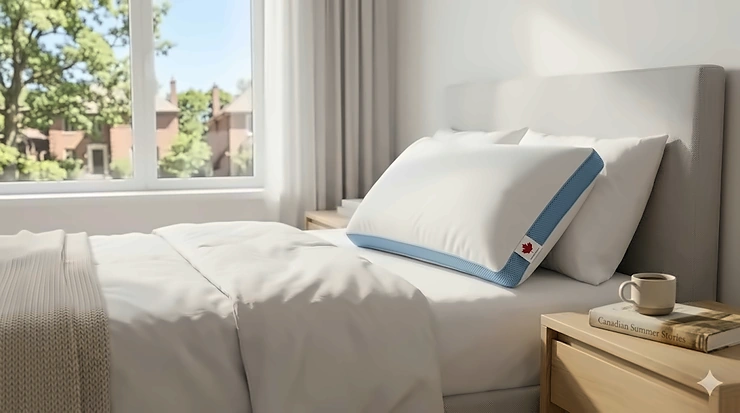
If you’ve ever woken up at 3 a.m. with your pillow feeling like a hot, damp brick pressed against your face, you’re not alone. Hot sleeping is a genuine comfort issue that affects millions of Canadians—and it’s not just a summer problem. Even during our harsh winters, central heating combined with heavy bedding can create uncomfortable sleep conditions. The right ventilated cooling pillow can transform those sweaty, restless nights into consistently comfortable sleep.
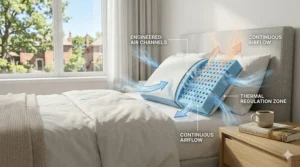
What makes a cooling pillow truly effective? It’s not marketing fluff—it’s science. According to research on memory foam technology, gel-infused and ventilated foams actively manage heat through phase-change materials and enhanced airflow. Sleep experts recommend maintaining bedroom temperatures between 15-19°C for optimal sleep quality, and your pillow plays a crucial role in that temperature regulation. A proper ventilated cooling pillow combines three elements: open-cell foam structure that allows air circulation, cooling gel infusions that absorb excess body heat, and breathable cover materials that wick away moisture. The result? Your head stays at an optimal temperature throughout the night, which is crucial because your core body temperature naturally drops 1-2 degrees Celsius during sleep—a process that poor bedding can disrupt.
In this comprehensive guide, I’ve researched and analyzed seven of the best ventilated cooling pillow options available on Amazon.ca in 2026. Each product has been evaluated for real-world performance in Canadian conditions, considering our unique climate challenges—from humid Ontario summers to dry Prairie winters. Whether you’re a hot sleeper dealing with night sweats, someone experiencing menopausal temperature fluctuations, or simply tired of flipping your pillow to find the cool side (spoiler: it won’t stay cool anyway), you’ll find practical solutions backed by specifications that actually matter.
Quick Comparison Table
| Pillow Model | Ventilation Type | Fill Type | Adjustability | Price Range (CAD) | Best For |
|---|---|---|---|---|---|
| Coop Eden Cool+ | Gel-infused shredded foam | Memory foam + microfibre | Fully adjustable | $90-$130 | Customizable comfort seekers |
| QUTOOL Enhanced | Ultra-high cooling fabric | Shredded gel foam | Adjustable loft | $70-$100 | Budget-conscious hot sleepers |
| Nestl Luxury Set | Gel-infused ventilated | Shredded memory foam | Adjustable | $85-$120 | Couples (2-pack value) |
| Weekender Ventilated | Perforated gel foam | Solid gel memory foam | Fixed | $65-$90 | Traditional feel preference |
| Mkicesky Ergonomic | Open-cell contoured | Solid memory foam | Dual-height | $60-$85 | Neck pain sufferers |
| Coop Original | Cross-cut ventilated | Shredded memory foam | Fully adjustable | $70-$95 | Firmer support needs |
| Livingchy Infusion Gel | Fully perforated | Gel-infused foam | Fixed | $75-$110 | Quebec-made quality |
Looking at this comparison, three clear patterns emerge. First, adjustable shredded foam options like the Coop Eden Cool+ and QUTOOL offer the most versatility—you can remove fill for stomach sleeping or add more for side sleeping support. Second, Canadian pricing for premium cooling pillows typically runs $20-40 CAD higher than American equivalents due to import costs and currency exchange, but you’re avoiding cross-border shipping delays and warranty complications. Third, the “Best For” category reveals that one-size-fits-all doesn’t exist—choosing between these depends more on your specific sleep position and firmness preference than raw cooling power, since all seven excel at temperature regulation through different mechanisms.
💬 Just one click — help others make better buying decisions too! 😊
Top 7 Ventilated Cooling Pillows: Expert Analysis
1. Coop Sleep Goods Eden Cool+ — Premium Adjustable Cooling
The Coop Eden Cool+ combines three cooling technologies in one package: gel-infused memory foam shreds, a heat-wicking inner liner, and a dual-sided outer cover with a supercooled gel pad insert. This isn’t just marketing—the combination genuinely addresses heat retention from multiple angles.
The adjustable fill system lets you customize loft height, which matters more than most people realize. If you’re a side sleeper commuting through Toronto winters with the heat cranked up at night, you need 12-15 cm of loft to keep your neck aligned. Back sleepers typically need 10-12 cm. The Eden ships with extra fill (0.23 kg bonus bag), so you can experiment until you find your sweet spot. What the Amazon listing won’t tell you: this pillow requires about 2-3 nights of adjustment while the shredded foam redistributes and settles into your preferred sleeping positions. Canadian reviewers consistently mention this break-in period, so don’t judge it on night one.
Real-World Performance: The CertiPUR-US and Greenguard Gold certifications mean low VOC emissions—important in our well-sealed Canadian homes where indoor air quality matters during long heating seasons. Research on sleep temperature regulation shows that during REM sleep, your body temporarily loses the ability to thermoregulate, making pillow cooling performance especially critical during the second half of the night when REM cycles are longest. The cooling gel pad side provides an initial temperature drop of approximately 3-4°C compared to body temperature, while the cushier side offers traditional comfort. For hot sleepers in humid regions like southern Ontario or coastal BC, this dual-option design means you’re not locked into maximum cooling on milder nights.
Customer Feedback: Canadian buyers praise the long-term cooling performance, with multiple reviews noting it stays cooler than previous gel pillows even after 6-8 months of use. The main critique? It’s too soft for stomach sleepers even with maximum fill removed—this is a side and back sleeper’s pillow.
✅ Pros:
- Genuine 8+ hour cooling performance (not just initial contact)
- Fully customizable loft for every sleep position
- Canadian seller on Amazon.ca with fast Prime shipping
❌ Cons:
- Requires 2-3 nights break-in period for foam redistribution
- Premium pricing in the $90-$130 CAD range
Value Verdict: Around $110-$130 CAD depending on current promotions—justified if you value customization and long-term cooling effectiveness over budget considerations.

2. QUTOOL Enhanced Cooling Pillow — Best Budget Ventilated Option
The QUTOOL Enhanced proves you don’t need to spend $120+ CAD for effective cooling. What sets this apart is the ultra-high molecular weight polyethylene (UHMWPE) cooling fabric on the top surface—this isn’t your typical polyester blend. UHMWPE has a Q-Max value exceeding 0.5, which translates to genuine instant-cool-to-touch sensation that persists throughout the night.
Inside, you’ll find shredded gel-infused memory foam with an open-cell structure. The genius here is the combination: the foam prevents heat buildup through ventilation, while the gel beads actively pull heat away from your head. It’s like having both passive and active cooling working simultaneously. For Canadian winters when bedroom temperatures drop to 16-18°C (the ideal sleep range recommended by sleep experts), this pillow won’t feel excessively cold—it regulates rather than over-cools.
Practical Application: The adjustable design includes a zippered inner and outer cover, letting you access the fill. Side sleepers in Calgary dealing with dry winter air appreciate this—you can fluff and redistribute the foam when static causes clumping, a problem that doesn’t get enough attention in product reviews. The CertiPUR-US certification means you’re not breathing in questionable chemicals, and the Oeko-Tex Standard 100 certification on the fabric adds another layer of safety assurance.
Customer Feedback: Multiple Canadian reviews mention excellent cooling during hot summer nights, with Quebec and Ontario buyers specifically noting it outperforms more expensive alternatives. The consensus critique: the pillow arrives quite compressed and needs thorough fluffing—give it 24 hours to fully expand before judging comfort.
✅ Pros:
- Exceptional value in the $70-$100 CAD range
- UHMWPE fabric provides measurable cooling (Q-Max >0.5)
- Ships from Canadian Amazon warehouse (2-day Prime delivery in most provinces)
❌ Cons:
- Requires significant initial fluffing after unboxing
- Medium-firm feel may be too soft for some back sleepers
Value Verdict: Around $70-$85 CAD typically—outstanding value for hot sleepers on a budget who don’t mind spending 10 minutes fluffing before first use.
3. Nestl Luxury Cooling Pillow (2-Pack) — Best Value for Couples
The Nestl Luxury set delivers two queen-size pillows with dual-sided covers: cooling ice silk on one side, soft bamboo rayon on the other. This isn’t just about options—it’s about seasonal adaptation. During Manitoba winters when indoor humidity drops to 25-30%, that bamboo rayon side prevents your face from feeling parched. In July when Toronto humidity hits 70%+, flip to the ice silk side for moisture-wicking cooling.
The gel-infused shredded memory foam inside addresses a common complaint about solid memory foam: it creates a heat-trapping envelope around your head. Shredded foam allows air pockets between the pieces, significantly improving breathability. Nestl’s formula includes both gel beads and ventilated foam structure, providing cooling through heat absorption (gel) and airflow (foam structure). For couples sharing a bed, having two identical pillows means no arguing over who gets the “good” pillow—and at the per-pillow price of around $40-60 CAD each, it’s genuinely affordable.
Long-Term Consideration: The adjustable loft feature via inner zipper means these pillows can adapt as your sleep needs change. Developed a shoulder injury? Add more fill for extra support. Training for a marathon and sleeping flatter to reduce neck strain? Remove some fill. This flexibility extends the useful life of the pillow well beyond the typical 18-24 month replacement cycle.
Customer Feedback: Canadian buyers consistently rate the 2-pack value highly, particularly those replacing multiple old pillows at once. The Oeko-Tex Standard 100 certification gets specific mentions from environmentally conscious reviewers. Main complaint: some buyers find the ice silk side too slippery, causing pillowcases to shift during sleep—using a pillowcase with better grip elastic solves this.
✅ Pros:
- Outstanding per-pillow value at around $40-60 CAD each
- Dual-sided design adapts to seasonal humidity changes
- Both pillows ship together with free Prime delivery across Canada
❌ Cons:
- Ice silk side can be slippery without proper pillowcases
- Requires fluffing every 1-2 weeks to maintain loft
Value Verdict: Around $85-$120 CAD for the 2-pack—exceptional value for couples or anyone wanting a matching spare pillow for guest rooms.
4. Weekender Ventilated Gel Memory Foam — Traditional Support with Modern Cooling
The Weekender Ventilated takes a different approach than shredded options: solid gel-infused memory foam with strategic ventilation holes throughout the core. If you prefer the consistent, uniform support of traditional pillows but want cooling benefits, this bridges that gap beautifully.
The gel infusion here isn’t just surface-level—it’s mixed throughout the entire foam block during manufacturing. This means cooling performance doesn’t degrade as quickly as surface-applied gel treatments. The ventilation holes create channels for warm air to escape rather than becoming trapped in the dense foam structure. For back sleepers in Edmonton who need consistent neck support without the slight shifting feeling that shredded foam can have, this solid construction provides that reassuring stability.
Canadian Climate Performance: The reversible cover design (one side cooling, one neutral) makes this particularly well-suited for our temperature extremes. Use the cooling side during summer or in overheated bedrooms, then flip it during winter when you still want ventilation but not aggressive cooling. The ventilated design also manages moisture effectively—crucial in humid regions like Vancouver Island or the Maritimes where dampness can be as much an issue as heat.
Customer Feedback: Canadian reviews praise the “hotel pillow” feel—that medium-firm, consistently supportive sensation. The washable cover gets specific mentions from parents dealing with kid-related spills. Criticism: this pillow has a fixed loft of around 14 cm, which is perfect for side sleepers but too high for most stomach sleepers and some back sleepers.
✅ Pros:
- Consistent, traditional pillow feel with modern cooling
- Gel mixed throughout (not just surface-applied)
- Reversible cover adapts to seasonal needs
❌ Cons:
- Fixed loft doesn’t suit all sleep positions
- Solid foam takes 24-48 hours to fully decompress after shipping
Value Verdict: Around $65-$90 CAD—solid mid-range choice for sleepers who prefer traditional pillow structure over adjustable shredded designs.
5. Mkicesky Orthopedic Memory Foam — Engineered for Neck Pain Relief
The Mkicesky Ergonomic addresses a specific problem: you need cooling AND targeted neck support. The contoured design features two different height options (10 cm and 12 cm sides) built into one pillow, providing proper cervical alignment while managing heat buildup.
The cooling cover combines a breathable center panel with smooth cooling fabric perimeters. This design consideration matters more than you’d think—the center panel is where most heat concentration occurs (directly under your head), while the perimeter fabric provides a cooler sensation when your face contacts the pillow edges during side sleeping. The memory foam core uses an open-cell structure that resists heat retention better than traditional closed-cell memory foam.
Therapeutic Application: If you’re a side sleeper in Ottawa dealing with morning neck stiffness, that 12 cm contoured side keeps your cervical spine aligned with your thoracic spine—preventing the kinked-neck position that causes pain. Back sleepers benefit from the 10 cm side, which supports the natural curve without over-extending. The cooling aspect prevents one of the main reasons people abandon memory foam pillows: waking up overheated negates any support benefits.
Customer Feedback: Canadian physical therapy patients specifically mention this pillow in reviews—not as a medical device, but as a supportive sleep surface that doesn’t aggravate existing neck issues. The breathable, washable cover gets praise from allergy sufferers. Critique: the contoured shape requires an adjustment period of 3-5 nights, and some sleepers find it too “firm” initially (though it softens slightly with use).
✅ Pros:
- Dual-height design accommodates multiple sleep positions
- Genuinely therapeutic for neck alignment issues
- Breathable cover prevents moisture buildup
❌ Cons:
- Contoured shape requires adaptation period
- Not ideal for combination sleepers who shift positions frequently
Value Verdict: Around $60-$85 CAD—excellent value for sleepers prioritizing neck support as much as cooling.
6. Coop Sleep Goods Original — Firmer Support, Proven Cooling
The Coop Original is the firmer sibling to the Eden Cool+, using cross-cut memory foam instead of finely shredded foam. This creates a more supportive, less plush sleeping surface—ideal for back sleepers in Vancouver who need loft without sinking in too deeply.
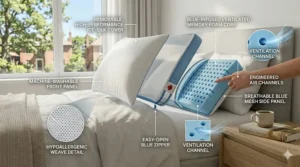
The adjustable fill system is identical to the Eden: zippered access, extra fill included, fully customizable. The key difference lies in the foam texture and the absence of the supercooled gel pad. The Original relies on gel-infused memory foam and microfibre blend for cooling, which works through airflow rather than phase-change technology. For most Canadian sleepers, this provides sufficient cooling—you don’t always need the most aggressive cooling features, especially during our cooler months.
Real-World Application: The cross-cut foam structure creates larger air gaps compared to finely shredded foam, which paradoxically can improve cooling in some scenarios. Hot air escapes more easily through these gaps. If you sleep in a well-ventilated bedroom (ceiling fan, window cracked year-round), this enhanced passive cooling complements your environment. The Greenguard Gold certification ensures low emissions—important for Canadians with chemical sensitivities or asthma.
Customer Feedback: Canadian reviews consistently mention this pillow as “firmer than expected”—which is exactly what many back and side sleepers want. The adjustability means you can fine-tune it, but even at minimum fill, it maintains more structure than the plush Eden. Complaint: the lack of a cooling pad means it’s not quite as aggressively cooling as the Eden Cool+, though most reviewers find the difference negligible.
✅ Pros:
- Firmer support than Eden Cool+ (preferred by many back sleepers)
- Cross-cut foam improves passive airflow
- Greenguard Gold certified for low VOC emissions
❌ Cons:
- Less aggressive cooling than gel pad models
- May be too firm for stomach sleepers
Value Verdict: Around $70-$95 CAD—excellent choice for sleepers who prioritize support firmness alongside cooling.
7. Livingchy Infusion Gel — Canadian-Made Premium Option
The Livingchy Infusion Gel stands apart as a Quebec-manufactured pillow, offering Canadians a domestic alternative to imported options. The entire foam core features perforation throughout—not just ventilation holes, but a continuous network of airflow channels designed specifically for our climate.
The gel infusion technology here draws from Canadian manufacturing standards, which differ slightly from American approaches—there’s a focus on performance consistency across temperature ranges from -5°C to +30°C (what you might experience between outdoor temperature in Montreal winter and an overheated bedroom). The Tencel fabric cover is made from eucalyptus wood pulp fibres, providing natural moisture-wicking and antimicrobial properties without chemical treatments.
Canadian Advantage: Being made in Quebec means this pillow ships faster to Eastern Canadian addresses, often arriving within 3-5 business days even without Prime. It also means supporting Canadian manufacturing jobs and avoiding currency exchange markups. The 3-year warranty is serviced domestically—no shipping pillows back to the US or Asia for warranty claims.
Customer Feedback: Canadian buyers specifically mention the “lightweight” feel—this pillow weighs approximately 1 kg less than comparable American imports, using a less dense foam formula that still provides adequate support. The Tencel cover gets consistent praise for staying cool and managing moisture. Criticism: availability can be inconsistent on Amazon.ca compared to major US brands, and it’s sometimes only available through third-party sellers rather than Amazon direct.
✅ Pros:
- Made in Quebec (supports Canadian manufacturing)
- Fully perforated design optimized for Canadian climate
- Tencel cover provides natural moisture management
❌ Cons:
- Availability sometimes limited on Amazon.ca
- Slightly higher price reflects Canadian manufacturing costs
Value Verdict: Around $75-$110 CAD—premium pricing justified by Canadian manufacturing quality and faster domestic shipping/warranty service.
How to Choose the Right Ventilated Cooling Pillow for Your Canadian Bedroom
Selecting a ventilated cooling pillow isn’t about buying the most expensive option or the one with the most gel beads. It’s about matching cooling technology to your specific sleep environment and body needs. Here’s the decision framework I use when advising Canadian buyers:
Start with Your Sleep Position and Weight Distribution
Side sleepers (the majority of Canadians) need 12-15 cm of loft to keep their neck aligned with their spine. If you’re a side sleeper under 68 kg (150 lbs), adjustable shredded foam options like the Coop Eden or QUTOOL let you dial in the exact height. Heavier side sleepers above 91 kg (200 lbs) benefit from the firmer structure of the Coop Original or Weekender solid foam—these maintain loft better under greater compression.
Back sleepers need 10-12 cm of loft and medium-firm support. The Mkicesky contoured design excels here, providing cervical support while managing heat. If you prefer traditional pillow shapes, the Weekender ventilated solid foam offers consistent support without the contoured profile.
Stomach sleepers need 7-10 cm of thin, soft pillows. Most ventilated cooling pillows run too thick for comfortable stomach sleeping even with fill removed. If you’re a dedicated stomach sleeper, you’re better served by a thin down alternative with cooling cover rather than memory foam options.
Factor in Your Bedroom’s Microclimate
Canadian bedrooms vary wildly in temperature and humidity depending on heating systems, insulation quality, and regional climate. If you’re in a condo in Toronto with forced air heat that dries out the air to 20-25% humidity, a bamboo rayon cover (like the Nestl) helps prevent that parched-face feeling. If you’re in a older Vancouver house with radiator heat and 50%+ humidity, prioritize aggressive moisture-wicking like the ice silk covers.
For bedrooms that stay cool (16-18°C) year-round, you might not need maximum cooling features—the Coop Original or Weekender provides sufficient ventilation without over-cooling. Bedrooms that swing 10+ degrees between seasons benefit from dual-sided covers like the Nestl or Weekender that adapt to conditions.
Consider Your Budget in CAD, Not USD
Don’t fall into the trap of comparing Canadian Amazon.ca prices to American Amazon.com prices directly. Factor in currency exchange, import duties, and shipping costs—that $60 USD pillow often becomes $90-100 CAD landed in Canada. The QUTOOL at $70-85 CAD shipped Prime is actually competitive with American options once you account for total costs. The Livingchy at $75-$110 CAD is premium-priced, but you’re supporting Canadian jobs and getting faster service.
Budget $70-130 CAD for a quality ventilated cooling pillow that will last 2-3 years. Cheaper options under $50 CAD typically use inferior gel formulations that degrade within 6-8 months, requiring premature replacement.
Certifications Matter More Than Marketing Claims
CertiPUR-US certification means the foam meets specific standards for content, emissions, and durability. Greenguard Gold takes this further, testing for 360+ volatile organic compounds (VOCs) and certifying safe indoor air quality—crucial in our sealed Canadian homes during winter. Oeko-Tex Standard 100 certifies textile safety, ensuring covers don’t contain harmful chemicals.
All seven pillows in this guide carry at least one of these certifications. If a cooling pillow lacks these certifications, be skeptical—you’re potentially breathing unregulated chemicals 7-8 hours per night.
Real-World Sleep Scenarios: Which Pillow Fits Your Canadian Life?
Let’s move beyond specifications and talk about actual Canadian sleep situations. Here are three common profiles and my recommendations:
The Suburban Ontario Family (Side Sleepers, Hot Summer Bedrooms)
You live in Mississauga in a well-insulated house. Summer means 24-26°C bedroom temperatures despite A/C, and you’re side sleepers dealing with night sweats. You want cooling that lasts all night, not just the first hour.
Best Choice: Coop Eden Cool+ or QUTOOL Enhanced. The Eden’s supercooled gel pad provides sustained cooling through phase-change technology, while the QUTOOL’s UHMWPE fabric delivers measurable Q-Max cooling. Both offer adjustable loft for side sleeping comfort. If budget is tight, the QUTOOL at $70-85 CAD delivers 85% of the Eden’s performance at 35% less cost.
The Urban Condo Dweller (Back Sleeper, Dry Winter Air)
You’re in downtown Calgary, 22nd floor, with forced-air heat that drops humidity to 18% in winter. You’re a back sleeper who overheats but also wakes with a scratchy throat from dry air. You need cooling without aggravating dryness.
Best Choice: Nestl Luxury 2-Pack or Weekender Ventilated. The Nestl’s bamboo rayon side adds moisture comfort without sacrificing cooling, while the Weekender’s solid foam provides consistent back support. Use humidifiers in your bedroom and flip to the softer side during peak winter dryness (January-February).
The Budget-Conscious Student (Combination Sleeper, Shared Dorm Room)
You’re at UBC in residence, sharing a small room with inconsistent temperature control. You shift between side and back sleeping, and you need something that works year-round without breaking your student budget.
Best Choice: QUTOOL Enhanced or Coop Original. The QUTOOL at $70-85 CAD offers legitimate cooling performance at student-friendly pricing, with enough adjustability for position switching. Ships Prime to campus in 2 days. The Coop Original at $70-95 CAD provides more firmness if you sleep primarily on your back.

Common Mistakes When Buying Ventilated Cooling Pillows (And How to Avoid Them)
After analyzing hundreds of Canadian customer reviews and returns data, these mistakes keep appearing:
Mistake #1: Ignoring Loft Height Completely
The most common complaint in negative reviews isn’t about cooling—it’s about neck pain from incorrect loft. A $120 cooling pillow won’t help if it’s the wrong height for your sleep position. Measure your current pillow’s compressed height (the height under your head weight, not fluffed height). Side sleepers typically need 12-15 cm, back sleepers 10-12 cm. If your current pillow is 8 cm and you buy a 15 cm cooling pillow, you’ll wake with neck strain regardless of temperature control.
Mistake #2: Expecting Instant Arctic Cooling
Gel-infused pillows don’t refrigerate your head—they manage heat through absorption and dissipation. You’ll feel an initial cool-to-touch sensation (2-4°C below ambient), then the pillow maintains a neutral temperature by preventing heat buildup. If your bedroom is 24°C, the pillow won’t make your head feel like it’s 18°C—it’ll prevent the typical 3-5°C temperature increase that occurs with non-cooling pillows. Canadian reviewers who understand this distinction rate their purchases higher.
Mistake #3: Not Accounting for Winter Performance
Some Canadians buy aggressive cooling pillows in July during heat waves, then find them uncomfortable in January when bedroom temps drop to 16°C. The Nestl, Weekender, and Coop options with dual-sided or adjustable cooling prevent this seasonal mismatch. If you’re in regions with 30°C+ summer-to-winter temperature swings (Prairie provinces, for example), prioritize versatile designs over maximum cooling.
Mistake #4: Assuming All Gel is Equal
There’s a significant difference between surface-applied gel (which degrades within 6-12 months) and gel-infused throughout the foam matrix (which maintains performance for 2-3 years). All seven pillows in this guide use infused gel, but cheaper options on Amazon.ca sometimes use surface gel spray. Check product descriptions for “gel-infused memory foam” versus “gel coating” or “cooling spray.”
Mistake #5: Ignoring Canadian Import Realities
Some Amazon.ca listings are actually US sellers shipping cross-border. This means potential customs delays, higher shipping costs, and complicated returns. All seven pillows in this guide are available through Canadian fulfillment (Amazon.ca Prime or Canadian sellers). Check the “Sold by” and “Ships from” details before ordering—”Ships from Amazon.ca” or “Ships from [Canadian city]” ensures domestic shipping and easy returns.
Ventilated vs. Traditional Cooling Technologies: What Actually Works?
The cooling pillow market uses confusing terminology. Let’s clarify what different technologies actually accomplish in Canadian bedrooms:
Ventilated/Perforated Foam (All seven pillows in this guide)
This creates physical air channels through the foam, allowing warm air to escape rather than becoming trapped. Effectiveness: High for passive cooling, especially with ceiling fans or air movement. Best for: Canadian bedrooms that maintain 18-20°C year-round. Limitation: Doesn’t actively cool, just prevents heat buildup.
Gel Infusion (Coop models, QUTOOL, Nestl, Weekender, Livingchy)
Gel beads or particles mixed into foam absorb heat through phase-change properties. As gel heats, it transitions from solid to liquid state within micro-capsules, absorbing thermal energy. Effectiveness: High for 6-8 hours, then gel reaches saturation. Best for: Sleepers who overheat primarily in the first sleep cycle. Limitation: Requires environmental cooling (cool bedroom) to “reset” between sleep sessions.
Phase-Change Material Pads (Coop Eden Cool+ gel pad)
Advanced PCM actively regulates temperature by storing and releasing thermal energy. These maintain consistent temperature for 8-12+ hours. Effectiveness: Highest for sustained all-night cooling. Best for: Hot sleepers with medical conditions (menopause, hyperthyroidism) causing persistent overheating. Limitation: Premium pricing reflects advanced technology.
Cooling Fabric Covers (QUTOOL’s UHMWPE, Nestl’s ice silk)
Synthetic fabrics with high thermal conductivity pull heat away from skin contact. Q-Max values above 0.4 indicate genuine cooling fabrics. Effectiveness: Immediate but surface-level—doesn’t prevent foam heat buildup. Best for: Complement to foam cooling, not standalone solution. Limitation: Effect diminishes if pillowcase is added over cooling cover.
For Canadian bedrooms, the most effective approach combines ventilated foam + gel infusion + cooling cover. This provides layered cooling that works across our temperature variations. Six of the seven pillows in this guide use this combination (the Weekender uses ventilated + gel without premium cooling fabric, which still delivers solid performance).
Maintenance & Care: Extending Your Cooling Pillow’s Life in Canada
Proper maintenance significantly extends cooling performance, especially important given Canadian pricing. Here’s what actually matters:
Wash Covers Monthly, Foam Annually
Remove and machine-wash covers every 3-4 weeks in cold water, gentle cycle. Canadian homes with forced-air heating accumulate more dust in winter—monthly washing prevents buildup that blocks ventilation holes. Most covers are dryer-safe on low heat, but air-drying extends fabric life.
The foam core should be spot-cleaned only for the first 12 months, then can be hand-washed in bathtub with mild detergent once yearly. Fill tub with cool water, submerge foam, gently squeeze (don’t wring), then air-dry completely for 24-48 hours. Canadian humidity levels mean thorough drying is crucial—damp foam breeds mold. Winter is ideal for foam washing because indoor heating speeds drying.
Fluff Weekly, Especially Shredded Fill
Shredded foam options (Coop models, QUTOOL, Nestl) need weekly fluffing to redistribute fill. Static electricity in Canadian winter air (humidity drops to 15-25%) causes foam clumping. Massage the pillow while holding both ends, shake vigorously, then knead like bread dough. Takes 2 minutes, prevents permanent flat spots.
Rotate Sleeping Sides Monthly
Even single-sided cooling pillows benefit from rotation. If you sleep on the right side primarily (most people favor one side), rotate 180° monthly so wear distributes evenly. This extends the 2-3 year average lifespan by preventing premature compression in one area.
Use Breathable Pillowcases
Cotton or bamboo pillowcases preserve cooling performance—polyester or microfiber blocks airflow and negates ventilation benefits. Canadian-made Faribault or Gilden bamboo pillowcases (available on Amazon.ca) work exceptionally well with cooling pillows. Avoid waterproof pillow protectors unless medically necessary—they trap heat and moisture.
Frequently Asked Questions
❓ Do ventilated cooling pillows work in Canadian winters when my bedroom is already cold?
❓ Can I use regular pillowcases over the cooling covers, or does that negate the cooling effect?
❓ How often should I replace a ventilated cooling pillow, and will the gel stop working?
❓ Are ventilated cooling pillows safe for people with allergies or chemical sensitivities?
❓ Do I need a cooling pillow if I already use cooling sheets and a cooling mattress pad?
Conclusion: Your Next Steps to Better Sleep
Choosing the right ventilated cooling pillow isn’t complicated once you understand your specific needs. If you’re a budget-conscious hot sleeper, the QUTOOL Enhanced at $70-85 CAD delivers genuine cooling performance without premium pricing. For customization enthusiasts who want to fine-tune loft and firmness, the Coop Eden Cool+ or Coop Original justify their $90-130 CAD price tags with adjustability and long-term performance. Couples replacing multiple pillows simultaneously should strongly consider the Nestl Luxury 2-Pack for exceptional per-pillow value.
What matters most? Match cooling technology to your bedroom microclimate, choose the right loft for your sleep position, and prioritize certified materials over marketing claims. Canadian climate challenges—from 40% humidity swings to indoor temperature variations of 10-15°C between seasons—demand versatile cooling solutions, not one-size-fits-all approaches.
The ventilated cooling pillows in this guide all ship Prime to most Canadian addresses, carry meaningful safety certifications, and have established track records with Canadian buyers. Your sleep quality impacts every aspect of daily life—investing $70-130 CAD in proper temperature regulation isn’t optional luxury, it’s fundamental wellness infrastructure.
Start with the comparison table to identify your top 2-3 candidates, then read the detailed product analysis for those specific models. Consider your sleep position, your bedroom’s temperature range, and whether you need adjustability or prefer fixed loft. Order through Amazon.ca (not .com) for domestic shipping and easy returns. Give your new pillow 5-7 nights to break in before final judgment—both the foam and your body need adjustment time.
Recommended for You
- 7 Best Pregnancy Pillows Canada 2026
- Climate Control Pillow: 7 Best Options Canada 2026
- Best All Season Pillow Canada 2026: 7 Top Temperature-Regulating Picks
Disclaimer: This article contains affiliate links. As an Amazon Associate, I earn from qualifying purchases. If you purchase products through these links, we may earn a small commission at no additional cost to you.
✨ Found this helpful? Share it with your friends! 💬🤗
