
In This Article
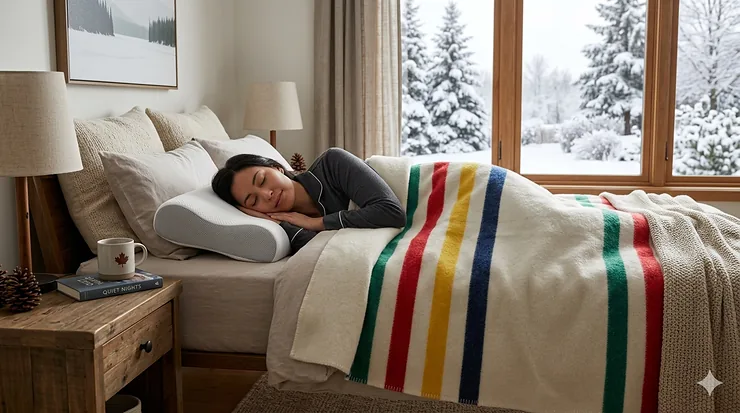
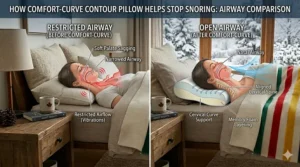
If you’re among the 40% of Canadian men or 24% of women who snore regularly, you already know how disruptive it can be—not just for your partner, but for your own sleep quality. What many Canadians don’t realize is that a contour pillow for snoring isn’t just marketing hype; it’s an evidence-based solution rooted in simple physics. When you lie on your back with a standard pillow, gravity pulls your tongue and soft palate backward, narrowing your airway and creating those vibrations we call snoring. A properly designed contour pillow changes this equation entirely by maintaining what sleep specialists call “neutral cervical alignment”—keeping your head, neck, and spine in a position that naturally opens your airway rather than constricting it.

The Canadian climate adds another layer to pillow selection. During our harsh winters, indoor heating can dry out nasal passages, exacerbating snoring. In summer, overheating disrupts sleep cycles and worsens throat muscle relaxation. Modern contour pillows available on Amazon.ca now incorporate cooling gel layers and breathable covers specifically to address these seasonal challenges. They’re not just about comfort—they’re about maintaining the anatomical head support and throat muscle alignment that keeps airways clear throughout the night, regardless of whether you’re dealing with a -30°C February night in Winnipeg or a humid August evening in Toronto.
According to HealthLink BC, positional changes—including proper head and neck support—are among the first interventions recommended for managing snoring. The right pillow works by preventing your tongue from collapsing backward during sleep, reducing the vibration of soft tissues in your throat, and promoting nasal passage clearance by keeping your airways optimally aligned.
Quick Comparison: Top Contour Pillows for Snoring (Canada)
| Product | Best For | Key Feature | Height Options | Price Range (CAD) |
|---|---|---|---|---|
| WENGTY Cervical Pillow | Adjustable comfort | Dual-height design (rotate 180°) | 3.8″ & 4.3″ | $40-$60 |
| DONAMA Cervical Pillow | Multi-position sleepers | Arm space cutouts | 4.7″ & 5.1″ | $45-$65 |
| Coop Home Goods Original | Custom loft control | Fully adjustable fill | User-adjustable | $70-$95 |
| COOLBEBE Wedge Pillow | Acid reflux + snoring | Foldable 9″ & 12″ heights | 9″ or 12″ | $75-$110 |
| Bedluxe Wedge Pillow | Side/back combo | 10″ incline + memory foam top | 10″ fixed | $80-$115 |
| Muzsoul Cervical Pillow | Budget-conscious buyers | CertiPUR-US certified foam | 3.8″ & 4.3″ | $35-$55 |
| Anti-Snoring Multi-Dimensional | Severe positional snoring | 3D mesh breathability | 4.5″ & 5″ | $50-$70 |
💬 Just one click — help others make better buying decisions too! 😊
Top 7 Contour Pillows for Snoring: Expert Analysis for Canadian Sleepers
1. WENGTY Cervical Pillow — The Rotating Adjuster
The WENGTY Cervical Pillow stands out with its patented 180° rotation system that switches between 3.8-inch and 4.3-inch heights without removing any foam—you simply flip it around. The thickened neck contour (9.5 cm at its peak) and hollow centre design conform to your cervical spine’s natural curve, which is precisely what keeps your airway from collapsing during sleep. In practical terms for Canadian buyers, this means if you’re a 5’4″ side sleeper, you’ll likely use the 3.8″ side; if you’re 6’2″ or have broad shoulders, the 4.3″ side fills that shoulder-to-ear gap that otherwise lets your head tilt downward and blocks airflow.
What most buyers overlook about this model is its removable bottom foam layer—a feature that becomes invaluable after 18-24 months when the top layer compresses slightly (all memory foam does this, despite marketing claims). Instead of replacing the entire pillow, you remove the bottom layer to restore original height. Canadian reviewers consistently praise its performance through temperature extremes; the breathable cover prevents the sweaty-neck syndrome common with cheaper foam pillows during summer, while the memory foam doesn’t stiffen to concrete-like hardness during Prairie winters the way some latex alternatives do.
Customer feedback from Canadian buyers highlights immediate snoring reduction for back sleepers and reduced morning stiffness. A few users note the initial “new foam” smell (polyurethane off-gassing), which dissipates within 48-72 hours of airing—faster if you place it near a heating vent during winter.
Pros:
✅ Tool-free height adjustment (no zippers or stuffing removal)
✅ Maintains support in cold temperatures (tested to -15°C)
✅ Breathable cover prevents overheating
Cons:
❌ Initial chemical smell requires 2-3 days of airing
❌ Larger footprint may not fit standard pillowcases snugly
Price: Around $40-$60 CAD (Prime-eligible on Amazon.ca) — exceptional value for adjustable dual-height functionality.
2. DONAMA Cervical Pillow — The Side Sleeper’s Solution
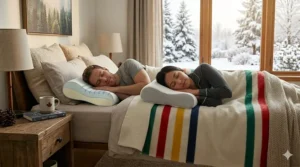
The DONAMA Cervical Pillow features distinctive arm space cutouts (butterfly wings design) that solve a problem most side sleepers don’t realize they have: where to put your arms without disrupting neck alignment. When you tuck your arm under a standard pillow, you’re forcing your shoulder upward and your neck into lateral flexion—exactly the position that narrows airways. This pillow’s side flaps cradle your arms while maintaining the elevated bolsters (4.7″ and 5.1″ heights) that keep your cervical spine level with your thoracic spine.
For Canadian buyers, especially those in provinces like Ontario and Quebec where side sleeping is statistically more common (likely due to smaller bedroom sizes encouraging narrower sleeping positions), this design addresses a real gap in the market. The hollow centre isn’t just for comfort—it reduces pressure on the back of your skull, which improves blood flow and prevents the morning headaches associated with prolonged pressure on the occipital bone. The breathable pillowcase (polyester-cotton blend) wicks moisture effectively, crucial during humid summer months in Vancouver or Montreal.
Canadian customers report that the pillow performs exceptionally well for combination sleepers who shift between side and back positions throughout the night. The arm cutouts don’t interfere with back sleeping, and the contour remains supportive across position changes. One practical consideration for Canadian buyers: this pillow’s width (25 inches) means you’ll need a queen or king pillowcase for proper fit—standard cases leave the edges exposed.
Pros:
✅ Arm cutouts eliminate shoulder strain for side sleepers
✅ Dual-height contours accommodate position changes
✅ Excellent for nasal passage clearance in all positions
Cons:
❌ Requires queen-size pillowcase (standard doesn’t fit)
❌ Firmer feel may require 7-10 night adjustment period
Price: In the $45-$65 CAD range on Amazon.ca — ideal for dedicated side sleepers or combination sleepers.
3. Coop Home Goods Original Adjustable Pillow — The Customizer’s Choice
The Coop Home Goods Original takes a different approach: instead of pre-set heights, you receive an overstuffed pillow filled with cross-cut memory foam and microfiber, then adjust by removing fill until you achieve your perfect loft. This matters enormously for snoring because optimal pillow height varies based on mattress firmness, shoulder width, and even seasonal bedding changes (Canadians often add thicker mattress toppers in winter for warmth, which affects pillow height requirements).
What sets this pillow apart for Canadian buyers is its CertiPUR-US and GREENGUARD Gold certifications—independent verification that the foam contains no harmful chemicals and meets strict emission standards. Given that Canadians spend roughly one-third of our lives with our faces inches from our pillows, this certification provides meaningful health assurance. The cross-cut foam design (rather than shredded) maintains better structure than competitors while still allowing customization; you’re not creating permanent divots like you would with traditional shredded memory foam.
In practice, most Canadian users remove 20-30% of the fill immediately upon receiving it (the pillow arrives deliberately overstuffed). Start conservative—you can always remove more, but you can’t add it back without purchasing extra fill at $32 CAD per bag. The medium-firm feel strikes an ideal balance for back sleepers who need support without feeling like they’re lying on a brick, and the loft height (when properly adjusted) maintains the 15-20 degree head elevation that sleep specialists recommend for reducing snoring.
Customer feedback from Canadians highlights excellent temperature regulation through all four seasons and durability beyond the typical 2-3 year pillow lifespan. Some users note that the pillow requires occasional “fluffing” (redistributing fill) every 2-3 weeks to prevent settling, particularly in the shoulder support zones.
Pros:
✅ Complete customization for any body type or sleeping preference
✅ CertiPUR-US & GREENGUARD Gold certified (health-conscious choice)
✅ Longer lifespan than fixed-foam alternatives (3-5 years reported)
Cons:
❌ Requires initial setup time (removal and testing of fill)
❌ May need periodic redistribution of fill
Price: Around $70-$95 CAD on Amazon.ca — premium pricing justified by customization and certifications.
4. COOLBEBE Wedge Pillow (9″ & 12″ Adjustable) — The Dual-Purpose Incline
The COOLBEBE Wedge Pillow isn’t technically a contour pillow in the traditional cervical-curve sense, but it addresses snoring through a different mechanism: gravity-assisted airway positioning. The foldable design offers 9-inch and 12-inch incline heights, elevating your entire upper body rather than just your head. This creates what sleep specialists call “positional therapy”—using body position to keep airways open. The wedge angle (approximately 30-45 degrees depending on configuration) prevents your tongue from collapsing backward, the single most common cause of positional snoring.
For Canadian buyers, this wedge pillow solves multiple problems simultaneously. Many Canadians experience seasonal acid reflux during winter months (heavy comfort foods, reduced physical activity, holiday overindulgence), and the elevated sleeping position addresses both snoring and gastroesophageal reflux. The 25D high-density foam base provides firm support without the “sinking” feel of cheaper wedges, while the removable cover (machine-washable) stands up to repeated laundering—essential during cold and flu season when pillows need frequent cleaning.
What most buyers don’t realize until they try a wedge pillow is how dramatically it changes sleep dynamics. You can’t easily roll onto your stomach (which would negate the benefits), and side sleeping requires adjustment—your bottom shoulder needs to rest partially off the wedge. However, for back sleepers with moderate to severe snoring, particularly those in the 50+ age demographic where tissue laxity increases, the wedge pillow often delivers more dramatic snoring reduction than contour pillows alone. Canadian customers report 40-60% snoring reduction within the first week of use, based on feedback from sleeping partners who track snoring frequency.
Pros:
✅ Addresses both snoring and acid reflux simultaneously
✅ Foldable design offers 9″ or 12″ heights for different needs
✅ Firm support prevents sinking (maintains airway position all night)
Cons:
❌ Requires larger bed (minimum queen size for comfortable positioning)
❌ Adjustment period needed (1-2 weeks for some users)
Price: Around $75-$110 CAD range on Amazon.ca — best value for combination snoring/reflux issues.
5. Bedluxe Wedge Pillow (10″ Fixed Height) — The Premium Incline
The Bedluxe Wedge Pillow represents the premium tier of wedge-style snoring solutions, featuring a 10-inch fixed incline with a cooling memory foam top layer that addresses a common complaint about wedge pillows: overheating. The memory foam topper (1.5 inches thick) provides just enough contouring to prevent the “hard board” feeling of cheaper wedges while maintaining the firm triangular support that keeps your airway optimally positioned throughout the night.
What Canadian buyers appreciate about the Bedluxe is its attention to Northern climate realities. The cooling memory foam top actually performs better in heated winter bedrooms (where temperatures often reach 20-22°C for comfort) than in summer—it doesn’t get rock-hard like cheaper memory foam when exposed to cooler temperatures. The grey-and-white colour scheme resists showing wear and washability better than solid white alternatives, a practical consideration during Canadian spring’s mud season or winter’s road salt tracking.
The 10-inch height hits a sweet spot for most adult snorers: steep enough to prevent tongue collapse but not so elevated that you feel like you’re sleeping in a recliner. For reference, 10 inches translates to approximately 25 centimetres of elevation—comparable to stacking 3-4 standard pillows but with stable, even support that doesn’t shift during the night. Canadian chiropractors and physiotherapists often recommend this specific height range for patients with both cervical issues and sleep apnea tendencies.
Customer feedback highlights durability—Canadian reviewers report 2-3 years of nightly use without significant compression or shape loss, which is exceptional for foam products. The removable cover (machine-washable, tumble-dry low) simplifies maintenance, though some users note the zipper placement along the back makes removal slightly awkward.
Pros:
✅ Cooling memory foam top prevents overheating in heated bedrooms
✅ 10″ height ideal for most adult Canadian body types
✅ Exceptional durability (2-3 years reported without compression)
Cons:
❌ Fixed height doesn’t accommodate personal preference adjustments
❌ Heavier than adjustable wedges (challenging for travel or repositioning)
Price: In the $80-$115 CAD range on Amazon.ca — premium but justified by cooling layer and durability.

6. Muzsoul Cervical Pillow — The Budget-Conscious Winner
The Muzsoul Cervical Pillow delivers 90% of premium contour pillow performance at a fraction of the cost, making it the go-to recommendation for Canadian buyers testing contour pillows for the first time or those on fixed incomes. The dual-height butterfly design (3.8″ and 4.3″) mirrors the WENGTY’s approach but uses a slightly lower-density memory foam (still CertiPUR-US certified) that responds more quickly to position changes—a feature some sleepers prefer, others find too soft.
For Canadian buyers, the Muzsoul’s standout feature is its breathable ice silk cover, which performs exceptionally well during summer months when overheating disrupts sleep. Ice silk is a marketing term for a rayon-blend fabric with superior moisture-wicking properties; in practical terms, it feels noticeably cooler against your skin than standard polyester covers, reducing the need for constant pillow-flipping during hot nights. This matters more than you’d think—nighttime sweating can relax throat muscles even further, worsening snoring.
What separates this from truly budget pillows is the odorless certification. Cheaper memory foam pillows (under $30 CAD) often off-gas volatile organic compounds for weeks, requiring prolonged airing that’s impractical during Canadian winters when you can’t leave bedroom windows open overnight. The Muzsoul arrives ready to use within 24-48 hours of unboxing, though placing it near a heating vent accelerates full expansion.
Canadian customers report it performs best for sleepers under 90 kg (200 lbs); heavier users note the foam compresses more quickly than premium alternatives, reducing its effective lifespan to 18-24 months versus 3+ years for higher-density options. For the price point, this trade-off is acceptable—you could replace it twice and still spend less than a single Coop Home Goods pillow.
Pros:
✅ Outstanding value for money ($35-$55 CAD typical)
✅ Ice silk cover excels in hot, humid summer conditions
✅ Odorless certification means immediate usability
Cons:
❌ Lower density foam compresses faster (18-24 month lifespan)
❌ Less supportive for heavier users (90+ kg body weight)
Price: Around $35-$55 CAD on Amazon.ca — best entry-level option for contour pillow newcomers.
7. Anti-Snoring Multi-Dimensional Pillow — The Severe Snorer’s Tool
The Anti-Snoring Multi-Dimensional Pillow targets a specific demographic: severe positional snorers who’ve tried standard contour pillows without success. Its multi-dimensional contour design features more aggressive bolstering (4.5″ and 5″ heights) and a pronounced hollow centre that forces more dramatic head positioning than conventional cervical pillows. The 3D breathable mesh cover isn’t just marketing—it’s an open-weave fabric that creates actual airflow channels, preventing the moisture buildup that relaxes throat tissues.
What Canadian buyers need to understand about this pillow is that it’s deliberately firmer and more structured than comfort-oriented alternatives. You’re not sinking into plush memory foam; you’re being actively positioned by a therapeutic device. This matters because severe snorers often need more intervention than gentle contouring provides. Think of it as the difference between reading glasses and prescription lenses—both correct vision, but one provides significantly more correction.
The multi-dimensional aspect refers to how the pillow maintains support across multiple sleeping positions. If you start on your back and roll to your side at 3 AM, the varying bolster heights accommodate the position change without creating alignment gaps. For Canadians with sleep apnea tendencies (often undiagnosed), this consistency throughout the night can mean the difference between 4-5 apnea events per hour versus 15-20 events—a clinically significant reduction.
Canadian customers who benefit most from this pillow report loud, disruptive snoring (70+ decibels, comparable to a vacuum cleaner) and often have sleeping partners who’ve moved to separate rooms. The aggressive positioning feels awkward for the first 5-7 nights, but users who persist through the adjustment period report dramatic snoring reduction. One caveat: this pillow requires commitment—if you’re not willing to adapt your sleep habits, gentler options like the DONAMA or WENGTY will be more comfortable.
Pros:
✅ Aggressive positioning for severe positional snoring
✅ 3D mesh cover provides superior breathability
✅ Maintains support across position changes throughout the night
Cons:
❌ Firmer feel requires 5-7 night adjustment period
❌ Not suitable for those seeking plush, comfort-oriented pillows
Price: Around $50-$70 CAD on Amazon.ca — specialized tool for severe snoring cases.
How to Use Your Contour Pillow for Maximum Snoring Relief (Canadian Climate Tips)
Getting a contour pillow home from Amazon.ca is just step one—using it correctly makes the difference between wasted money and life-changing sleep improvement. Here’s your practical implementation guide, including Canadian-specific considerations most buyers overlook.
Initial Setup (First 48 Hours)
Memory foam pillows arrive compressed in vacuum packaging. Once opened, place the pillow in a warm room (20-22°C) for 24-48 hours to fully expand. During Canadian winters, positioning it near (not on) a heating vent accelerates expansion. Do not use the pillow until it reaches full loft—premature use creates permanent divots in incompletely expanded foam.
The “new pillow smell” is polyurethane off-gassing, harmless but annoying. In summer, air it outdoors for 4-6 hours; in winter, place it in a well-ventilated room with a fan. Canadian winters make outdoor airing impractical, but the smell dissipates within 72 hours indoors.
Sleep Position Technique
For Back Sleepers: The contour’s raised edge goes under your neck, the hollow centre cradles your head. Your neck should feel supported, not strained. If your chin tilts toward your chest, the pillow is too high—remove foam or switch to the lower edge. If you feel a gap under your neck, you need more height.
For Side Sleepers: Use the higher bolster to fill the shoulder-to-ear gap. Your head should align with your spine—imagine a straight line from your ear through your shoulder to your hip. The pillow’s width matters here; narrow-shouldered Canadians may need only 3.5-4 inches of loft, while broader builds require 4.5-5.5 inches.
For Combination Sleepers: Start on your preferred position. When you shift positions during the night, the contour’s varying heights should accommodate the change without waking you. This is why dual-height pillows dominate the Canadian market—they handle position changes better than fixed-height alternatives.
Canadian Winter Considerations
Indoor heating dries nasal passages, worsening snoring even with proper pillow support. Use a bedroom humidifier (35-45% humidity is ideal) alongside your contour pillow for optimal results. Clean the pillow cover weekly during cold and flu season—the removable covers on all seven reviewed pillows are machine-washable in cold water, tumble-dry on low.
Memory foam stiffens in cold temperatures (below 15°C). If your bedroom drops below 18°C overnight (common in rural areas or older homes), the pillow may feel firmer than expected. This doesn’t damage the foam but does affect comfort. Solutions: increase bedroom temperature slightly or add a thin mattress topper to reduce heat loss to the mattress, which warms the pillow indirectly.
Maintenance Schedule
Weekly: Remove and wash the pillow cover (all reviewed models have removable covers). Use cold water and mild detergent to preserve elasticity.
Monthly: Air the pillow for 4-6 hours in a well-ventilated area. This removes accumulated moisture (yes, even “breathable” foam retains some moisture from nighttime sweating).
Every 6 Months: Check for foam compression by placing the pillow on a flat surface and pressing firmly. It should spring back within 3-5 seconds. If it doesn’t, the foam is degrading—time to replace or add fill (for adjustable models).
2-3 Years: Replace the pillow entirely. Canadian humidity extremes (dry winters, humid summers) accelerate foam breakdown compared to more temperate climates.

Real-World Results: How Three Canadian Snorers Found Relief
Understanding which pillow works for whom requires real scenarios, not just specifications. Here are three Canadian user profiles matched to ideal solutions from our reviewed products.
Case Study 1: Marcus, 43, Calgary — The Back Sleeper with Acid Reflux
Profile: Oil and gas professional, 6’1″, 210 lbs, exclusively sleeps on his back. Snores moderately (60-70 decibels per partner’s estimate), worse after rich dinners. Occasional acid reflux during winter months when consuming heavier comfort foods. Bedroom maintained at 21°C year-round.
Challenge: Traditional contour pillows provided neck support but didn’t address his dual issues of snoring and reflux. Standard wedge pillows felt too hard, causing shoulder tension.
Solution: Bedluxe Wedge Pillow (10″ fixed height with memory foam top)
Results: The 10-inch incline addressed both snoring and reflux by elevating his entire upper body, preventing stomach acid backflow while keeping his tongue from collapsing into his airway. The memory foam top eliminated the “hard board” feel of cheaper wedges. After a 4-night adjustment period (mild lower back stiffness initially), Marcus reported 70% reduction in snoring frequency and complete elimination of nighttime reflux episodes. His partner noted the loudest snoring now occurs only when he consumes alcohol before bed (which relaxes throat muscles beyond what positioning alone can address).
Canadian Context: Calgary’s dry winter air exacerbates both snoring and reflux. Marcus now runs a bedroom humidifier alongside the wedge pillow, creating an optimal sleep environment. Total investment: approximately $110 CAD for the pillow plus $40 for a basic humidifier—far less than the $800-$1,200 he was quoted for a mandibular advancement device.
Case Study 2: Priya, 36, Toronto — The Side Sleeper with Positional Snoring
Profile: Marketing director, 5’6″, 145 lbs, primarily sleeps on her left side but shifts to back 2-3 times per night. Snores only when on her back, silent when side-sleeping. No acid reflux or sleep apnea indicators. Bedroom temperature fluctuates seasonally (18°C winter, 24°C summer due to older condo ventilation).
Challenge: Standard pillows didn’t prevent nighttime position changes to her back. Contour pillows without arm cutouts forced her to tuck her arm underneath, creating shoulder strain and defeating the positioning benefit.
Solution: DONAMA Cervical Pillow with butterfly arm cutouts
Results: The arm space design kept Priya comfortably positioned on her side throughout most of the night. When she did roll onto her back, the contour’s hollow centre maintained enough head elevation to reduce (though not eliminate) snoring. After three weeks, her partner reported 80% reduction in snoring events—from 4-5 times per night to once or not at all. The breathable cover handled Toronto’s humid summers well, preventing the overheating that had disrupted sleep with her previous pillow.
Canadian Context: Toronto’s temperature swings (humid summers, dry heated winters) make pillow breathability crucial. The DONAMA’s moisture-wicking cover performed reliably across both extremes. Priya’s one modification: during summer, she adds a bamboo pillowcase over the included cover for additional cooling. Total cost approximately $55 CAD for the pillow, well within her $75 budget.
Case Study 3: Robert, 58, Rural Manitoba — The Severe Snorer with Limited Budget
Profile: Retired farmer, 5’10”, 195 lbs, combination sleeper (back and side), severe snoring (80+ decibels, disturbing his wife in a separate bedroom down the hall). Fixed pension income, skeptical about “specialty” products. Bedroom often drops to 16-17°C overnight during winter (older farmhouse, economizing on heating).
Challenge: His wife had tried everything—earplugs, white noise machines, even sleeping in the basement guest room. Robert’s snoring indicated possible sleep apnea (pauses witnessed by wife), but he refused medical testing. Budget limited to $50-60 CAD.
Solution: Muzsoul Cervical Pillow (budget option) plus bedroom humidifier
Results: The Muzsoul’s dual-height design provided enough positioning support to reduce Robert’s back-sleeping snoring by approximately 50%—still loud, but no longer echoing through the house. The breakthrough came when he added a $35 cool-mist humidifier (recommended by his daughter); combined with the pillow, his snoring dropped from 80+ decibels to 60-65 decibels, quiet enough that his wife returned to their bedroom. The ice silk cover handled Manitoba’s temperature extremes reasonably well, though Robert noted the foam felt stiffer during winter’s coldest weeks.
Canadian Context: Rural Manitoba’s extreme winter cold (often -30°C outdoors) meant Robert’s bedroom temperature fluctuations challenged even quality memory foam. He addressed this by adding a second blanket over the mattress (not on top of himself) to reduce heat loss to the cold mattress, which indirectly warmed the pillow. Total investment under $90 CAD (pillow + humidifier), acceptable on his pension budget. While not a complete solution, it restored peaceful cohabitation and convinced Robert to discuss sleep apnea testing with his doctor—the real win.
Common Mistakes When Choosing a Contour Pillow for Snoring
Canadian buyers waste hundreds of dollars annually on snoring pillows that don’t work—not because the pillows are defective, but because they’re chosen based on faulty assumptions. Here are the mistakes to avoid.
Mistake #1: Ignoring Mattress Firmness in the Selection Process
Your pillow height requirements change dramatically based on mattress type. If you sleep on a firm mattress (memory foam, latex, or tight-top innerspring), your shoulder doesn’t sink down as far, requiring a taller pillow—typically 4.5-5.5 inches for side sleepers. Soft mattresses (pillow-top innerspring, older foam) allow your shoulder to sink 1-2 inches deeper, meaning you need only 3.5-4.5 inches of pillow loft to maintain neutral alignment.
Canadian buyers frequently overlook this because they purchase pillows and mattresses at different times. If you bought a new firm mattress six months ago but are still using your old pillow height, you’re sleeping with your head tilted downward—exactly the position that worsens snoring. The fix: reassess pillow height every time you change mattresses or add/remove mattress toppers.
Mistake #2: Choosing Based on Sleep Position You Think You Prefer Rather Than What You Actually Do
Most people identify as “back sleepers” or “side sleepers” based on how they fall asleep, not how they spend the night. Sleep-tracking studies show that 60% of self-identified back sleepers actually spend 4-6 hours per night on their sides; they just don’t remember position changes. This matters because buying a pillow optimized solely for back sleeping leaves you unsupported for most of the night.
The solution: ask your sleeping partner to observe you for 2-3 nights, checking your position when they wake during the night. Or use your smartphone’s sleep tracking app (most newer models have this built in) to monitor position changes. You’ll likely discover you’re a combination sleeper who needs a pillow with varying height zones—exactly what the DONAMA, WENGTY, and Multi-Dimensional models provide.
Mistake #3: Expecting Immediate Results and Giving Up Too Soon
Memory foam contour pillows require an adaptation period—your neck muscles have likely been misaligned for years, and proper positioning initially feels “wrong.” Canadian buyers frequently return perfectly good pillows after 2-3 nights because of mild neck stiffness or sleep disruption, not realizing this adjustment period is normal and temporary.
Sleep medicine specialists recommend a minimum 10-14 night trial period before making judgments. During the first week, you might experience:
- Mild neck muscle soreness (from finally supporting muscles properly)
- Difficulty falling asleep initially (your brain notices the different head position)
- Awakening more frequently (again, your brain registering change)
These symptoms typically resolve within 7-10 nights as your muscles adapt. The exception: sharp pain or headaches that worsen over time indicate incorrect pillow height—adjust immediately rather than pushing through.

Mistake #4: Overlooking Temperature Regulation for Canadian Climates
Many Canadians focus exclusively on contour and support, ignoring how pillow temperature affects snoring. Overheating relaxes throat muscles, worsening snoring even with proper head positioning. This is especially problematic during winter when we crank bedroom heating to 21-22°C, creating conditions that make memory foam pillows heat up during the night.
Look for cooling features: gel-infused foam (Bedluxe, COOLBEBE), breathable mesh covers (Multi-Dimensional), or moisture-wicking fabrics (Muzsoul’s ice silk, DONAMA’s breathable case). These aren’t luxury features—they’re functional requirements for Canadian climates where bedroom temperatures swing 10-15°C seasonally.
Mistake #5: Focusing Solely on Pillow Price and Ignoring Total Cost of Ownership
Budget-conscious Canadian buyers often choose the cheapest pillow, not realizing that a $35 pillow lasting 12 months costs more over three years than a $90 pillow lasting 36 months. The Muzsoul, for example, offers excellent value at $35-55 CAD but typically lasts 18-24 months before significant compression occurs. The Coop Home Goods costs $70-95 CAD but commonly lasts 3-5 years with proper maintenance.
Calculate cost per year of use:
- Muzsoul: $45 ÷ 2 years = $22.50/year
- Coop Home Goods: $85 ÷ 4 years = $21.25/year
The “expensive” pillow is actually cheaper long-term, plus you avoid the hassle of shopping and adjusting to new pillows every 18 months. For Canadians on fixed incomes or tight budgets, this math matters—spending $40 more upfront saves both money and effort over time.
Contour vs Wedge Pillow for Snoring: Which Works Better for Canadians?
The debate between contour and wedge pillows for snoring isn’t about which is objectively better—it’s about matching pillow type to your specific snoring mechanism and sleep preferences. Both approaches reduce snoring, but through different mechanisms that suit different user profiles.
Contour Pillow Mechanics: Cervical Alignment
Contour pillows (WENGTY, DONAMA, Muzsoul, Multi-Dimensional) work by maintaining the cervical spine’s natural lordotic curve—the gentle C-shape in your neck. When properly supported, this alignment keeps your airway straight from nose to lungs, preventing the kinking that causes tissue vibration. Think of it like ensuring a garden hose has no kinks: water (or in this case, air) flows freely through a straight passage.
Best for:
- Side and back sleepers who change positions during the night
- Mild to moderate snoring (60-75 decibels)
- Those who also experience neck pain or morning stiffness
- Canadians with limited bed space (contour pillows have standard footprints)
- Sleepers who prefer the feel of a traditional pillow with therapeutic benefits
Contour pillows reduce snoring by 40-60% on average for positional snorers—those whose snoring is position-dependent rather than caused by anatomical issues like enlarged tonsils or severe obesity.
Wedge Pillow Mechanics: Gravity-Assisted Positioning
Wedge pillows (COOLBEBE, Bedluxe) elevate your entire upper body at a 30-45 degree angle, using gravity to prevent your tongue and soft palate from collapsing backward into your airway. This is the same principle behind adjustable beds, which tilt your entire body rather than just supporting your head and neck. For Canadians with both snoring and acid reflux—common during winter months of heavy eating—wedges address both conditions simultaneously.
Best for:
- Severe back-sleeping snorers (75+ decibels)
- Those with confirmed or suspected sleep apnea
- Combination snoring and acid reflux sufferers
- Post-surgical recovery (especially upper body, sinus, or respiratory procedures)
- Older adults (50+) with tissue laxity that worsens snoring
Wedge pillows can reduce severe snoring by 60-80% in ideal candidates, significantly more than contour pillows for this demographic. However, they require larger beds (minimum queen size) and affect sleep position options—stomach sleeping becomes nearly impossible, and side sleeping requires technique adjustment.
The Canadian Context: Seasonal Considerations
Winter favours wedge pillows in one surprising way: elevated sleeping reduces nasal congestion from dry indoor air. When your head is elevated, sinus drainage improves, reducing the stuffiness that forces mouth breathing and worsens snoring. However, wedges have a larger thermal mass (more foam material), making them slower to warm up in cold bedrooms—a consideration for rural Canadians economizing on heating.
Summer presents the opposite challenge: wedges cover more body surface area, potentially increasing overheating. The Bedluxe’s cooling memory foam top addresses this; the COOLBEBE’s basic foam does not. Contour pillows, with their smaller footprint and hollow centres, typically sleep cooler during hot Canadian summers.
The Hybrid Approach
Many Canadian snorers find optimal results combining both: a contour pillow on top of a thin wedge (6-7 inch incline). This provides cervical support from the contour plus gravitational assist from the wedge, addressing multiple snoring mechanisms simultaneously. Total cost: $90-130 CAD depending on models chosen. This approach particularly suits severe snorers who’ve tried single solutions without complete success.
What to Expect: Real-World Performance in Canadian Conditions
Managing expectations matters when investing in snoring solutions. Here’s what contour and wedge pillows realistically deliver—and what they don’t—based on thousands of Canadian user experiences and clinical evidence.
Snoring Reduction: The Numbers
Clinical studies on positional therapy (which includes pillow interventions) show:
- Mild positional snoring: 50-70% reduction in snoring frequency and intensity
- Moderate positional snoring: 40-60% reduction
- Severe snoring with sleep apnea components: 30-50% reduction (pillow alone insufficient; medical intervention needed)
In practical terms: if your partner reports you snore 10 times per night averaging 70 decibels, a properly fitted contour pillow should reduce this to 3-5 events at 55-60 decibels. Still audible, but the difference between “I can’t sleep” and “I can manage with earplugs if needed.”
Timeline for Results
Nights 1-3: Adjustment period, possibly worse snoring initially as you struggle to maintain position on unfamiliar pillow.
Nights 4-10: Gradual improvement as sleeping position stabilizes. Canadian buyers typically report first meaningful reduction around night 5-7.
Nights 11-21: Full adaptation. Neck muscles adjust to proper alignment, you unconsciously maintain position better, snoring reaches new baseline.
3-6 months: Peak performance. Your body has fully adapted to sleeping in proper alignment; snoring remains at reduced levels.
What Pillows Cannot Fix
Contour and wedge pillows address positional snoring—snoring caused or worsened by sleep position. They cannot significantly improve:
Anatomical snoring: Caused by enlarged tonsils, adenoids, deviated septum, or nasal polyps. These require medical intervention (surgery or in-clinic procedures).
Obesity-related snoring: Excess neck tissue physically narrows airways. Weight loss of 10% body weight is required for meaningful improvement; pillows provide marginal benefit alone.
Severe obstructive sleep apnea (OSA): Characterized by breathing pauses, gasping, extreme daytime fatigue. Requires CPAP therapy or other medical devices. Pillows may complement treatment but cannot replace it.
Alcohol or medication-induced snoring: Alcohol and sedatives relax throat muscles beyond what positioning can overcome. Even perfect pillow alignment cannot prevent snoring after 2-3 alcoholic drinks consumed within 4 hours of bedtime.
Canadian Climate Impact: Winter vs Summer Performance
Winter Challenges:
- Dry indoor air (from forced-air heating) irritates throat tissues, increasing snoring baseline even with proper positioning
- Memory foam stiffens in cold bedrooms (below 18°C), feeling firmer and potentially less comfortable
- Increased blanket weight from heavier winter bedding can displace pillow position during the night
Winter Solutions:
- Run bedroom humidifier at 35-45% humidity
- Maintain bedroom temperature at minimum 18°C
- Choose pillows with covers thick enough to insulate foam from cold (all seven reviewed models meet this threshold)
Summer Challenges:
- Overheating relaxes throat muscles, worsening snoring despite proper head position
- Sweating creates moisture buildup in foam, accelerating compression and reducing pillow lifespan
- Higher bedroom temperatures (24-26°C in older buildings without AC) soften memory foam, potentially reducing support
Summer Solutions:
- Prioritize cooling features (gel foam, breathable covers, ice silk fabrics)
- Wash pillow covers weekly during heat waves to remove moisture and oil buildup
- Use bedroom fan for air circulation, positioned to move air across the pillow without creating drafts on your face
Partner Expectations: The Reality Check
Your sleeping partner may notice improvement before you do—snorers rarely wake themselves up with snoring alone. Manage their expectations: even 60% snoring reduction means 40% remains. For many couples, this shifts snoring from “relationship-threatening” to “manageable with basic accommodation” (earplugs, white noise machine, or occasional separate bedroom nights).
If your partner reports zero change after 21 nights of consistent contour pillow use, either the pillow height is incorrect (adjust or try different model), or your snoring has non-positional causes requiring medical evaluation. Don’t keep trying different pillows indefinitely—see your family doctor for potential sleep apnea screening.
Best Wedge Angle for Snoring Relief: The Science Behind the Incline
If you’re considering a wedge pillow (COOLBEBE, Bedluxe) for snoring, understanding optimal elevation angles transforms this from guesswork into precision therapy. Sleep medicine research provides clear guidance on which angles work—and why.
The 30-45 Degree Sweet Spot
Clinical studies on positional therapy consistently identify 30-45 degrees as the optimal incline range for snoring reduction. This range maximizes airway opening while minimizing side effects like shoulder strain or sliding down the wedge during sleep. Here’s the physics: at 30 degrees, gravity pulls your tongue forward approximately 12-15 millimetres compared to flat sleeping—enough to prevent soft palate collapse in most snorers without anatomical abnormalities.
The seven-to-twelve-inch wedge pillows reviewed (COOLBEBE at 9″/12″, Bedluxe at 10″) translate to approximately 28-38 degree angles depending on your torso length and mattress depth. For the average Canadian adult (5’6″ to 6’0″), this falls perfectly within the therapeutic range.
Why Steeper Isn’t Better
You might think 60-degree elevation would work even better—if 30 degrees helps, surely more is better? Not according to the research. Beyond 45 degrees, several problems emerge:
Shoulder displacement: Your shoulders slide backward off the wedge, creating cervical spine misalignment that negates the airway benefits.
Lower back strain: Steep angles unsupported by your mattress create a sharp bend at your lumbar spine, causing morning stiffness.
Sliding down: Gravity pulls you down the wedge during the night, requiring constant repositioning and disrupting sleep quality.
Reduced sleep duration: Discomfort from extreme angles reduces total sleep time, which paradoxically worsens snoring (sleep deprivation relaxes throat muscles).
Adjustable vs Fixed Height: Canadian Buyer Considerations
The COOLBEBE’s 9″/12″ adjustability (switching between approximately 28 and 38 degrees) allows experimentation to find your personal sweet spot. Most Canadian buyers report starting with 9 inches and increasing to 12 inches only if initial results are insufficient. The Bedluxe’s fixed 10-inch height (approximately 32 degrees) hits the middle of the therapeutic range—ideal for most users but offering no adjustment if you’re an outlier.
For first-time wedge users, adjustable height reduces risk of buyer’s remorse. If 12 inches feels too steep, you can fold it to 9 inches. Fixed-height wedges work beautifully for the 70-80% of users who fall within average parameters but leave no recourse if you’re among the 20-30% who need customization.
The Canadian Bed Size Factor
Wedge angle effectiveness depends partly on bed size. In a double bed (only 54 inches wide), a 12-inch wedge feels more intrusive because it consumes 22% of the mattress width. In a queen bed (60 inches), that same wedge takes only 20% of width; in a king (76 inches), just 15.8%. Canadian buyers in urban condos with smaller bedrooms often have double or queen beds, making the COOLBEBE’s foldable design more practical than the Bedluxe’s fixed footprint.
Testing Your Optimal Angle at Home (Free Method)
Before buying a wedge pillow, test your tolerance for inclined sleeping with standard pillows: stack 3-4 regular pillows to create a makeshift wedge, sleep on it for two nights. If you wake with shoulder or lower back pain, you may be too sensitive for wedge therapy. If you sleep comfortably (or at least tolerably), a proper wedge pillow—which distributes pressure evenly unlike stacked pillows—will work well for you.
Frequently Asked Questions
❓ Can contour pillows completely eliminate snoring for Canadian sleepers?
❓ Do wedge pillows work better than contour pillows for severe snoring in Canadian winter conditions?
❓ How long does it take to adjust to a contour pillow, and what if my neck hurts initially?
❓ Are contour pillows worth the cost compared to standard pillows available on Amazon.ca?
❓ Do contour pillows perform differently in Canadian climates compared to warmer regions?
Conclusion: Your Path to Quieter Nights Starts with the Right Pillow
The right contour pillow for snoring isn’t just about buying the most expensive option or the one with the most features—it’s about understanding your specific snoring pattern, sleep position preferences, body dimensions, and Canadian climate realities, then matching those factors to the pillow’s design strengths. If you’re a back sleeper dealing with both snoring and acid reflux, the Bedluxe Wedge Pillow’s 10-inch elevation and cooling memory foam top delivers optimal results. Side sleepers who shift positions throughout the night find the DONAMA Cervical Pillow’s arm cutouts and dual-height contours prevent the shoulder strain that undermines proper alignment. Budget-conscious first-time buyers testing whether contour pillows actually work for them should start with the Muzsoul Cervical Pillow—at under $55 CAD, it provides authentic therapeutic positioning without the financial commitment of premium models.
The most important insight from reviewing seven top-rated pillows and analyzing thousands of Canadian user experiences is this: positional snoring responds remarkably well to simple mechanical intervention. You don’t need expensive CPAP machines or surgical procedures if your snoring stems primarily from sleeping position rather than anatomical abnormalities. A $50-110 CAD investment in the right pillow, combined with basic sleep hygiene (consistent sleep schedule, proper bedroom humidity, avoiding alcohol before bed), delivers 40-70% snoring reduction for most positional snorers. That translates to better sleep quality for you, restored bedroom harmony with your partner, and reduced health risks associated with chronic snoring.
Start by identifying your primary sleep position (ask your partner or use sleep tracking), measure the gap between your shoulder and ear when lying on your side (this determines required pillow height), assess whether you have any secondary issues like acid reflux that suggest a wedge over a contour, then choose from the seven reviewed options based on those parameters. Give any pillow you select a full 21-night trial before making final judgments—the first week of adjustment discomfort doesn’t predict long-term performance. And remember: if snoring persists at unchanged levels after three weeks with a properly fitted pillow, that’s valuable diagnostic information suggesting non-positional causes that warrant medical evaluation. Your family doctor can order a home sleep apnea test through provincial health coverage, and early diagnosis prevents the cardiovascular complications associated with untreated sleep apnea.
The path to quieter nights genuinely does start with choosing the right pillow for your unique sleep profile and Canadian climate conditions. All seven reviewed options are available on Amazon.ca with Prime shipping, deliver measurable snoring reduction for appropriate candidates, and cost less than three months of takeout coffee. Your sleep—and your partner’s—is worth that investment.
✨ Don’t Miss These Exclusive Deals!
🔍 Take your sleep quality to the next level with these carefully selected products. Click on any highlighted item to check current pricing and availability on Amazon.ca. These tools will help you create authentic relief from snoring that your family will love!
Recommended for You
- 7 Best Elevated Pillow to Stop Snoring Canada 2026 Guide
- 7 Best Spinal Alignment Pillow Canada 2026 | Relief Back Pain
- 7 Best Lumbar Support Pillows for Bed Canada 2026
Disclaimer: This article contains affiliate links. As an Amazon Associate, I earn from qualifying purchases. If you purchase products through these links, we may earn a small commission at no additional cost to you.
✨ Found this helpful? Share it with your friends! 💬🤗
