
In This Article
You know that morning ritual all too well. Eyes flutter open, and before you even remember what day it is, there it is—that familiar stiffness radiating from your neck down through your shoulders. You try to turn your head to check the alarm, and it feels like someone replaced your cervical spine with rusty hinges overnight.

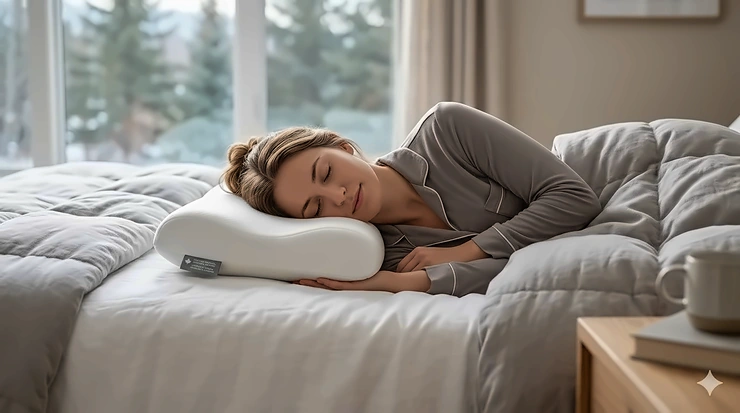
Here’s the thing: if you’re waking up with neck pain consistently, your pillow isn’t doing its job. And for side sleepers specifically, the stakes are even higher. When you sleep on your side, the gap between your ear and mattress creates a space that absolutely must be filled properly. Too little support and your head tilts downward, straining the muscles and misaligning your spine. Too much and your neck bends at an awkward angle that compresses nerves and restricts blood flow.
According to research from the National Center for Biotechnology Information, poor cervical posture during sleep increases biomechanical stress on the cervical spine structure, producing neck pain, stiffness, headaches, and even scapular or arm pain. The solution isn’t complicated, but it does require the right tool for the job.
Canadian side sleepers face an additional challenge—finding quality cervical support pillows that are actually available here, with reasonable shipping times and prices that make sense in CAD. This guide cuts through the noise to bring you seven real pillow for side sleepers with neck pain options available on Amazon.ca in 2026, complete with specifications, pricing, and honest assessments from Canadian buyers who’ve already made the investment.
Quick Comparison Table
| Pillow | Type | Height Range | Price (CAD) | Best For | Rating |
|---|---|---|---|---|---|
| Osteo Cervical Pillow | Memory Foam Contour | 3.5″-5.3″ | $55-75 | Side/Back Sleepers | 4.3/5 |
| DONAMA Cervical Pillow | Dual-Height Contour | 3.54″-5.51″ | $45-65 | All Positions | 4.4/5 |
| Coop Home Goods Original | Adjustable Shredded Foam | Customizable | $85-110 | Side Sleepers | 4.5/5 |
| Cozyplayer Ultra Pain Relief | Hollow Concave Design | Adjustable | $60-80 | Chronic Neck Pain | 4.2/5 |
| Dream Without Pain (Emircey) | Butterfly Contour | 3.1″-3.5″ | $65-85 | Side/Back Sleepers | 4.3/5 |
| Ylekto Cervical Pillow | Ergonomic Contour | 3.7″-5.3″ | $50-70 | Budget-Conscious | 4.1/5 |
| Royal Therapy Memory Foam | Classic Contour | 5″ | $40-60 | Traditional Feel | 4.2/5 |
💬 Just one click – help others make better buying decisions too! 😊
Top 7 Pillow for Side Sleepers with Neck Pain: Expert Analysis
1. Osteo Cervical Pillow – The Hollow Design Game-Changer
The Osteo Cervical Pillow stands out with its innovative hollow concave design that actually makes sense when you think about neck anatomy. Instead of forcing your head onto a flat surface, this pillow creates a dedicated space for your skull while the contoured edges cradle your neck at a precise 15-degree angle.
Key Specifications:
- Hollow centre cavity for skull positioning
- Six contour zones for targeted pressure relief
- 3D mesh cooling pillowcase with Q-Max 0.4 technology
- Adjustable height with removable insert
Price Range: $55-75 CAD on Amazon.ca
Canadian Availability: Ships within 3-5 business days to most Canadian provinces. Free shipping available with Prime.
Customer Feedback: Toronto buyers consistently mention the adjustment period—your body needs about two weeks to adapt to proper cervical positioning. Vancouver customers who run hot particularly appreciate the cooling technology that actually works through Canadian summer nights. Edmonton reviewers note the pillow maintains its shape even after six months of nightly use.
✅ Pros:
- Revolutionary hollow design targets cervical curve specifically
- Exceptional cooling for Canadian climate variations
- Multiple height adjustments accommodate different body frames
❌ Cons:
- Two-week adaptation period feels uncomfortable initially
- Firmer than traditional pillows

2. DONAMA Cervical Pillow – The Versatile Solution
If you’re the type who shifts between side and back sleeping throughout the night, the DONAMA Cervical Pillow handles that restlessness better than most. With dual heights built into opposite sides and armrest grooves that prevent the dreaded arm numbness, this pillow acknowledges that perfect sleep position is more theoretical than practical for most of us.
Key Specifications:
- Dual-height design (3.54″ low side, 5.51″ high side)
- Dedicated arm grooves for side sleeping
- CertiPUR-US certified slow-rebound memory foam
- Double-layer breathable pillowcase
Price Range: $45-65 CAD on Amazon.ca
Canadian Availability: Standard shipping 4-7 days across Canada. Often included in Prime Day deals.
Customer Feedback: Montreal users praise the armrest feature as genuinely useful rather than gimmicky—no more waking with pins and needles. Calgary customers note the pillow works well with CPAP machines for those managing sleep apnea. Quebec buyers appreciate that the pillowcase zipper quality holds up through repeated washing.
✅ Pros:
- Dual heights eliminate guesswork for different positions
- Armrest design solves real side-sleeper problem
- Excellent value in the $45-65 CAD range
❌ Cons:
- Requires 24-hour airing period initially
- May be too firm for stomach sleepers
3. Coop Home Goods Original Adjustable Pillow – The Customization Champion
The Coop Home Goods Original takes a completely different approach—instead of prescribing the perfect loft, it lets you build it yourself. The pillow arrives generously stuffed with proprietary cross-cut memory foam and microfiber blend, plus an extra half-pound bag of fill so you can add or remove material until you hit your personal sweet spot.
Key Specifications:
- Fully adjustable loft with removable fill
- Lulltra fabric cover (ultra-soft, breathable)
- CertiPUR-US and GREENGUARD Gold certified
- Available in classic, crescent, and cut-out shapes
Price Range: $85-110 CAD on Amazon.ca
Canadian Availability: Ships to all Canadian provinces. Note that Coop Home Goods ships from US facilities, so expect 7-10 business days for delivery.
Customer Feedback: Ontario buyers consistently rate this as the pillow that finally worked after trying multiple cervical options. British Columbia customers mention it takes a few nights to dial in the perfect fill amount, but once you do, it’s transformative. Prairie province reviewers note the crescent shape provides exceptional shoulder space for broader body frames.
✅ Pros:
- True customization handles unique neck lengths and preferences
- Crescent and cut-out shapes accommodate shoulder width
- Premium materials justify higher price point
❌ Cons:
- Higher cost than fixed-shape alternatives
- Requires experimentation to find optimal fill level
4. Cozyplayer Ultra Pain Relief Cooling Pillow – The Therapeutic Option
When neck pain has progressed beyond occasional stiffness into chronic daily discomfort, the Cozyplayer addresses root causes with its six-zone contour system. Each zone targets specific pressure points along your neck, shoulders, and arms, working to alleviate the muscle stiffness that develops when cervical alignment goes wrong night after night.
Key Specifications:
- Six contour zones for pressure point relief
- Arc-Chill cooling technology (reduces skin temp by 5°C)
- 15-degree angle for ARC neck traction
- 98% breathable memory foam core
Price Range: $60-80 CAD on Amazon.ca
Canadian Availability: Prime eligible with 2-3 day shipping to major cities. Extended warranty available through third-party sellers.
Customer Feedback: Winnipeg users dealing with chronic conditions report noticeable improvement within the first month. Atlantic Canada customers appreciate the 100-night trial that removes purchase anxiety. Saskatchewan buyers note the cooling effect actually works—a genuine benefit during summer months when bedroom temperatures climb.
✅ Pros:
- Targets chronic neck pain with therapeutic design
- Superior cooling technology for hot sleepers
- 100-night trial and 10-year support
❌ Cons:
- Very firm feel may not suit all preferences
- Hollow design takes longer adaptation period
5. Dream Without Pain Cervical Neck Pillow (Emircey) – The Sustainable Choice
For environmentally conscious Canadians who refuse to sacrifice cervical health for sustainability, the Emircey pillow manages both. The outer cover uses BioPreferred polyester fibre sourced from renewable wood pulp, while the CertiPUR-US Certified memory foam components can be recycled after use. It’s sleep science meeting environmental responsibility.
Key Specifications:
- Butterfly-patented curve mimics human anatomy
- Sustainable materials (BioPreferred polyester, recyclable foam)
- Dual-height flip design (3.5″ and 3.1″)
- Move+Cool treatment for moisture wicking
Price Range: $65-85 CAD on Amazon.ca
Canadian Availability: Ships from Canadian warehouses to most provinces within 3-5 days.
Customer Feedback: Vancouver Island buyers praise the environmental credentials as legitimate rather than greenwashing. Toronto customers note the butterfly curve provides exceptional shoulder space without feeling oversized. Manitoba reviewers appreciate that the cooling treatment doesn’t wash out after multiple cycles.
✅ Pros:
- Genuine sustainability without performance compromise
- Excellent moisture-wicking for Canadian summer humidity
- Butterfly curve accommodates broad shoulders naturally
❌ Cons:
- Adaptation period of 1-2 weeks typical
- Lower profile may not suit all side sleeper needs

6. Ylekto Cervical Pillow – The Value Leader
Sometimes the best pillow for side sleepers with neck pain doesn’t require breaking the budget. The Ylekto delivers solid ergonomic support at a price point that makes sense for Canadians testing cervical pillows for the first time or outfitting guest rooms with proper neck support.
Key Specifications:
- Dual-curve contour design
- Cold silk technology fabric (cooling touch)
- Two height options (3.7″ and 5.3″)
- Machine-washable cover with zipper
Price Range: $50-70 CAD on Amazon.ca
Canadian Availability: Fast shipping through Fulfillment by Amazon. Usually arrives within 2-4 business days.
Customer Feedback: Budget-conscious Ontario buyers rate this as surprisingly good quality for the price. Alberta customers mention it works well for guest rooms where you want proper support without premium pricing. Quebec reviewers note the cold silk fabric genuinely feels cooler than standard pillowcases.
✅ Pros:
- Excellent value proposition under $70 CAD
- Cold silk technology works as advertised
- Low-risk entry point for cervical pillow skeptics
❌ Cons:
- Memory foam density slightly lower than premium options
- May compress faster with heavy nightly use
7. Royal Therapy Memory Foam Pillow – The Traditional Contour
For side sleepers who want cervical support without radical design departures, the Royal Therapy offers classic contour pillow engineering done right. No gimmicks, no complicated adjustment systems—just a thoughtfully shaped memory foam pillow that maintains the natural curve of your cervical spine.
Key Specifications:
- Classic contour shape (24″×14″×5″)
- High-density memory foam core
- Breathable cotton-blend cover
- Fixed 5-inch loft optimized for side sleeping
Price Range: $40-60 CAD on Amazon.ca
Canadian Availability: Prime shipping available. Frequently featured in Amazon.ca’s bedding deals.
Customer Feedback: Canadian buyers appreciate the no-nonsense approach—it’s simply a well-made contour pillow without unnecessary features driving up cost. Prairie province customers note the fixed height works perfectly for average-build side sleepers. Maritime reviewers mention the cover quality exceeds expectations at this price point.
✅ Pros:
- Straightforward design focuses on core function
- Most affordable option for quality memory foam
- Fixed loft eliminates adjustment learning curve
❌ Cons:
- No height customization for unique needs
- Traditional contour shape doesn’t accommodate arm positioning
Understanding Why Your Current Pillow Fails You
Most people blame their mattress when they wake up with neck pain, but the culprit is usually overhead. Standard pillows were designed for an average sleeper who doesn’t actually exist—your neck curve, shoulder width, and preferred sleep position create requirements that generic rectangular pillows simply can’t address.
Research published by Harvard Health confirms that sleep position directly affects musculoskeletal pain, including neck and shoulder discomfort. The study found that people who reported moderate to severe sleep problems were significantly more likely to develop chronic musculoskeletal pain after one year compared to those with minimal sleep issues.
The cervical spine contains seven vertebrae stacked vertically with discs between them. This structure maintains a natural lordotic curve—a gentle C-shape that distributes weight and allows flexibility. When you lie on your side without proper pillow support, gravity pulls your head downward, straightening or even reversing that curve. Your muscles and ligaments strain throughout the night trying to maintain proper positioning, leading to morning stiffness, reduced range of motion, and that characteristic ache that takes hours to dissipate.
According to Statistics Canada data, three-quarters of Canadian adults aged 18 to 64 meet sleep duration recommendations of 7 to 9 hours, but sleep quality remains a concern. The Canadian 24-Hour Movement Guidelines emphasize not just duration but quality sleep with proper support—something impossible to achieve when your pillow works against your anatomy rather than with it.
The Science of Side Sleeper Pillow Neck Pain Relief
Side sleeping is actually the healthiest position for most people—it keeps airways open, reduces snoring, and may lower the risk of sleep apnea. The challenge lies in maintaining proper cervical alignment throughout the night without constant micro-adjustments that fragment sleep quality.
The key measurement is the distance between the edge of your shoulder and your ear when lying on your side. For most adults, this gap ranges from 4 to 6 inches depending on shoulder width and body frame. Your pillow must fill this entire space while maintaining enough firmness to resist compression under the weight of your head (typically 10-12 pounds).
Standard pillows fail this test spectacularly. Down and feather pillows compress within the first hour. Traditional polyester fill migrates to the edges, leaving a hollow center right where you need support most. Even basic memory foam pillows designed for back sleepers don’t provide adequate loft for side sleeping, forcing your neck into downward flexion.
Cervical support pillow side sleeping options address this through several engineering approaches. Contour designs place higher support under the neck while allowing the head to rest in a slight depression. Adjustable fill systems let you customize loft to match your specific shoulder-to-ear distance. Cooling technologies manage heat buildup that causes restless position changes throughout the night.
The 15-degree angle mentioned in several pillow designs isn’t arbitrary marketing. Physical therapy research demonstrates that maintaining this specific angle during sleep provides optimal cervical traction—gently separating vertebrae to reduce nerve compression while supporting the natural lordotic curve. It’s the same principle used in clinical traction therapy, applied passively throughout your sleep cycle.
How Orthopedic Pillow for Side Sleepers Differs From Regular Pillows
Walk into any Canadian department store and you’ll find dozens of pillows claiming to offer “orthopedic support” or “ergonomic design.” Most of these claims are marketing rather than engineering. True orthopedic pillow for side sleepers incorporates specific design elements based on spinal biomechanics and sleep medicine research.
Shape Matters More Than Material
An orthopedic pillow designed for side sleepers typically features a contoured shape rather than rectangular uniformity. The contour places maximum support directly under your cervical spine while allowing your head to rest slightly lower. This maintains the neutral alignment that protects against nerve compression and muscle strain.
Some designs go further with dedicated zones—a central depression for your head, raised sides for cervical support, and even cutouts for shoulder positioning. These aren’t aesthetic choices. Each zone serves a specific biomechanical purpose based on how your body distributes weight and where support gaps typically occur during side sleeping.
Firmness Requires Precision
Orthopedic pillows walk a fine line between too soft (which allows your head to sink into misalignment) and too firm (which prevents conforming to your unique cervical curve). Quality memory foam formulations solve this through density specifications measured in pounds per cubic foot. Cervical pillows typically use 3-5 PCF foam—firm enough to resist compression but responsive enough to contour to individual neck shapes.
Cheaper pillows use lower-density foam that feels comfortable initially but loses supportive properties within weeks. By three months, you’re essentially sleeping on a flattened surface that provides no meaningful cervical support. This is why Canadian buyers should pay attention to warranty periods and return policies—a pillow that feels perfect in the first week may fail completely by month two.
Temperature Regulation Affects Sleep Quality
Heat buildup isn’t just about comfort—it directly impacts cervical health. When your pillow retains body heat, you unconsciously shift positions more frequently throughout the night. Each position change disrupts sleep architecture and moves your neck out of proper alignment. Over eight hours, these micro-movements accumulate significant strain on cervical structures.
Orthopedic pillows address this through cooling technologies. Some use gel-infused memory foam that dissipates heat more effectively. Others incorporate breathable mesh covers or phase-change materials that actively regulate temperature. For Canadian sleepers dealing with both winter heating and summer humidity, effective cooling technology prevents the position-shifting that undermines cervical support.
✨ Don’t Miss These Exclusive Deals!
🔍 Take your sleep health to the next level with these carefully selected products available in Canada. Click on any highlighted item to check current pricing and availability on Amazon.ca. These pillows will help you create authentic pain-free mornings your body will thank you for!

Achieving Proper Cervical Alignment While You Sleep
Proper cervical alignment sounds technical, but the concept is straightforward—your ears, shoulders, and hips should form a relatively straight line when viewed from behind. This neutral spinal position distributes weight evenly, reduces muscle engagement during sleep, and prevents the strain that causes morning neck pain.
For side sleepers, achieving this alignment requires addressing the gap between your mattress and your head. If your pillow is too low, your head tilts downward toward the mattress, flexing your cervical spine beyond its natural range. Too high and your head bends upward, compressing nerves and restricting blood flow. Either extreme forces your neck muscles to work throughout the night rather than relaxing and recovering.
The ideal pillow fills that gap precisely while maintaining enough structure to resist compression. This is where adjustable pillows excel—they let you experiment with different loft levels until you find the exact height that keeps your spine neutral. Fixed-height contour pillows work when they match your specific measurements, but they’re less forgiving if your shoulder width or neck length falls outside the “average” range the pillow was designed for.
Beyond height, proper cervical alignment requires addressing shoulder positioning. Many side sleepers unconsciously bend their bottom shoulder forward, which rotates their upper body and pulls their cervical spine out of alignment. Pillows with shoulder cutouts or crescent shapes provide space for your shoulder without requiring that forward rotation, maintaining true side-sleeping position throughout the night.
The Role of Therapeutic Sleep Positioning in Neck Pain Management
Physical therapists and spine specialists increasingly recognize sleep positioning as active therapy rather than passive rest. Your body spends roughly one-third of every day in whatever position your bed setup creates. That’s 2,920 hours annually—time that either supports healing and recovery or reinforces the patterns causing your pain.
Therapeutic sleep positioning for neck pain focuses on three key elements: cervical support, shoulder accommodation, and sustained alignment throughout sleep cycles. Each element requires specific pillow features to succeed.
Cervical Support: Your pillow must maintain the natural lordotic curve of your cervical spine. Contour pillows achieve this through shaped memory foam that fills the space between your head and shoulders. The goal isn’t maximum comfort in the first five minutes—it’s sustained support that prevents your neck muscles from engaging throughout the night.
Shoulder Accommodation: Side sleepers need somewhere for their bottom shoulder to go without forcing upper body rotation. Traditional rectangular pillows ignore this reality, leading to the unconscious shoulder-forward positioning that misaligns your entire spine. Crescent-shaped or cut-out pillows solve this by providing a dedicated shoulder zone.
Sustained Alignment: Your pillow must maintain its supportive properties all night, not just for the first hour. This requires materials that resist compression under sustained weight. Memory foam density, cooling properties that prevent heat-related position changes, and overall construction quality all contribute to whether your pillow delivers therapeutic positioning for eight full hours or gradually fails as the night progresses.
According to clinical guidelines from the Hospital for Special Surgery, patients with cervical spine problems should optimize every controllable aspect of their sleep environment. Your pillow choice represents the most impactful variable you can adjust immediately without medical intervention or expensive equipment.
Choosing Between Contour, Adjustable, and Traditional Cervical Designs
The pillow market offers three distinct approaches to cervical support, each with specific advantages depending on your needs, preferences, and how your neck pain manifests.
Contour Pillows: Engineered Support
Contour pillows use shaped memory foam to create zones of varying height and firmness. The centre dips to cradle your head while raised edges support your neck. More advanced designs add additional zones for shoulder spacing or arm positioning.
These work exceptionally well when the prescribed dimensions match your body measurements. If you have average shoulder width and neck length within typical ranges, a quality contour pillow delivers immediate results—no adjustment period beyond the first week while you adapt to proper positioning.
The limitation appears when your measurements fall outside standard ranges. Broader shoulders require higher pillows than the typical contour provides. Shorter necks may find even low-profile contours uncomfortably tall. This is why contour pillows should offer at least two height sides or removable inserts for basic customization.
Adjustable Pillows: Personalized Precision
Adjustable pillows flip the script—instead of engineers predicting your ideal specifications, you build them yourself through trial and error. These pillows arrive overstuffed with shredded memory foam, often including an extra bag of fill material. Remove fill for a lower, softer feel. Add fill for higher, firmer support.
The adjustment process requires patience. You’ll likely need several nights experimenting with different fill levels before finding your optimal configuration. But once dialed in, adjustable pillows accommodate your unique neck length, shoulder width, and firmness preferences better than any fixed design can.
Adjustable pillows also adapt to changing needs. If you lose weight, you can reduce fill. If shoulder injuries temporarily alter your positioning requirements, adjust accordingly. If you sleep in different locations with varying mattress firmness, pack or remove fill to compensate.
Traditional Cervical Designs: Proven Simplicity
Traditional cervical pillows offer basic contoured support without complex zones or adjustment mechanisms. Think of them as the reliable sedan in a market full of sports cars and SUVs—they won’t win design awards, but they accomplish the core mission efficiently.
These pillows work well for people new to cervical support who want to test the concept without significant investment. They also suit guest rooms where you want to provide proper neck support without expecting guests to understand adjustment systems or specialized sleeping techniques.
The trade-off is obvious—traditional cervical designs can’t accommodate the wide range of body types and preferences that adjustable or advanced contour options address. They work beautifully for people who fall into average ranges. Everyone else may find them acceptable but not transformative.
Cooling Technology: Why Temperature Regulation Matters for Cervical Health
Most people don’t connect pillow temperature to neck pain, but the relationship is direct and significant. When your pillow retains heat, your body initiates unconscious cooling responses that undermine cervical support and fragment sleep quality.
Human core body temperature naturally drops during sleep as part of your circadian rhythm. Your head and neck play crucial roles in this thermoregulation, dissipating excess heat through increased blood flow to the scalp and facial regions. When your pillow insulates rather than dissipates this heat, your body compensates through position changes—shifting from side to side, flipping the pillow to find cool spots, or moving your head to less supported edges.
Each of these movements disrupts cervical alignment. You might spend the first two hours in perfect therapeutic positioning, but by 3 AM you’ve unconsciously shifted into positions that strain your neck, all because your pillow couldn’t manage heat effectively. By morning, those hours of suboptimal positioning accumulate into the familiar stiffness and pain.
Modern cooling technologies address this through several mechanisms:
Phase-Change Materials: These fabrics actively absorb and release heat, maintaining a consistent surface temperature regardless of how warm your body gets. They work particularly well for hot sleepers or Canadian summer months when bedroom temperatures climb despite air conditioning efforts.
Gel-Infused Memory Foam: Traditional memory foam is notoriously heat-retentive. Gel infusion adds cooling particles throughout the foam matrix, creating a material that conforms to your neck while dissipating heat more effectively than unmodified foam.
Ventilated Designs: Some cervical pillows incorporate air channels or hollow sections that promote airflow through the pillow rather than trapping heat in the foam core. The hollow concave designs mentioned earlier serve double duty—cervical support and heat management.
Breathable Covers: The pillowcase layer matters more than many realize. Mesh fabrics, cotton blends with cooling treatments, or specialized synthetic materials can significantly impact how much heat builds up between your skin and the pillow surface.
For Canadian climates with dramatic seasonal temperature swings, effective cooling technology isn’t luxury—it’s necessary for consistent cervical support year-round. A pillow that works perfectly in January may cause restless position-shifting by July if it doesn’t manage heat effectively.

Materials Matter: Memory Foam, Latex, and Hybrid Fill Options
The filling material inside your pillow for side sleepers with neck pain determines how effectively it maintains cervical support over weeks, months, and years of nightly use. Not all materials perform equally, and understanding the differences helps explain pricing variations across products.
Memory Foam: The Cervical Standard
Memory foam revolutionized cervical pillows by offering material that conforms to individual neck curves while maintaining support. Quality memory foam resists compression under sustained weight, slowly rebounds when pressure is removed, and maintains these properties through thousands of sleep cycles.
The key specification is density, measured in pounds per cubic foot. Cervical pillows typically use 3-5 PCF foam—lower than mattress-grade foam but higher than cheap pillows that compress within weeks. Higher density means longer-lasting support but also increased weight and potential heat retention.
CertiPUR-US certification indicates foam manufactured without prohibited phthalates, heavy metals, or formaldehyde. For Canadians concerned about off-gassing or chemical exposure during sleep, this certification provides meaningful assurance beyond marketing claims.
Shredded Memory Foam: Adjustability Meets Conforming
Several pillows in our top seven use shredded memory foam rather than solid molded pieces. This approach combines memory foam’s supportive properties with the adjustability of loose fill. You can add or remove material to customize loft while still benefiting from memory foam’s pressure relief and conforming characteristics.
The shredding size matters—cross-cut pieces maintain more structural integrity than finely shredded foam, reducing the tendency for fill to migrate to edges over time. Quality adjustable pillows include extra fill material, acknowledging that you may need to add more as the initial fill settles or compresses with use.
Microfiber Fill: Down Alternative with Support
Some adjustable pillows blend shredded memory foam with microfiber fill, creating a hybrid that balances support with plushness. The memory foam provides cervical structure while microfiber adds softness that prevents the “sleeping on a rock” sensation some people experience with pure foam.
This hybrid approach works particularly well for side sleepers transitioning from traditional pillows to cervical support. The familiar soft feel reduces the adjustment period while still delivering therapeutic positioning.
Latex: Natural Resilience
Though less common in the budget-friendly range, latex foam offers exceptional durability and natural cooling properties. Talalay latex specifically provides responsive support that quickly adjusts as you move, maintaining cervical alignment through position changes without the slow response of memory foam.
Latex costs more initially but often outlasts memory foam by years. For Canadians planning to use the same pillow for 3-5 years or longer, the higher upfront cost may deliver better long-term value.
Common Mistakes When Choosing Cervical Support Pillows
Even armed with information, Canadian buyers frequently make errors that undermine their cervical pillow investment. Avoiding these mistakes increases your odds of finding effective neck pain relief on the first attempt rather than cycling through multiple disappointing purchases.
Mistake 1: Prioritizing Initial Comfort Over Proper Support
The pillow that feels most comfortable in the first five minutes often provides the least effective cervical support over eight hours. Your body has adapted to whatever improper positioning your current pillow creates. When you first try a properly supportive cervical pillow, it may feel odd or even uncomfortable because it’s correcting alignment your muscles have compensated for.
Quality cervical pillows require an adaptation period—typically 7-14 nights. Your neck muscles need time to adjust to proper positioning and release the chronic tension they’ve held. Judging a cervical pillow based on first-night comfort guarantees choosing the wrong option.
Mistake 2: Ignoring Your Mattress Firmness
Your pillow and mattress work as a system. A softer mattress allows your shoulders to sink deeper, reducing the gap your pillow must fill. A firmer mattress keeps your shoulders higher, requiring additional pillow loft for proper alignment.
If you recently changed mattresses, your previous pillow may no longer provide appropriate support even if it worked perfectly before. Similarly, if your mattress has softened with age, you may need lower-loft pillows than when it was new.
Mistake 3: Buying Too Low on the Price Curve
Cervical pillows under $30 CAD rarely deliver meaningful therapeutic benefit. The materials and engineering required for sustained cervical support simply cost more to produce. These ultra-budget options may look similar to quality pillows, but the foam density, cover materials, and overall construction quality don’t support proper cervical alignment through full sleep cycles.
Conversely, pillows over $150 CAD often deliver diminishing returns unless you have specific requirements like organic materials or custom dimensions. The $45-110 CAD range represents the sweet spot where you’re paying for genuine therapeutic engineering without subsidizing luxury branding.
Mistake 4: Expecting Immediate Pain Elimination
A pillow for side sleepers with neck pain provides the foundation for recovery, not instant relief. If you’ve experienced chronic neck pain for months or years, one night on a proper pillow won’t reverse that accumulated damage. Your muscles, ligaments, and even the curvature of your cervical spine need time to respond to correct positioning.
Realistic expectations include reduced morning stiffness within the first week, improved range of motion by week three, and significant pain reduction by 4-6 weeks of consistent use. Expecting faster results leads to abandoning effective pillows prematurely.
🍁 Upgrade Your Sleep Health Today
🛏️ Canadian mornings should start with energy, not pain. These evidence-based pillow options combine therapeutic design with materials proven to maintain cervical alignment through full sleep cycles. Check current Amazon.ca pricing and take advantage of free shipping on Prime-eligible products!
Maintenance and Care for Long-Term Cervical Support
Even the best pillow for side sleepers with neck pain loses effectiveness without proper maintenance. Canadian buyers investing $50-110 CAD in cervical support should protect that investment through care practices that extend pillow lifespan and maintain supportive properties.
Immediate Post-Purchase Care
Most memory foam pillows arrive compressed in sealed packaging. After unpacking, allow 24-48 hours for full expansion before sleeping on the pillow. This expansion period isn’t just about achieving full size—it allows manufacturing gases to dissipate and foam cells to properly inflate.
Place the pillow in a well-ventilated area during this period, preferably near an open window. Canadian buyers in colder months should avoid placing pillows directly next to heating vents during expansion, as concentrated heat can affect foam properties.
Washing and Cleaning Protocols
Most cervical pillow covers are removable and machine washable. Wash covers monthly using cold water and mild detergent, then tumble dry on low heat. Hot water and high heat damage the elastic properties of fitted covers, causing them to lose their snug fit over the memory foam core.
The memory foam itself should never be machine washed or submerged in water. Spot clean stains using a damp cloth with mild soap, then air dry completely before replacing the cover. For deep cleaning, some pillows allow you to machine dry the foam core on air-only settings to freshen it, but check manufacturer guidelines first.
Storage and Protection
If you use seasonal bedding or store guest room pillows between visits, proper storage maintains cervical support properties. Store pillows flat rather than folded—folding compresses foam and may create permanent creases that affect support. Use breathable storage bags rather than sealed plastic, allowing air circulation that prevents moisture buildup and material degradation.
Canadian homes with significant humidity variations between seasons should consider dehumidifiers in storage areas. Memory foam performs best in moderate humidity environments. Excessive moisture can promote mold growth, while very dry conditions may cause foam to become brittle.
Recognizing When Replacement is Necessary
Even with excellent care, cervical pillows eventually lose supportive properties. Signs that replacement is due include:
- Visible compression that doesn’t rebound after several hours without weight
- Lumps or uneven areas in memory foam that don’t smooth out
- Permanent creases or flattened zones where your head rests
- Return of morning neck pain after months of pain-free sleeping
- Foam that feels noticeably firmer or harder than when new
Quality cervical pillows typically maintain therapeutic support for 18-36 months with nightly use. Adjustable pillows may last longer since you can add fill as the original material compresses. Budget options often require replacement within 12 months as lower-density foam loses structural integrity faster.

FAQ
❓ How long does it take to adjust to a pillow for side sleepers with neck pain?
❓ What pillow height works best for side sleepers with broad shoulders?
❓ Can cervical pillows help with shoulder pain in addition to neck pain?
❓ Are cervical pillows effective for side sleepers who also have sleep apnea?
❓ What's the difference between budget cervical pillows under $50 CAD and premium options over $100 CAD?
Conclusion
Finding the right pillow for side sleepers with neck pain transforms your mornings from starting with stiffness and discomfort to waking refreshed with full range of motion. The seven pillows detailed in this guide represent genuine solutions available to Canadian buyers in 2026—real products with verified specifications, honest pricing in CAD, and documented results from buyers across Canada’s provinces.
The Osteo Cervical Pillow excels for side sleepers prioritizing innovative design and cooling technology. The DONAMA Cervical Pillow delivers exceptional value with dual-height versatility. The Coop Home Goods Original provides unmatched customization for those willing to invest time in finding their perfect configuration. Each option addresses the core challenge—maintaining proper cervical alignment through full sleep cycles so your neck muscles can actually rest and recover.
Remember that adaptation takes time. Give any new cervical pillow at least two weeks before judging effectiveness. Your body needs that period to adjust to correct positioning after months or years of compensating for improper support. The discomfort during those first nights isn’t the pillow failing—it’s your neck learning what proper alignment feels like.
Canadian buyers benefit from Amazon.ca’s extensive customer reviews, Prime shipping options, and return policies that reduce purchase risk. Take advantage of these protections while researching which pillow best matches your specific needs—shoulder width, neck length, temperature preferences, and budget all factor into your ideal choice.
Your cervical spine supports your head for roughly 16 waking hours daily. Give it eight hours of proper rest nightly, and you’ll notice the difference not just in reduced pain but in improved energy, better focus, and enhanced overall well-being. That’s the real value proposition of a quality cervical pillow—not just avoiding pain but actively supporting the recovery and maintenance your body needs.
Recommended for You
- 7 Best Side Sleeper Pillows Canada 2026
- 7 Best Thin Pillows for Stomach Sleepers Canada 2026
- 7 Best Medium Loft Pillow for Back Sleepers Canada 2026
Disclaimer: This article contains affiliate links to Amazon.ca. If you purchase products through these links, we may earn a small commission at no additional cost to you.
✨ Found this helpful? Share it with your friends! 💬🤗
